
How Do You Join New Yarn Balls Seamlessly?
Publié le Oct 29, 2026
By Editorial Team
Économisez 25 % sur les patrons et accessoires de tricot, aucun code requis

Last Updated: October 29, 2026
Quick Summary
To join new yarn seamlessly, tie a magic knot: two overhand knots pulled against each other, with tails left about 6 inches long. Match the method to your fiber, since smooth, tightly spun wool holds a magic knot well while slippery or fuzzy yarns need an overlap or knit-in instead.
Learning how to join new yarn is one of those small skills that makes the difference between a sweater that looks handmade and one that looks finished with care. A clean connection matters from the very first row, especially in wool where every join shows. The good news is that you don't need special tools, only a few minutes and a method that suits your fiber.
A weak join can unravel under tension, and a bulky one can show as a lump in the finished fabric. Both problems are easy to prevent when you plan the join before you knit the next stitch.
Good joins do three jobs at once. They hold firm under stretch, they stay hidden in the fabric, and they keep the yarn's texture consistent from one ball to the next.
Here is what a well-made join should achieve:
Not every join suits every yarn. A method that works on a smooth, tightly spun worsted yarn may fail on a fuzzy or loosely spun one. Match the technique to the fiber and weight before you start, this is the step most joining tutorials skip, and it is the one that decides whether your join survives the first wash.
Use this framework to pick a method:
For example, Regal 2-Ply DK is a 100% wool, looser-spun heavy DK, so it benefits from a longer overlap. Atlantic 3-ply Aran is a sturdy 100% wool made for substantial knitting. Sport Single Ply is a fine 100% wool, so a careful magic knot keeps the join slim, but because it is a single ply, keep the tails a little longer before trimming.
Best for: Knitters who want the join to match the fiber and weight of their project, not just the technique that looks easiest in a video.
The magic knot is a favorite because it creates a secure join with almost no bulk. Step by Step Guide to Casting Off shows how to close off the project edge once your join is finished. It takes practice, but it's worth learning. The key is that a true magic knot is two knots pulled together, not a single overhand knot, so each strand locks the other in place.
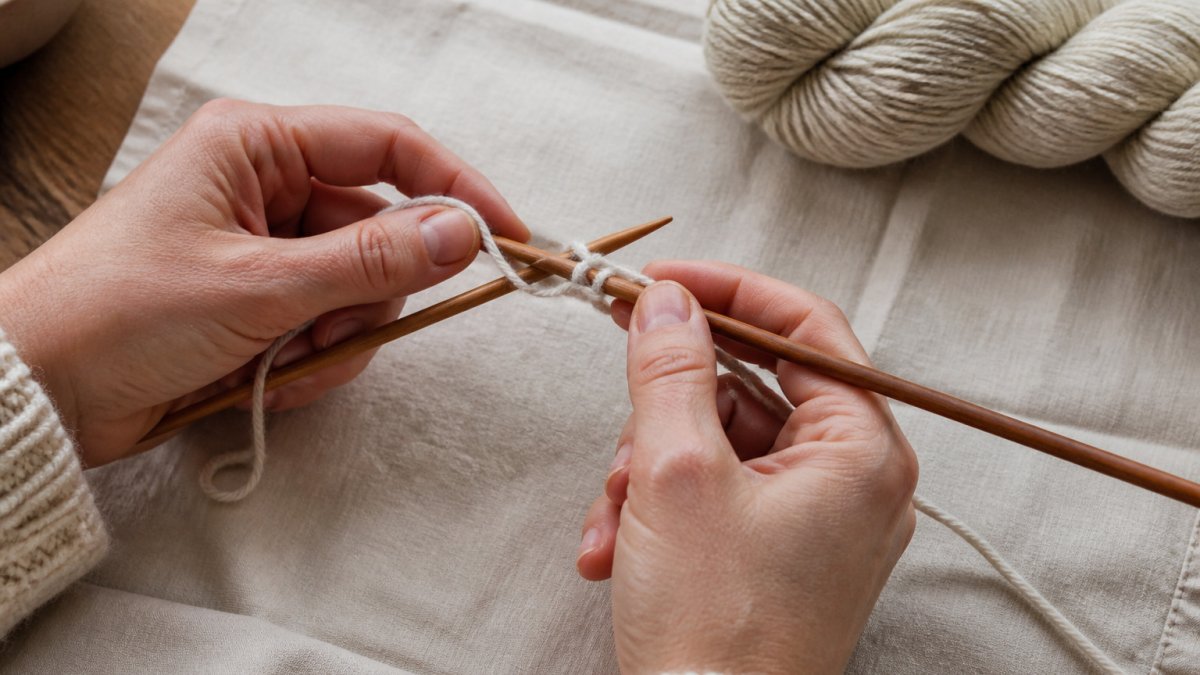
When the magic knot works well: smooth, tightly spun wool, where the knot sits flat and the tails stay put. When to skip it: fuzzy yarns (the knot hides but the tails shed), slippery yarns like silk or tightly spun superwash (the knot can work loose), and any project where a hard lump against the skin matters, such as a baby garment or a hat brim.
Practice on a swatch first. Once the knot feels natural, test it by tugging both strands hard, a correct magic knot will not slip. If it does, you tied only one knot.
!Close-up of hands forming a magic knot joining two wool yarn ends over wooden knitting needles in natural daylight
Each join method suits different yarns, so this table sums up when the magic knot works and when to skip it.
| Situation | Works well? | Why |
|---|---|---|
| Smooth, tightly spun wool | Yes | The knot sits flat and the fibers grip the tails |
| Fuzzy yarns | No | The knot hides, but the tails can shed |
| Slippery yarns like silk | No | The knot can work loose |
| Tightly spun superwash | No | The knot can work loose |
| Baby garments or hat brims | No | A hard lump can sit against the skin |
| Single tied overhand knot | No | It slides apart under tension; a true magic knot needs two knots |
The knit-in method works by knitting the new strand into the first few stitches of the next row. Browse intermediate knitting patterns to practice this technique on a project of your own. Because the yarn stays part of the fabric, the join is very strong.
Regal 2-Ply DK 100% Wool Yarn →
To knit in a new strand, lay the new yarn's end alongside the old yarn and work the next few stitches holding both strands together. Continue for about four to six stitches, then drop the old strand and carry on with the new one.
This method suits wool sweaters and socks well, since the fibers felt together slightly and lock the join in place. It takes a little more care than a knot, but it leaves no loose ends to weave in later.
Once a join is made, you still need to tidy the tails. Weaving in ends correctly keeps the join from working loose during wear.
Thread a blunt tapestry needle with the tail and run it through the back of several stitches in the same direction as the knitting. Change direction once or twice so the tail doesn't pull free. Then clip the end close to the fabric.
A common mistake is weaving too few stitches. Aim for at least five or six, and avoid pulling so tight that the fabric puckers.
Joins at a color change, or in a visible area like the front of a sweater, need extra attention. See how to knit an Aran sweater step by step for these joins worked into a full project. Place the join at the edge of a color block or at the side seam where possible, since it is easier to hide there.
When the join must sit in the open, use the magic knot with the tails woven carefully along the same color, not the new one. This keeps the fabric looking even from the outside.
If a join keeps loosening, the cause is usually too little overlap or tails that were trimmed too soon. Undo the join, make a fresh overlap of at least a few inches, and weave the tails in again with more stitches.
Watch out: pulling a join too tight can break the wool fibers and make the weak spot worse, so tighten gently.
Good joins start with good yarn. The Brae & Heather collection offers wool in a range of weights, from the fine Sport Single Ply to the sturdy Atlantic 3-ply Aran. Explore the full yarn collection to choose the right yarn for your next knit. Each yarn's listing shows its weight, yardage and gauge.
For an undyed option, Softspun Cream Undyed is a soft 2-ply worsted wool.
For most knitters, the magic knot is the most reliable choice for wool, because it creates a tight, almost invisible join that holds without a visible bump. Overlapping the two ends and knitting them together works well for a quick join in cotton or smooth yarns. The best method depends on your fiber and how visible the join will be in the finished piece. Test on a swatch first, especially with a loosely spun wool.
Leave a tail of roughly 6 inches when you join a new ball, and trim it only after the join has been worked into the fabric. For a magic knot, a 6-inch tail gives you enough length to form the knot and tuck the ends. For the knit-in method, leave at least 4 to 6 inches so you have room to weave the end in later. Shorter tails are harder to secure, and longer ones waste yarn you could knit with.
Thread the tail onto a tapestry needle and weave it back along the path of the stitches for about 2 inches in a direction that changes once or twice. Run the tail through the back of several stitches in both directions before trimming close to the fabric. On wool, this helps the join hold through wear and washing. Hand wash and air dry your finished piece to care for the wool.
A simple overhand knot can work for a temporary join, but it often creates a bump that shows through the fabric and can slip apart under tension. Techniques such as the magic knot or knitting in a new strand avoid a visible knot and produce a more durable result. If you do tie a knot, make it firm and then weave the tails in securely so the join does not unravel during wear.
Ready to put these techniques to work? Browse the Brae & Heather yarn collection and find the wool for your next project.


0 commentaire