To organize your yarn stash by color, first make a no pile, then sort into broad groups of warm, cool, neutral, and multicolored. Break each group into color families and line each family up light to dark. Bag each family so the group stays together.
Sort into broad color groups first, then break each group into color families.
Line each color family up by shade from light to dark, like a paint chip strip.
Bag each color family in one zip-top bag or basket to keep it together.
Add weight as a second label inside each color family, such as Blues / DK.
Store animal fibers in sealed containers and rotate your stash every few months.
A yarn stash organized by color can make it easier to find the shade you want. This guide shows one way to sort: color first, everything else second.
Color sorting puts shade families front and center. A pattern may call for a soft contrast, a tonal fade, or a bold pop.
Sort by fiber and your stash answers a question. Sort by color to put shades together.
What Color Sorting Solves That Fiber Sorting Does Not
Fiber-first storage groups yarn by what it is made of: wool, animal fibers, plant fibers.
Color-first storage puts shade families front and center. You can look for a missing tone, check whether you already have a shade, and plan colorwork.
Build color first, then layer fiber, weight, and dye lot underneath.
A Practical Color-Sorting Method for Your Yarn Stash
Here is one method. Pull the skeins, balls, and hanks you want to sort together. Sort them on a surface with good light.
Make a "no" pile first. Set aside anything you will not knit: scratchy oddments, tangled leftovers, yarn you have outgrown.
Sort into broad color groups. Warm, cool, neutral, and multicolored. Do not fuss over exact shades yet.
Break each group into color families. Within warm, separate reds, oranges, and yellows. Within cool, split blues from greens and purples.
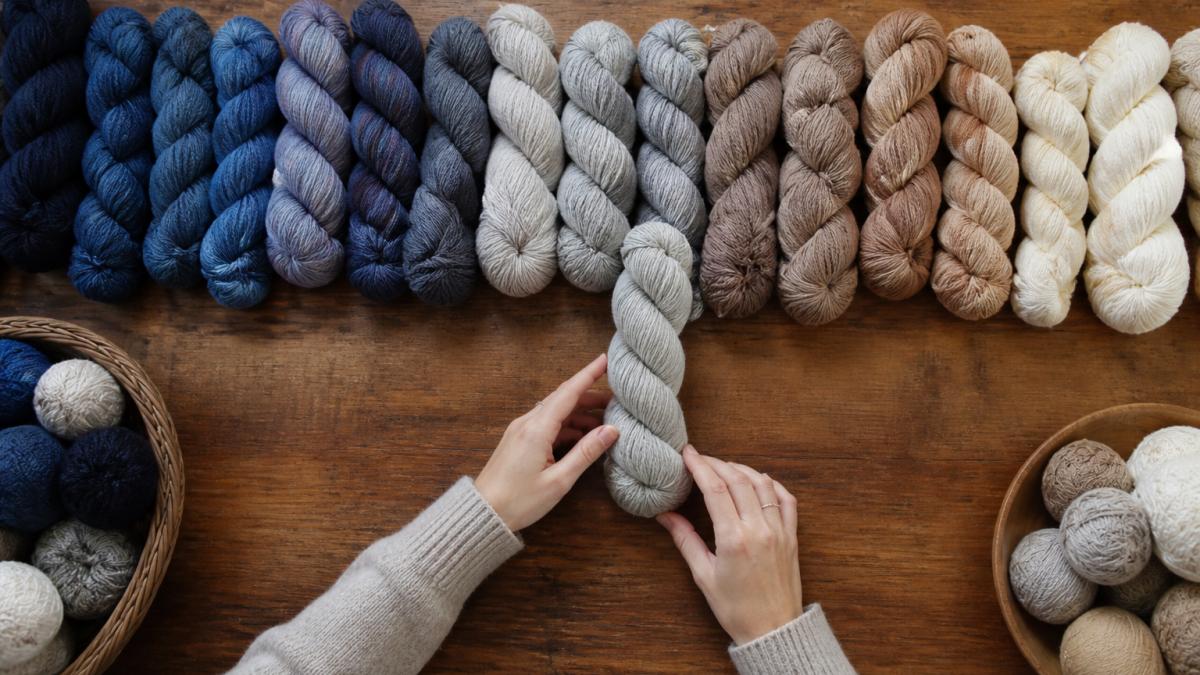
Line each family up by shade. Light to dark, like a paint chip strip.
Bag each family. One zip-top bag or basket per family keeps the group together.
Hands organizing colorful wool skeins on a wooden table by color family
The time needed for a sort will depend on the stash. Sorting can help you group yarn by color.
Building Color Families That Match How You See Shade
You can group colors in a way that suits your projects. For example, split blue into "denim" and "navy," or keep one blue family and sort by shade inside it.
You can match the family to how you plan projects. For tonal fades, keep families narrow; for bold contrast, keep families wide. For help comparing shades, this guide on how to match yarn colors online walks through the comparison steps.
Organizing Yarn by Color and Weight Without Losing Either
Color-first does not mean ignoring weight. You can add weight as a second label inside each color family.
You can use a two-part tag on a bag or bin: color family plus weight. "Blues / DK." "Reds / worsted." "Creams / fingering."
You can try these ways of organizing the two categories:
Store one weight per bag when a family is large
Put the most-used weight at eye level
Keep a small "mixed weight" bag for leftovers
Label the outside, not the inside
Not sure how to tell weights apart? This explanation of worsted vs. DK yarn covers the differences.
Yarn Storage Ideas That Keep Colors Visible and Skeins Safe
Visibility can be useful when sorting yarn by color.
Clear bins, open baskets, wire cubbies, and zip-top bags are possible storage options.
A few storage ideas to consider:
Open baskets for the families you use most
Clear lidded bins for seasonal or specialty yarn
Wire cubbies to stack color families on a shelf
Zip-top bags inside bins to keep skeins clean and grouped
Drawstring project bags for anything in active rotation
The Little Voices knitting project bag gives you room for yarn, needles, and notions while keeping everything together between sessions.
Consider keeping heavy bins on the shelf rather than on yarn.
Moth-Proof Yarn Storage for Wool and Animal Fibers
Wool and animal fibers need protection that synthetic yarn never will. Moths and carpet beetles target protein fibers, and a neglected stash is an easy meal. The content gap most guides miss is that pest prevention is not a product you buy once; it is a set of storage conditions and a repeatable inspection routine.
Start with the three conditions pests need: protein, darkness, and stillness. Remove any one and you break the cycle.
Protein: Keep animal fibers in sealed containers, not open baskets, when they are not in active rotation.
Darkness: Store sealed bins in a closet or cabinet rather than on open shelves if moths have been an issue in your home.
Stillness: Handle and rotate your stash every few months so nothing sits undisturbed for a season.
Clean First, Seal Second
Cedar blocks and lavender sachets are deterrents, not killers. They slow moths down but do not stop an active infestation. Use them as one layer, not the only layer.
You can start by pulling the skeins you want to sort together and laying them out. Group them into broad color families, such as blues, greens, neutrals, and warm tones, then refine each family by shade from light to dark. You can keep dye lots together inside each group, label the container with the color family and weight, and photograph the sorted stash.
How should you store yarn to protect it from moths?
You can choose a storage container and check your stash periodically.
Should yarn be stored in clear bins or baskets?
Clear bins, baskets, and cubbies are possible storage options. You can choose a container based on how you want to organize your stash.
How do you keep track of yarn color, fiber, and weight?
You can make a yarn inventory spreadsheet with columns such as color family, shade name, fiber content, weight, yardage, and dye lot. You can add a photo column, update it when you buy or finish a skein, and note where each bin lives.
A color-sorted stash only stays sorted if the yarn you add fits the system. Brae & Heather curates premium Shetland wool and expertly designed patterns for knitters who care about shade and fiber quality. Browse the collection to find yarn that slots cleanly into your color families, and pair it with a project bag that keeps every active project ready to knit. Get started with Brae & Heather and build a stash you can actually see.




0 comentarios