Bamboo vs Metal Knitting Needles: Key Differences at a Glance
Choosing between bamboo and metal knitting needles affects stitch tension, hand comfort, and project speed. The right choice depends on your yarn type, knitting speed, and hand health needs.
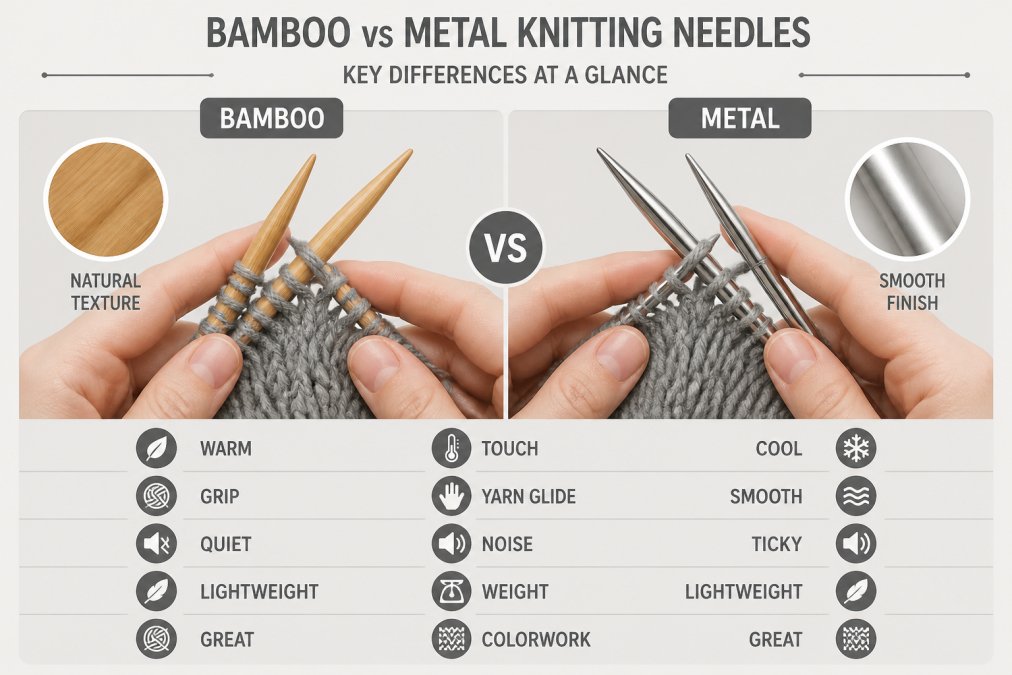
Close-up of hands holding bamboo knitting needles and metal knitting needles side by side, showing texture differences and surface finish, with yarn in progress on the needles
Bamboo needles are made from bamboo grain; metal needles are typically aluminum or nickel-plated brass. This distinction affects stitch behavior, knitting speed, and hand comfort. Matching needle material to yarn type prevents common mistakes like pairing slippery yarn with bamboo needles or choosing metal when hand fatigue is a concern.
Pros and Cons of Bamboo Needles
Bamboo needles offer warmth and grip, preventing stitches from slipping off easily, especially valuable with lightweight or slippery yarns where stitch control matters most.
Bamboo needles provide tactile feedback that helps maintain consistent gauge and tension. They're lightweight and quiet, ideal for shared spaces or meditative knitting.
Bamboo needles are slower to knit with because friction slows stitches down. They flex more than metal, affecting control on tight gauge work, and can develop splinters over time, reducing durability.
Pro TipBamboo needles work best with sticky or fuzzy yarns (wool, alpaca, mohair) where the friction prevents stitches from sliding. Pair them with slippery yarn only if you're comfortable with slower knitting speed.
Pros and Cons of Metal Needles
Metal needles deliver speed and precision. The smooth surface creates minimal friction, so stitches glide effortlessly. This speed advantage compounds on large projects: a sweater that takes weeks on bamboo might take significantly less time on metal.
The Addi Turbo needles exemplify metal needle advantages: seamless joins, flexible cord, and exceptionally smooth nickel-plated tips reduce hand fatigue during long sessions, significant for knitters managing arthritis or joint pain.
Addi Turbo Knitting Needles
Metal needles maintain their surface finish indefinitely with no splinters or degradation, lasting a lifetime. The clicking sound appeals to some knitters and bothers others.
Metal needles don't grip yarn well; with slippery yarn or loose tension, stitches slide off easily. They feel cold initially, though they warm quickly during knitting.
Watch OutMetal needles with slippery yarn (silk, tencel, rayon blends) require deliberate tension control. Dropped stitches are common if you knit loosely or pause frequently. This is where yarn-specific compatibility matters most.
Best Knitting Needles for Beginners
Beginners are often told to choose bamboo needles, but yarn type matters more than skill level. Mismatching needle and yarn creates frustration beginners incorrectly attribute to their own technique.
Yarn-Needle Compatibility for Beginners
The chart below shows which needle material works best with common beginner yarns:
Choosing metal needles because they're "faster," then dropping stitches and blaming themselves
Cotton
100% cotton
Aluminum or nickel-plated brass
Cotton is slippery and dense; bamboo friction creates hand fatigue
Using bamboo and developing hand pain before learning proper tension
Merino wool
100% merino
Bamboo or aluminum
Merino is softer and slightly slippery; bamboo provides security
Assuming all wool is the same; merino on bamboo works but merino on metal requires deliberate tension
Alpaca or mohair blend
Alpaca/wool mix
Bamboo
Fuzzy fiber grips well; bamboo maximizes this grip
Choosing metal needles and losing the security that fuzzy fiber provides
When beginners pair slippery yarn with bamboo needles, friction creates resistance that feels wrong, leading to hand tension and quitting. When they pair sticky yarn with metal needles, stitches slide off constantly. In both cases, the needle-yarn mismatch is the problem, not the knitter's skill.
Start with yarn type. For worsted-weight wool, bamboo or aluminum needles both work well. For other yarns, test both materials on a small swatch before committing to a full project. The Aluminum Double Points from Brae & Heather work well for beginners: they're lightweight, durable, and affordable.
Aluminum Double Points
Key TakeawayBeginners don't need a specific needle material, they need the right needle-yarn pairing. Match the needle to the yarn's behavior, not your skill level, and you'll avoid the most common source of early frustration.
Knitting with Slippery Yarn: Needle Material Matters
Slippery yarn, including silk, tencel, and rayon, behaves fundamentally differently on bamboo versus metal needles, directly impacting gauge consistency and dropped stitches.
On bamboo needles, slippery yarn creates loose, unevenly-tensioned stitches and slower knitting speed because friction requires constant muscular engagement. The advantage: stitches rarely drop off because bamboo grips them. You trade speed for security.
On metal needles, slippery yarn glides frictionlessly, enabling fast knitting and consistent stitch size if you maintain steady tension. The primary risk: dropped stitches when you pause or adjust your grip. You must actively maintain tension in a narrow "sweet spot."
On bamboo needles: accept slower speed, use slightly blunter tips, work in shorter sessions, and swatch to establish baseline gauge. On metal needles: use sharper tips, maintain deliberate tension, use needle stoppers on circular needles, pause less frequently, and consider shorter needle lengths for better stitch security.
With slippery yarn, prioritize: sharp tips (which grip better than blunt), stiff cables on circular needles, smooth needle surfaces, and light needle weight to reduce hand fatigue.
Project-Specific Recommendations
Lace shawls in silk or tencel: Bamboo needles with slightly blunt tips. The friction helps you maintain the precise tension that lace requires, and the slower speed suits the meditative nature of lace knitting.
Smooth stockinette in rayon blend: Metal needles with sharp tips and needle stoppers. Speed is valuable for large projects, and sharp tips + stoppers prevent dropped stitches.
Colorwork in slippery yarn: Metal needles with sharp tips. Colorwork requires precise stitch control, and metal needles' speed helps you complete color changes without hand fatigue.
Delicate garments in silk: Test both materials on a swatch. If gauge consistency matters more than speed, use bamboo. If you knit tightly enough to maintain gauge on metal, use metal for the speed advantage.
Watch OutThe most common mistake with slippery yarn is assuming the needle material is the problem when the real issue is tension management or needle-tip sharpness. Before switching needles, try using sharper tips, needle stoppers, or deliberate tension control. Often, these adjustments solve the problem without requiring a different material.
Ergonomic Knitting Needles for Arthritis and Hand Comfort
Hand health becomes critical as knitting hours accumulate. Arthritis, tendonitis, and repetitive strain affect many experienced knitters. The right needle choice directly impacts long-term comfort and whether you can continue knitting pain-free.
Metal needles with smooth surfaces reduce hand fatigue because stitches move with minimal resistance. Your hands don't grip or strain to push stitches along the needle. The Addi Turbo needles are specifically designed for this: the seamless joins and flexible cord eliminate pressure points where needles traditionally create friction. Knitters with joint pain often report that switching to high-quality metal needles allows them to knit for hours without discomfort.
Weight matters significantly. Heavier needles, even slightly, increase hand strain during long sessions. Aluminum needles are lighter than brass or steel, making them gentler on hands during extended knitting. The Aluminum Double Points from Brae & Heather weigh less than comparable metal options, reducing fatigue for knitters managing hand health concerns.
Bamboo needles offer warmth, which some knitters with arthritis prefer.
Key TakeawayFor long-term hand health, prioritize smooth needle surfaces and minimal weight. Metal needles typically outperform bamboo for knitters managing arthritis or repetitive strain, though individual response varies.
Choosing Your Needles: Fiber, Speed, and Long-Term Hand Health
The decision framework combines three factors: yarn type, project speed, and hand health.
Needle Material
Best For
Speed
Durability
Hand Comfort
Bamboo
Slippery yarn, delicate work, quiet knitting
Slower
Moderate (splinters over time)
Warm, quiet, but requires more grip
Metal (Aluminum)
General knitting, circular work, budget-conscious
Fast
Excellent (lifetime durability)
Smooth, minimal fatigue, initially cool
Metal (Nickel-plated Brass)
Premium projects, long sessions, arthritis management
Very fast
Excellent (seamless construction)
Exceptionally smooth, reduces strain
Frequently Asked Questions
Are bamboo or metal needles better for beginners?
Bamboo needles are often the better choice for beginners because their textured surface grips yarn naturally, preventing stitches from sliding off unexpectedly. This reduces frustration when learning to maintain stitch tension. Metal needles require more deliberate tension control since stitches move more freely. As you develop muscle memory and consistent technique, metal needles become easier to manage and offer speed advantages.
Do stitches slide off bamboo needles easier than metal?
No, it's the opposite. Bamboo needles have a slightly rougher surface that creates friction with yarn, making stitches less likely to slip. Metal needles are smooth and slippery, so stitches move freely along the shaft. This means metal needles require tighter tension control to prevent accidental drops, while bamboo's natural grip offers built-in security, especially valuable when working with delicate or slippery fibers.
Which knitting needles are best for slippery yarns?
Bamboo needles excel with slippery yarns because their textured surface provides friction that keeps stitches in place. Yarns like silk, rayon, or fine merino can be challenging on metal needles since they slide too easily. If you prefer metal needles for their speed, choose ones with a slightly duller finish rather than highly polished options. Point sharpness also matters, sharper tips give better control over slippery stitches.
Do metal needles cause hand fatigue compared to bamboo?
Metal needles are lighter and smoother, which reduces the physical effort needed to move stitches, many knitters find them less fatiguing for speed work. However, the constant small adjustments needed to control stitches on metal can tire some hands. Bamboo needles are slightly heavier but require less tension management, which some find more comfortable for longer sessions. Weight, grip comfort, and personal ergonomics matter more than material alone.
How does needle material affect knitting gauge?
Needle material itself doesn't change gauge, but the tactile feedback and friction do influence stitch tension. Bamboo's grip can make tension feel tighter initially, while metal's smoothness allows looser, faster stitches. If you switch between materials mid-project, your gauge may shift slightly due to unconscious tension changes. Always swatch with the actual needles you plan to use, especially when changing from bamboo to metal or vice versa.




0 comentarios