
Authentic Shetland Wool for Heritage Projects
Publicado el Sep 25, 2026
By Editorial Team
Ahorra un 15% en toda la tienda desde ahora hasta el 31 de diciembre de 2025

Last Updated: September 24, 2026
Authentic shetland wool stands apart from other fibers through its unique heritage, processing methods, and distinctive characteristics that span centuries of textile tradition. At Brae & Heather, understanding the difference between authentic shetland wool and mass-produced alternatives is essential for knitters pursuing heritage projects with historical accuracy and superior quality.
The distinction begins with provenance. True shetland wool originates from sheep bred on the Shetland Islands, where specific bloodlines have been maintained for generations. This geographic specificity and selective breeding create fiber properties that cannot be replicated elsewhere. The climate, pasture composition, and traditional husbandry practices all contribute to the wool's final character.
Authentic shetland wool exhibits a particular combination of softness, elasticity, and loft. The fiber micron count produces a fabric with natural drape and subtle texture that defines heritage Fair Isle work. This fineness is paired with natural crimp and elasticity that allows garments to hold their shape through years of wear.
The spinning method profoundly influences the final yarn's behavior. Worsted spinning, which aligns fibers parallel before twisting, creates yarn with superior stitch definition and crisp colorwork clarity, essential for Fair Isle patterns where color contrast must read distinctly across a garment. Woollen spinning, by contrast, traps air between fibers, producing lofty, elastic yarn ideal for cables and garment structure. Authentic shetland wool manufacturers employ both methods strategically, selecting the appropriate technique based on the intended end use.
The quality of authentic shetland wool manifests in multiple measurable dimensions that directly impact the knitting experience and finished garment performance. Recognizing these differences prevents costly mistakes and ensures heritage projects meet the standards they demand.
Fiber micron count measures the diameter of individual wool fibers in micrometers. Shetland wool typically ranges from 19 to 24 microns, placing it in the fine-to-medium category. This fineness directly correlates with softness against skin and the yarn's ability to create detailed colorwork without excessive bulk.
Lower micron counts produce softer, more delicate fabric suitable for garments worn close to the body. Higher micron counts within the Shetland range remain soft enough for most applications while offering greater durability and resilience. The natural lanolin present in unwashed shetland wool contributes additional softness and water resistance.
Authentic shetland wool retains natural lanolin. This natural lanolin acts as a built-in conditioner, improving the fiber's elasticity and recovery properties. Garments made from lanolin-rich shetland wool resist felting and maintain their shape, a critical factor for heritage Fair Isle garments intended for longevity.
The distinction between worsted and woollen spinning fundamentally changes how yarn behaves in the knitter's hands and how the finished fabric performs.
Worsted spun yarn aligns fibers parallel to the yarn's axis before twisting. This alignment creates smooth, compact yarn with excellent stitch definition. Colors remain distinct and crisp in Fair Isle work, and the yarn produces fabric with a smooth surface and clear stitch structure. Worsted shetland wool is ideal for colorwork projects where pattern clarity is paramount.
Woollen spun yarn traps air between fibers during the spinning process. This creates lofty, elastic yarn that springs back readily after tension release. The resulting fabric is warm, resilient, and forgiving of tension inconsistencies, qualities valued for cables, garment structure, and everyday wear. Woollen spun shetland wool produces the characteristic loft and bounce associated with traditional Shetland jumpers.
Understanding your project's demands determines which spinning method serves best. Heritage Fair Isle patterns typically call for worsted spun yarn to honor the original garments' crisp stitch definition. Aran-weight projects benefit from woollen spun construction for natural elasticity and warmth.
Distinguishing authentic shetland wool from imitations or blends requires attention to specific indicators that verify both fiber content and quality standards. Knitters investing in heritage projects must develop skills to assess authenticity before committing yarn to a project.
Authentic shetland wool carries documented provenance tracing back to recognized producers operating within established quality frameworks. Jamieson & Smith, a historic Shetland wool producer, provides detailed documentation of fiber source and processing methods with every yarn shipment.

Verify that yarn labels clearly identify the producer, fiber percentage, and yardage per weight. Legitimate shetland wool manufacturers provide this information transparently. Be cautious of vague labeling that claims "shetland-type" or "shetland-inspired", these phrases indicate blends or imitations rather than authentic fiber.
Request information about the sheep breed, processing location, and spinning method. Authentic producers willingly provide this detail because their reputation depends on transparency.
Authentic shetland wool retains natural lanolin unless explicitly processed for removal. This lanolin creates a characteristic bloom, a subtle sheen visible on the yarn surface, and produces a distinctive handle that feels slightly waxy or grippy compared to heavily scoured alternatives.
Run your fingers along the yarn. Authentic shetland wool should feel smooth yet slightly textured, with a subtle tackiness that aids grip during knitting. The yarn should not feel dry, brittle, or slippery. When wet, authentic shetland wool develops a subtle smell, not unpleasant, but distinctly woolly, that indicates natural lanolin presence.
Jamieson & Smith Shetland Heritage →
Examine the yarn under natural light. Authentic shetland wool displays subtle color depth and slight luminosity even in solid shades. Undyed natural shades should appear warm and slightly variable rather than uniformly flat.
Fair Isle knitting demands specific technical approaches to achieve the stitch definition and color clarity that distinguish heritage garments.
Stitch definition, the clarity with which individual stitches read as distinct units, depends on yarn weight, fiber fineness, and tension consistency. Worsted spun shetland wool in fingering weight naturally produces excellent stitch definition because the aligned fibers create a smooth surface that showcases each stitch's architecture.
Tension consistency proves critical in Fair Isle work. Stranded colorwork creates multiple yarn layers within each stitch. Inconsistent tension produces uneven stitch sizes, causing some stitches to appear larger and others smaller. This inconsistency disrupts the pattern's visual rhythm and compromises the garment's finished appearance.
Authentic shetland wool's natural elasticity and recovery properties help compensate for minor tension variations. The fiber's inherent spring assists in maintaining consistent stitch size even when tension wavers slightly.
Heritage Fair Isle patterns specify tension in stitches and rows per 10 centimeters (4 inches). Achieving the correct tension proves essential both for garment fit and for honoring the original pattern's design intentions.
Test your tension on a swatch at least 15 centimeters (6 inches) square, knitting the stitch pattern you plan to use in the finished garment. Measure the swatch after blocking it using the method you'll employ for the final garment. Shetland wool typically responds well to gentle blocking with steam or light wet blocking, which sets the stitches without distorting the fiber structure.
Record your tension results and compare them to the pattern's specified gauge.
Heritage Fair Isle garments represent more than functional clothing; they embody centuries of cultural practice, technical innovation, and aesthetic refinement. Recreating these garments with authentic materials and techniques honors the tradition's historical significance.
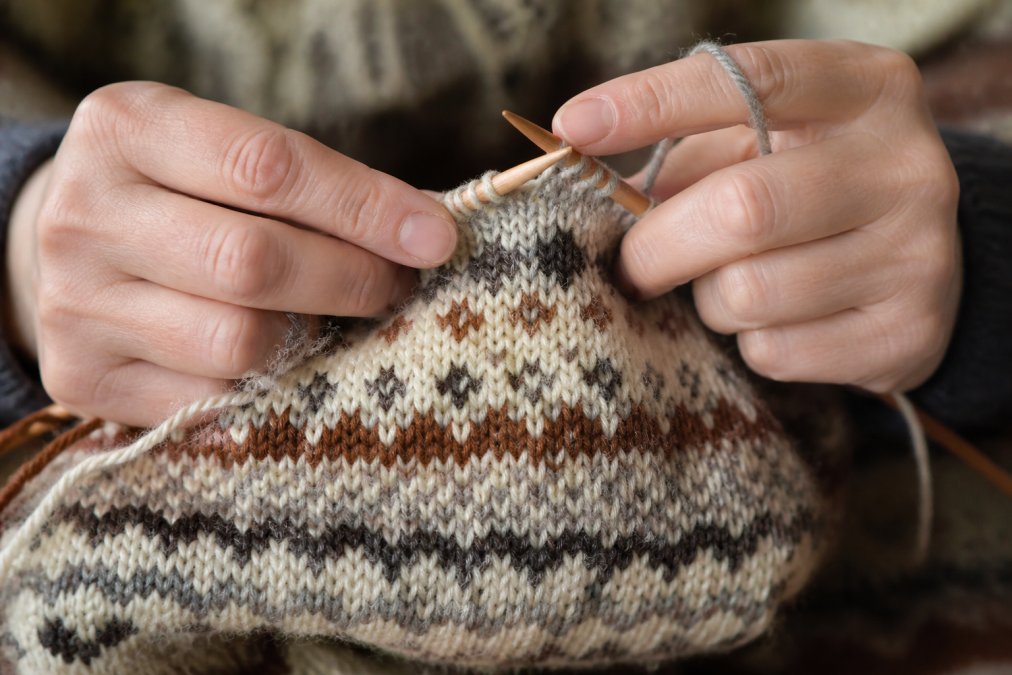
Nineteenth-century Fair Isle garments employed specific yarn characteristics and knitting techniques that modern knitters can research and replicate. The Shetland Museum and Archives preserves original garments that provide detailed documentation of fiber properties, stitch patterns, and construction methods.
Original Fair Isle patterns employed a limited palette of undyed natural shades supplemented by vegetable dyes and natural colorants. The undyed shades ranged from cream and pale fawn through deeper browns and near-black, with considerable variation within each shade category.
Project type, gauge requirements, and intended finished fabric characteristics determine which shetland wool weight and spinning method best serves your needs. Understanding these relationships prevents costly yarn purchases that fail to meet project demands.
Fingering weight shetland wool, typically 400-500 yards per 50 grams, suits lace projects, fine colorwork, and garments requiring detailed stitch definition. The yarn's fineness allows complex stitch patterns to read clearly without excessive bulk. Worsted spun fingering weight produces exceptional Fair Isle work with crisp color separation.
Aran weight shetland wool, typically 150-200 yards per 50 grams, suits projects emphasizing cables, textured stitches, and substantial garment structure. Woollen spun aran weight produces lofty, elastic fabric ideal for everyday garments and projects where warmth and resilience matter.
Authentic Shetland wool offers exceptional softness, natural lanolin content, and superior stitch definition for colorwork. The fiber's micron count creates a smooth finish without itchiness. This heritage fiber has been used for centuries in Fair Isle and lace knitting, making it ideal for projects requiring historical accuracy.
Look for clear provenance documentation from established spinners like Jamieson & Smith, who work directly with Shetland Museum and Archives on heritage yarn reconstruction. Authentic Shetland wool should specify the fiber micron count and spinning method (worsted versus woollen). Reputable sources will provide tension specifications for their yarns, particularly those replicated from museum collections.
Yes, 100% Shetland wool is specifically prized for Fair Isle and colorwork. The fiber's smooth finish and stitch definition create pattern clarity and color separation. Worsted-spun Shetland Heritage yarn, for example, recreates the original handspun 'wursit' used in nineteenth-century Fair Isle garments, giving patterns definition and complexity. Fingering-weight Shetland at 30 stitches and 32 rows per 10 centimeters over Fair Isle produces the crisp, detailed colorwork essential for heritage accuracy.
Fingering weight (2.8nm worsted, approximately 110 meters per 25 grams) creates delicate, detailed colorwork ideal for lace and traditional Fair Isle garments. Aran weight (2/2.2nm worsted, approximately 61 meters per 50 grams) suits cables and structured garments. Aran's heavier ply provides definition for cable patterns and creates more substantial fabric with excellent drape. Choose fingering for heritage Fair Isle projects requiring intricate stitch definition; choose Aran for garments emphasizing texture and structure.

0 comentarios