What Defines a Premium Shetland Wool Knitting Kit?
Authentic Shetland wool knitting kits are distinguished by their fiber provenance, spinning method, and the integrity of the pattern design. A true premium kit uses 100% pure new wool from Shetland sheep, spun to replicate historical handspun yarns rather than modern commercial substitutes. For discerning knitters, the difference between a heritage kit and a generic yarn pack is immediately visible in stitch definition, color depth, and the longevity of the finished garment.
At Brae & Heather, the curation process prioritizes collaborations with established Shetland spinners and designers. This guide explains what separates exceptional kits from mass-produced options, helping you make an informed choice before you cast on.
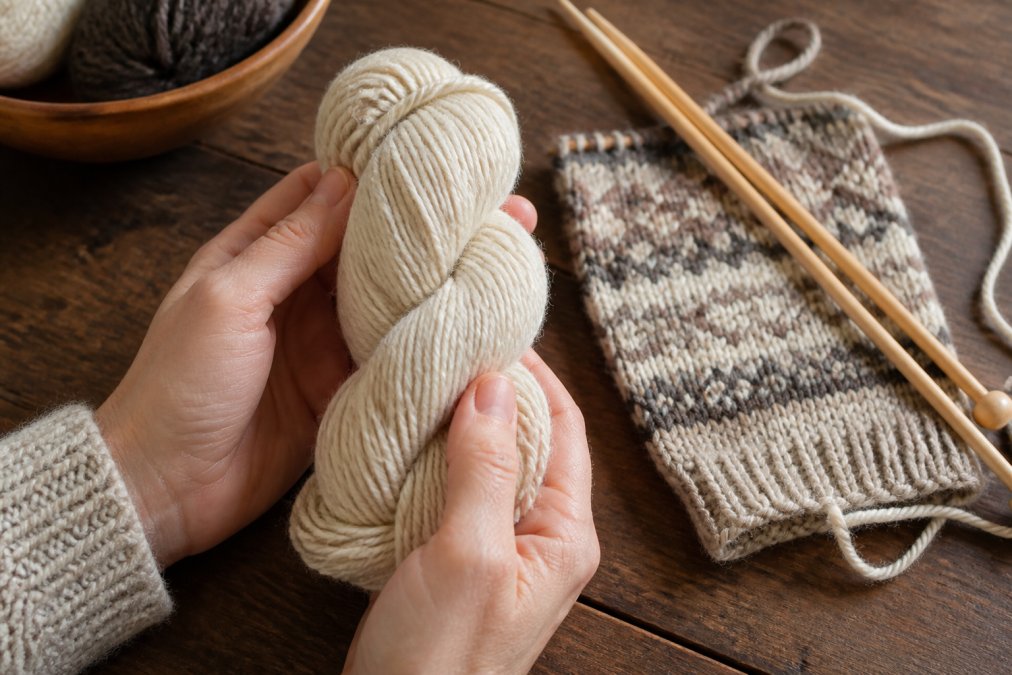
Close-up of hands holding a skein of natural undyed Shetland wool yarn beside wooden knitting needles and a partially finished Fair Isle swatch on a rustic table
Fiber Sourcing and Spinning Traditions
The quality difference in shetland wool begins with the sheep and the spinning. Shetland sheep produce a fine, soft undercoat that traditional spinners process without harsh chemicals, preserving the natural lanolin and crimp. This heritage approach yields a fiber with rustic texture and excellent warmth-to-weight ratio.
Worsted spinning, as used in the Jamieson & Smith Shetland Heritage range, combs the fibers parallel before twisting. This produces a smooth, durable yarn ideal for stranded knitting and intricate Fair Isle patterns. Woollen spinning, by contrast, traps air for a softer, more insulating fabric, often used for lace weight projects.
Jamieson & Smith Shetland Heritage
The Quality Difference in Shetland Wool: Heritage vs. Commercial
Commercial yarns often blend Shetland wool with other fibers or use faster spinning methods that cut corners on fiber alignment. The resulting fabric can pill, lose its shape, or lack the crisp stitch definition that makes stranded colorwork patterns sing. Heritage yarns, such as the Shetland Heritage Naturals, are worsted spun from combed tops to give a soft feel and a smooth finish, recreating the original characteristics of handspun 'wursit' found in museum collections.
Jamieson & Smith Shetland Heritage Naturals
Pro TipWhen comparing skeins, hold them side by side. A heritage yarn will feel denser and smoother than a woollen-spun equivalent, and the twist will be more visible. This density is what allows complex Fair Isle motifs to pop without becoming muddy.
Worsted vs. Woollen Spun: What It Means for Your Knitting
The spinning method directly affects your gauge and the final drape of your garment. Worsted-spun yarns, like the Jamieson & Smith 2ply Jumper Weight, are stronger and more durable, making them excellent for frequently worn items like yoked sweaters. Woollen-spun yarns are lighter and airier, perfect for shawls and accessories where softness is paramount.
Many knitters find that worsted-spun yarns are easier to work with for colorwork because the smooth finish allows stitches to glide along the needles. This reduces hand fatigue during long stranded knitting sessions, a benefit that justifies the higher price point of premium kits.
Selecting the Best Knitting Kits for Fair Isle Colorwork
The best knitting kits for fair isle projects pair high-contrast yarn shades with patterns designed for stranded techniques. Look for kits that specify the recommended needle size and tension, as Fair Isle requires a denser fabric to avoid gaps between color changes. The Jamieson & Smith Shetland Heritage yarn, for instance, calls for 3mm needles and a tension of 30 stitches over 4 inches, ensuring a snug, professional finish.
Jamieson & Smith 2ply Jumper Weight
Shetland Wool Week's guide to Fair Isle techniques emphasizes the importance of yarn quality for achieving even tension. A kit that includes a full palette of shades, from deep natural blacks to vibrant dyed hues, provides the flexibility needed for authentic patterns.
Essential Kit Components: From Yarn Packs to Patterns
A complete premium kit should include more than just yarn. Essential components include a clearly written pattern with charts, sufficient yarn packs for the selected size, and guidance on gauge swatching. Brae & Heather's curated selection pairs yarns with patterns like the Rionag Beanie, a design worked in the round that is perfect for knitters beginning their Fair Isle journey.
Kit Component
What to Look For
Why It Matters
Yarn Packs
Multiple shades of 100% Shetland wool
Ensures color consistency and adequate yardage
Pattern Clarity
Charts with clear symbols and written instructions
Prevents mid-project confusion and frogging
Gauge Guidance
Specific needle size and stitch count
Guarantees the finished size matches the design
Fiber Content
Pure new wool, no acrylic blends
Provides warmth, durability, and proper stitch definition
Choosing the Right Yarn Weight and Gauge
Yarn weight determines the scale of your project and the speed of your knitting. Fingering weight yarns, such as the Jamieson & Smith 2ply Jumper Weight, are traditional for Fair Isle sweaters, offering fine detail. Aran weight yarns, like the Shetland Aran Worsted, knit up faster and are excellent for textured cables and bolder colorwork pieces.
Matching your yarn weight to the pattern's gauge is non-negotiable. A pattern designed for fingering weight will produce a bulky, misshapen garment if knitted with Aran yarn. Always knit a gauge swatch in the round, as your tension often differs from flat knitting.
Matching Kits to Your Skill Level and Project Goals
Most product roundups list kits without ever addressing the single biggest cause of abandoned projects: a mismatch between the knitter's experience and the pattern's demands. A premium kit should push your skills, not punish them. Here is a practical framework for choosing a kit based on where you are in your knitting journey.
The Three-Project Rule for Beginners
If you have completed fewer than three stranded-colorwork projects, your goal is to build muscle memory for yarn management and chart reading, not to tackle a complex yoked sweater. Look for kits that feature:
A single motif repeated around a circumference (like a beanie or a cowl) rather than a full charted yoke with multiple pattern shifts.
A maximum of three colors in the main chart. This limits the number of live yarn strands you are managing and reduces the risk of twisted floats on the wrong side.
A pattern worked in the round. Seamed colorwork pieces require purling with multiple colors, which is a significantly harder skill to master than knitting in the round.
A kit like the Rionag Beanie fits this profile perfectly. Its chart is a single, repeating geometric band that allows you to focus on achieving even tension without the cognitive load of a complex chart sequence.
Intermediate: The Steek and the Yoke
The leap from a hat to a sweater is less about the colorwork itself and more about the construction techniques that surround it. Intermediate knitters should look for kits that introduce one new skill at a time. For example, a kit that features a stranded yoke but is knitted in the round with no steeking is a logical next step. You are practicing consistent tension across hundreds of stitches, but you are not yet dealing with cutting your fabric.
When you are ready for steeking, look for a kit that explicitly includes a reinforcing crochet chain step in its instructions. A well-written pattern will guide you through picking up stitches and cutting the steek with confidence. This is the point where the quality of the yarn becomes non-negotiable: a woollen-spun yarn with a shorter staple will not felt together as securely as a worsted-spun yarn when you reinforce the steek, leading to a frayed edge.
Advanced: The Lace and Colorwork Crossover
For advanced knitters, the most rewarding projects combine Shetland lace techniques with colorwork. This is a niche area where few kits excel. Look for patterns that use a heavier laceweight yarn (like a 2ply) to create a fabric with distinct texture. The key challenge here is managing the different gauges required for the lace sections versus the stranded sections. A kit that provides separate gauge guidance for each section is a sign of a thoughtfully designed pattern.
Pro TipA common pattern among experienced knitters is to keep a project journal. When you finish a kit, note the needle size you actually used to hit gauge, the yarn brand, and any modifications you made. This personal reference is more valuable than any generic guide when you are planning your next purchase.
A Decision Checklist for Your Next Kit
Before you click 'add to cart,' run the pattern through this checklist:
Chart Complexity: Does the chart have more than 20 rows? If so, are you comfortable reading charts without a row-by-row key?
Color Palette: Are the colors in the kit high-contrast? Low-contrast palettes (like pastels) are harder to read in stranded knitting and can obscure the pattern.
Construction Techniques: Does the pattern involve steeking, short rows, or three-needle bind-offs? If you have not done them before, are you willing to learn?
Yardage Margin: Does the kit provide at least 10% more yarn than the pattern calls for? This allows for gauge swatching and error correction without the risk of running out of a dyelot.
By applying this framework, you move beyond simply buying a pretty yarn pack and instead invest in a project that matches your current skill ceiling, ensuring a satisfying finish and a garment you will actually wear.
Caring for Your Finished Shetland Garments
Shetland wool requires gentle hand washing in lukewarm water with a pH-neutral wool wash (woolmark.com). Avoid wringing or twisting the wet fabric, which can felt the fibers and ruin the stitch definition. Instead, press the water out with a towel and dry flat, reshaping the garment to its original dimensions.
Proper care extends the life of your knitwear significantly. Wool bloom, where the fibers relax and soften after washing, will enhance the comfort of your garment, but only if the fabric is handled correctly. Store finished pieces folded, not hung, to prevent stretching at the shoulders.
The quality difference in shetland wool is tangible from the moment you feel the yarn. Premium kits, built on heritage spinning traditions and thoughtfully designed patterns, reward your investment with garments that last for decades. Brae & Heather offers an unparalleled collection of expertly designed knitwear patterns, premium fiber, and specialized books and textile tools to support your creative journey.
Whether you are seeking timeless Aran patterns or high-quality materials for your first Fair Isle sweater, the curated selection at Brae & Heather provides the essential resources to elevate your craft. Explore the range of authentic Shetland wool yarns and patterns and discover the perfect blend of tradition and inspiration for your next project.
Frequently Asked Questions
What makes Shetland wool different from other types of wool?
Authentic Shetland wool comes from sheep raised on the Shetland Isles and offers a unique combination of softness, warmth, and durability. The fibers have a fine crimp that creates natural elasticity, making it ideal for stranded colorwork like Fair Isle. Unlike commercial blends, pure Shetland wool retains a rustic texture and wool bloom that improves with wear. Its ability to hold crisp stitch definition also makes it a preferred choice for heritage patterns and heirloom-quality garments.
Are Shetland wool knitting kits suitable for beginners?
Many premium Shetland wool knitting kits are designed with intermediate knitters in mind, especially those featuring Fair Isle colorwork. However, beginners can start with simpler patterns like the Rionag Beanie or the free Mirky Nichts Bairn's Bunnet pattern, which introduce stranded knitting gradually. Look for kits that include clear charts and detailed instructions. Starting with a smaller project like a hat or cowl helps build confidence before tackling a full Fair Isle sweater.
How do I care for garments made with premium Shetland wool?
Hand wash your finished Shetland wool garments in lukewarm water using a gentle wool wash. Avoid agitating the fabric, as this can cause felting. Press out excess water gently and lay the item flat on a towel to dry, reshaping it to the correct dimensions. Store folded rather than hung to prevent stretching. With proper care, the natural lanolin and wool fibers will maintain their warmth, color depth, and durability for years.
What is the difference between authentic Shetland wool and commercial blends?
Authentic Shetland wool is 100% pure new wool sourced from sheep bred on the Shetland Isles. It offers superior stitch definition, a characteristic rustic texture, and a depth of color that commercial blends cannot replicate. Blends often add synthetic fibers or lower-grade wools, which reduce warmth and durability. For traditional colorwork, authentic Shetland wool provides the right balance of grip and softness, ensuring your Fair Isle patterns remain crisp and vibrant.
Choosing the right kit comes down to understanding fiber provenance, spinning methods, and honest skill assessment. A premium kit should challenge you without overwhelming you, using materials that make every stitch a pleasure. Get started with Brae & Heather and find the pattern that will become your next heirloom.




0 commentaire