Shetland wool is a natural fiber produced from the native Shetland sheep breed, prized for its unique combination of fineness, warmth, and remarkable durability that sets it apart from virtually every other wool in the world. At Brae & Heather, we've spent considerable time sourcing and working with authentic Shetland fiber, and the quality difference in Shetland wool becomes immediately apparent the moment you handle it alongside other wools. Understanding what drives that difference, at a technical level, is what this guide is about.
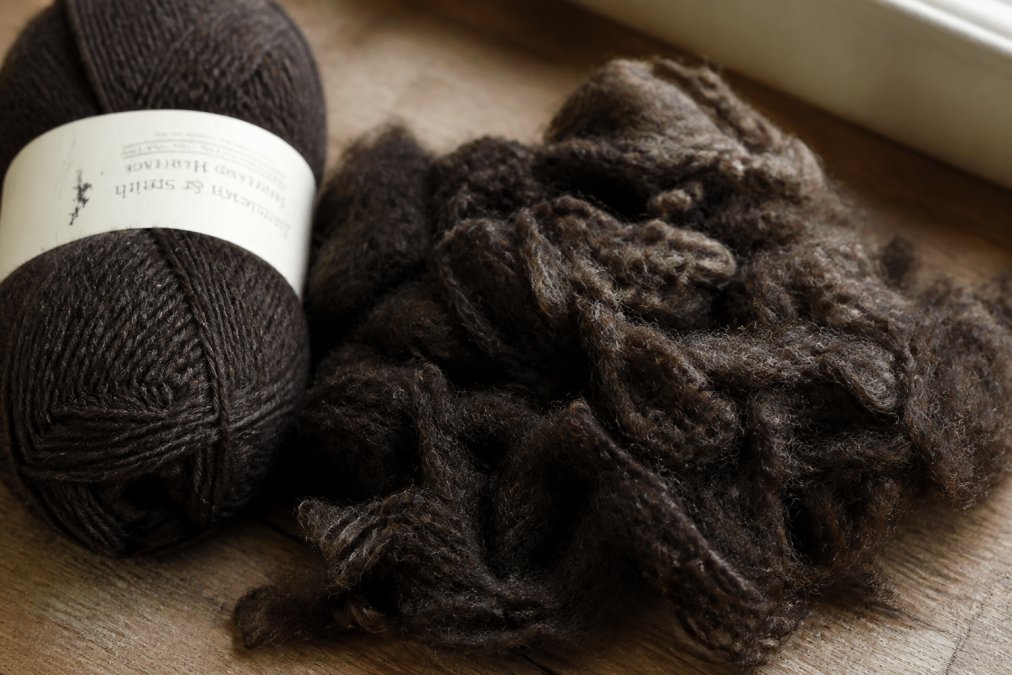
Close-up of raw Shetland fleece showing natural crimp, loft, and texture detail, arranged on a worn wooden surface under soft natural window light
The Native Breed Behind the Fiber
The Shetland sheep is one of the oldest native breeds in Britain, shaped over centuries by the harsh conditions of the Shetland Isles. That environment matters more than most knitters realize. Exposure to Atlantic winds, sparse grazing, and a short growing season produced a sheep with a fleece that insulates efficiently at low weight. The breed is listed as a "Priority" conservation breed by the Rare Breeds Survival Trust, which reflects both its heritage value and the active effort required to maintain its distinct genetic characteristics.
The native breed is smaller than commercial sheep, and its fleece grows in a double-coat structure: a fine inner coat and a coarser outer coat called the "kemp." Skilled graders separate these layers during processing, and the ratio of fine fiber to kemp is one of the primary indicators of quality. Authentic Shetland wool from well-managed flocks will have minimal kemp in the finished yarn.
Fleece Characteristics: Crimp, Staple Length, and Loft
The crimp in Shetland fleece is natural and irregular, not the tight, uniform crimp of heavily-bred Merino. This irregularity creates a yarn with exceptional loft and breathability. The fiber traps air effectively, which is why a lightweight Shetland Fair Isle garment can be genuinely warm without feeling heavy.
Staple length typically runs between 5 and 10 centimeters, which makes the fiber well-suited to both woollen and worsted spinning. The natural elasticity of the fiber means it springs back after stretching, giving finished garments longevity that many synthetic or blended yarns simply cannot match. This elasticity also contributes to the fiber's felting potential, something to manage carefully during washing, but a quality that traditional Shetland knitters have used deliberately for centuries.
Shetland Wool Grading Standards Explained
Grading is where the quality difference in Shetland wool becomes measurable rather than subjective. Raw fleece is sorted and graded before spinning, and the standards applied at this stage determine the character of the finished yarn.
Micron Count and Fiber Fineness
Fiber fineness is measured in microns, one micron equals one-thousandth of a millimeter, and this single figure predicts more about a wool's hand-feel than almost any other metric. Shetland wool generally falls in the range of 23 to 30 microns, with the finest fleeces from well-managed native flocks reaching the lower end of that range. The British Wool marketing and grading standards provide the framework within which Shetland fleece is assessed, ensuring consistency across the supply chain.
Fiber diameter directly affects whether a wool feels soft or scratchy against the skin. Fibers below 25 microns are generally considered non-irritating for most wearers. Above 30 microns, coarser fibers begin to activate skin mechanoreceptors, which is what most people describe as "itchiness."
How Processing Affects Final Quality
Processing has a profound effect on the final character of the yarn, and this is the angle most retail descriptions overlook entirely. The journey from raw fleece to finished yarn involves scouring (washing), carding, and spinning, and each stage can either preserve or diminish the fiber's natural qualities.
Scouring removes lanolin and vegetable matter. Aggressive scouring with high temperatures strips the fiber's natural protective coating and reduces softness. Careful, low-temperature scouring preserves more of the fiber's inherent hand-feel. Carding aligns the fibers and determines whether the yarn will be woollen-spun or worsted-spun, a distinction covered in detail later in this guide. The key point: two yarns labeled "Shetland wool" can feel dramatically different if their processing differs, even if the raw fiber came from the same flock.
Watch OutAvoid assuming all Shetland-labeled yarn is equivalent. Some products labeled "Shetland-style" use blended or non-native fiber. Check whether the yarn specifies 100% Shetland wool from native breed fleece before purchasing.
Shetland Wool vs Merino Wool: An Objective Comparison
The most common comparison knitters make is between Shetland and Merino. Both are premium natural fibers, but they serve genuinely different purposes and deliver different experiences. Understanding the quality difference in Shetland wool relative to Merino requires looking at the actual fiber metrics, not just marketing language.
Micron Count Comparison Table
Fiber Type
Typical Micron Range
Hand-feel
Best For
Felting Potential
Shetland (fine grade)
23-25 microns
Slightly textured, warm
Fair Isle, colorwork, outerwear
High
Shetland (standard grade)
25-30 microns
Rustic, characterful
Traditional garments, accessories
High
Merino (superfine)
15-18 microns
Exceptionally soft
Next-to-skin garments
Low-Medium
Merino (fine)
18-22 microns
Very soft
Lightweight knitwear
Low-Medium
Lambswool
25-30 microns
Soft, smooth
First-shear garments, blends
Medium
Merino wins on raw softness at the fiber level. Shetland wins on durability, loft, thermal properties, and the depth of color it takes in dyeing. For colorwork specifically, Shetland's slightly textured surface grips adjacent strands better, which is why traditional Fair Isle knitters have always worked with it rather than Merino.
Shetland Wool vs Lambswool
Lambswool comes from the first shearing of any sheep breed, typically at around seven months old. The fiber is naturally soft because the tip has never been cut before, giving it a tapered end rather than a blunt one. Shetland lambswool can be exceptionally fine, but standard lambswool from non-native breeds does not carry the same thermal properties or characteristic loft.
The practical difference: lambswool softens with washing and wears in gracefully, while Shetland wool maintains its structure and insulating properties over many years of wear. For heirloom-quality garments, Shetland's durability and garment longevity make it the more considered choice.
Is Shetland Wool Itchy? A Sensory Testing Guide
Shetland wool is not inherently itchy, but fiber coarseness varies significantly between grades and between producers. The question deserves a more precise answer than most guides offer.
The sensation of itchiness comes from individual fibers above a certain diameter deflecting rather than bending when they contact skin. Fibers under approximately 25 microns bend on contact; coarser fibers push back. This is why the same person can wear fine-grade Shetland comfortably against their wrist but find a coarser grade uncomfortable at the neck.
A practical sensory test you can use before committing to a project:
Hold a small length of yarn against the inside of your wrist for 30 seconds
Press it lightly against the side of your neck for 15 seconds
Wet a short length and repeat both tests (wet fiber behaves differently against skin)
If no irritation appears after all three steps, the yarn is likely suitable for next-to-skin wear
The neck test is the most reliable because that skin is thinner and more sensitive than wrist skin. Many knitters who believe they cannot wear wool have never tested a genuine fine-grade Shetland, the quality difference in Shetland wool at the fiber level often surprises them.
Pro TipFor projects worn directly against the skin, choose a worsted-spun Shetland yarn. The worsted spinning process aligns fibers parallel to each other, which smooths the yarn surface and reduces the prickle sensation even at the same micron count.
How to Identify Authentic Shetland Wool
Authentic Shetland wool is a specific product from a specific place, but the term is not always used with precision by retailers. Knowing what to look for protects your investment and ensures your finished garment performs as expected.
Key indicators of authentic Shetland wool:
Breed specification: The label or product description should reference Shetland sheep or native Shetland breed fleece
100% wool content: No fiber blends; authentic Shetland yarn is all-natural fiber
Natural color range: Shetland sheep produce fleece in a wide natural color palette, from white through fawn, moorit, grey, and natural black, without dyeing
Yarn weight and twist: Traditional Shetland yarns have a characteristic twist and loft that differs from commercial wool
Source transparency: Reputable producers can trace the fiber to specific flocks or regions
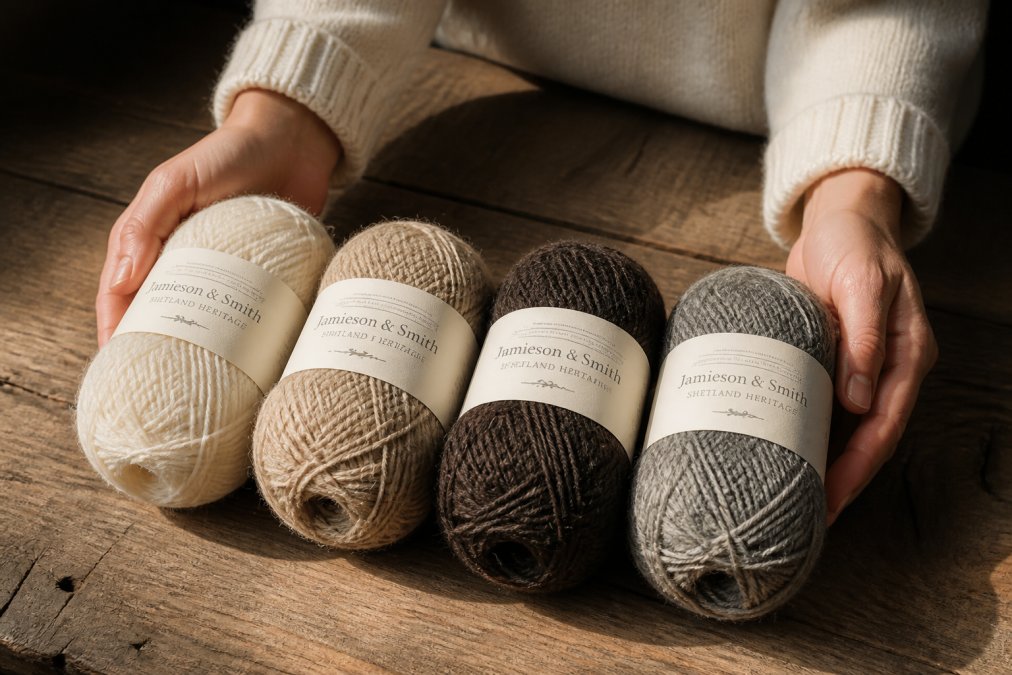
Hands holding several skeins of natural-colored Shetland wool yarn in undyed shades of white, fawn, moorit, and natural grey, arranged on a weathered wooden table in warm afternoon light
The Shetland Wool Week and its producer network is a useful reference point for understanding which producers maintain authentic breed and processing standards. Buying from suppliers who can name their source spinner or producer is always preferable to buying on label claims alone.
The Quality Difference in Shetland Wool You Can See in the Yarn
Two skeins of Shetland wool sitting side by side can look almost identical. The real quality difference in Shetland wool reveals itself in how the yarn behaves during knitting and how the finished fabric wears over time.
Woollen vs Worsted Spinning
Spinning method is one of the most significant quality variables, and it is frequently underdisclosed on yarn labels. Woollen spinning cards fibers randomly, trapping air between them. The resulting yarn has excellent loft, warmth, and a slightly hazy surface, this is the traditional character of authentic Fair Isle yarn. Worsted spinning aligns fibers parallel before spinning, producing a denser, smoother yarn with better stitch definition.
Neither is superior in absolute terms. The Jamieson & Smith 2ply Jumper Weight available through Brae & Heather is a woollen-spun yarn, technically a 4-ply construction despite the name, and it is the traditional choice for Fair Isle colorwork, delivering that characteristic depth of color and loft that worsted-spun alternatives cannot replicate. For cables and textured stitch patterns where stitch definition matters, a worsted-spun option like the Jamieson & Smith Shetland Aran Worsted is the more considered choice.
Natural Color, Durability, and Garment Longevity
The natural color range of Shetland wool is one of its most underappreciated qualities. Undyed natural shades, white, fawn, moorit, shaela, and natural black, are stable, fade-resistant, and require no chemical processing. Dyed Shetland wool takes color with exceptional depth because the fiber structure absorbs dye differently from smoother wools.
Durability comes from the fiber's natural elasticity and the tight, consistent spinning of quality producers. A well-knitted Shetland garment, properly cared for, will outlast most modern knitwear by decades. This is not sentiment, it is the reason museum collections contain intact Shetland garments that are generations old. The Shetland Museum and Archives holds examples that directly informed the development of the Jamieson & Smith Shetland Heritage yarn, which was replicated from historic Fair Isle garments in their collection.
Jamieson & Smith Shetland Heritage
Choosing the Right Shetland Wool Quality for Your Project
The practical question most knitters arrive at is: which grade or type of Shetland wool suits my specific project? The answer depends on three factors, the garment's position on the body, the stitch pattern, and the knitter's experience with the fiber.
For knitters new to Shetland fiber, starting with a worsted-spun yarn is often the more comfortable entry point. The smoother surface is more forgiving on sensitive skin, and the stitch definition makes reading your work easier. The Jamieson & Smith Shetland Aran Worsted is described as "super soft" and works across cables and colorwork, a genuinely versatile starting point.
Jamieson & Smith 2ply Jumper Weight
For those ready to work with the most historically accurate fiber, the Shetland Heritage range at Brae & Heather was developed with wool experts, specialist dyers, curators, and knitters working from actual garments in the Shetland Museum and Archives collection. That level of provenance is rare, and it shows in how the yarn behaves in traditional patterns.
Key TakeawayThe quality difference in Shetland wool is not a single variable, it is the combined result of breed authenticity, fleece grade, micron count, processing method, and spinning technique. Evaluating all five before purchasing will save you from costly project failures and help you choose fiber that genuinely matches your creative intention.
Understanding the quality difference in Shetland wool requires moving past vague descriptions of "heritage" and "tradition" and into the measurable, technical realities of fiber fineness, processing, and spinning method. Brae & Heather's curated selection of Jamieson & Smith yarns, from the woollen-spun 2ply Jumper Weight to the worsted-spun Shetland Heritage range, gives you access to authentic Shetland fiber with full transparency about provenance and construction. Browse the Brae & Heather collection and find the right Shetland wool for your next project.
Frequently Asked Questions
What makes Shetland wool different from other wool types?
Shetland wool comes from a native breed of sheep adapted to harsh island conditions over centuries. The fleece has a distinctive fine crimp, natural elasticity, and a fiber diameter typically ranging from 23 to 30 microns. This combination produces a yarn with exceptional thermal properties, breathability, and loft that most commercial wool breeds cannot replicate. The natural color range, from creamy white to deep moorit brown, is also unique to the Shetland breed.
How is Shetland wool graded for quality?
Shetland wool is graded primarily by fiber diameter, measured in microns, alongside staple length and cleanliness of the fleece. Finer grades with lower micron counts are softer against the skin and command higher prices. The scouring, carding, and spinning processes also influence the final grade: worsted spinning produces a smoother, denser yarn while woollen spinning retains more loft and warmth. Grading standards follow general British Wool Marketing Board classifications for native breed fleeces.
Is all Shetland wool soft?
Not all Shetland wool feels the same. Fiber fineness varies between individual animals, fleece position on the body, and how the wool is processed. Finer grades with micron counts closer to 23 feel noticeably softer than coarser fleeces above 28 microns. Worsted-spun yarns tend to feel smoother than woollen-spun. Processing steps like scouring and carding also affect hand-feel significantly. Choosing yarn from a reputable spinner who selects for consistent fiber fineness makes a measurable difference in softness.
How can you tell if Shetland wool is authentic?
Authentic Shetland wool comes from Shetland breed sheep, not just sheep raised on the Shetland islands. Look for labeling that specifies 100% Shetland wool and identifies the spinner by name. Genuine yarn has a characteristic natural color range, a slightly springy hand-feel from the crimp, and good elasticity. Yarns spun by established Shetland spinners like Jamieson & Smith are traceable to the breed and the islands, giving you confidence in provenance that generic 'British wool' labels cannot provide.




0 commentaire