
Tips for Buying Knitting Yarn Online: A 2026 Guide
Publicado el Sep 19, 2026
By Editorial Team
Ahorra un 15% en toda la tienda desde ahora hasta el 31 de diciembre de 2025

Last Updated: September 19, 2026
Buying knitting yarn online starts with the pattern, not the product page. Every pattern lists two numbers that decide everything else: gauge and yardage. Skip them and even beautiful Shetland wool can end up in a drawer.
Brae & Heather has built its pattern collection around this principle. The yarn comes second; the requirements come first.
Gauge is the number of stitches and rows that fit into a set measurement, usually 4 inches, in a specific stitch pattern. A pattern might call for 28 stitches and 36 rows over 4 inches in stockinette on size 3 needles.
Yardage is the total length of yarn the project needs. Buy 10 to 15 percent extra to allow for swatching and any adjustments.
If a pattern calls for 1,200 yards and the skein holds 114 yards, that is 11 skeins minimum, rounded up.
The fastest way to choose yarn weight for knitting is to match the pattern's gauge, not the label on the ball. Weight names vary between brands, so trust the stitch count instead.
A fingering weight yarn like Jamieson & Smith 2ply Jumper Weight knits at 28 stitches over 4 inches on size 3 needles. That matches fine Fair Isle patterns. A worsted yarn like Jamieson & Smith Shetland Aran Worsted works at 19 stitches over 4 inches on size 4 needles, better suited to cables and heavier garments.


| Yarn Weight | Typical Gauge (4 in) | Best For |
|---|---|---|
| Fingering | 28-32 sts | Fair Isle, fine colorwork |
| Sport / DK | 20-24 sts | Sweaters, colorwork |
| Worsted / Aran | 18-20 sts | Cables, outerwear |
Natural fiber yarn holds stitch definition, breathes, and ages well, which is why heritage knitting traditions have relied on wool for centuries. Shetland wool in particular has a soft hand and a slight halo that makes colorwork patterns read clearly.
The benefits of natural fiber yarn go beyond feel.
Fiber content is the first field to scan, and the way it is written tells you more than the headline word. A listing that says "100% wool" is stating a single fiber.
Three things to check before you commit:
| Project Type | Fiber Behavior to Look For | Why It Matters |
|---|---|---|
| Stranded colorwork | Worsted-spun 2-ply wool, firm hand | Crisp stitches, flat blocking, colors stay distinct |
| Cables and texture | Firmer wool with memory | Stitch definition holds through wear |
| Lace | Fine wool with good blocking | Opens up when wet-blocked, holds shape |
| Everyday garments | Wool with natural elasticity | Resists sagging at cuffs and hems |
Wool's crimp gives it elasticity, so a knitted garment returns to shape instead of stretching out at the elbows and cuffs. The fiber's outer layer sheds water while the inner core absorbs moisture vapor, which is why wool feels dry against the skin even during exertion. Lanolin, the natural wax in fleece, contributes some of the hand-feel that makes Shetland wool soft without added treatments.
Knitting yarn color matching tips begin with one hard truth: screens lie. Monitors shift hue and saturation, so the sage green on a listing may arrive closer to olive.
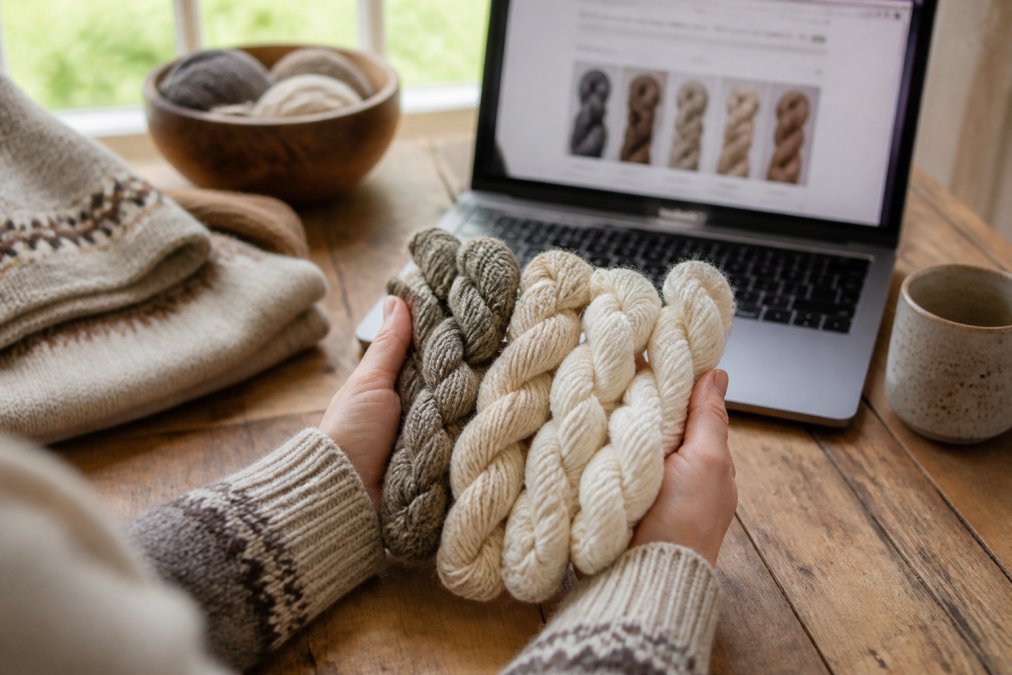
Three habits reduce the risk:
An online yarn listing is a specification sheet. Read it the way an engineer reads a data sheet: fiber content, yardage, weight, gauge, and dye lot.
A dye lot is the batch a skein was dyed in. Skeins from the same lot match; skeins from different lots may not. Listings that show the dye lot number let buyers order enough for the whole project at once.
Watch for these fields:
Shipping and returns are where online yarn buying differs most from buying in a store, and they are the two policies most buyers skim past. Read them before you add to cart, not after the box arrives.
Before you pay, confirm each of these on the store's policy pages:
The single most effective way to avoid a return is to order every skein for a project at once. One transaction means one dye lot, which means the colors match when the box arrives. Splitting an order across two checkouts, even a day apart, can pull from different dye lots.
Open the box and inspect before you wind anything:
Buying from a dyer or mill in another country adds steps that domestic orders skip. Customs processing can add days to transit, and import fees or duties may be assessed on delivery. Ask the seller how they declare the shipment and whether tracking continues across the border. If the store does not publish its international policy, email before ordering, the answer tells you how they handle problems after the sale.
The best stash is a working stash. Buy for projects, not for moods, and keep a simple running list of what you already own.
Look at what the listing actually specifies: fiber content, yardage per skein, gauge over 4 inches, and recommended needle size. A listing that names the breed and spinning method, such as worsted spun Shetland wool, gives you more to work with than one that only says 'wool.' Check customer reviews for comments on stitch definition and how the yarn holds up after blocking, since those details rarely appear in the product copy itself.
Start with the gauge the pattern states, not the weight name on the label. Two yarns both sold as DK can knit up at different gauges depending on ply and spinning method. Swatch with the needle size the pattern recommends, measure your stitches over 4 inches, and adjust needle size until it matches. If you cannot reach gauge, the yarn weight is wrong for that pattern, even if the label sounds right.
Order all the skeins you need in one transaction and request the same dye lot, since color can shift between batches. If the listing does not show dye lot numbers, ask before ordering. For larger projects, buy one extra skein as insurance. Alternating skeins every couple of rows also blends minor variations and keeps the finished fabric looking even.
It is, if you buy from a seller who publishes full specifications: fiber content, yardage, gauge, and care instructions. Reputable sellers also show clear photos and answer questions about dye lots and shipping. Read the return policy before checkout so you know your options if the color or texture differs from what you expected.
Buying knitting yarn online rewards preparation. Gauge, yardage, dye lot, and fiber content decide whether a project succeeds long before the first stitch.
Brae & Heather curates patterns and premium Shetland wool for exactly this kind of considered buying. The collection includes heritage-inspired yarns, expertly designed knitwear patterns, and the textile tools to match. Get started with Brae & Heather and build a stash you will actually knit through.

0 comentarios