Hand-dyed yarn is created through small-batch processes where artisans apply color to fiber with intentional variation, while commercial yarn undergoes standardized industrial dyeing designed to produce uniform color across every skein. This distinction shapes everything from color character to project outcomes.
Hand-dyed yarn typically exhibits tonal variation within and between skeins in the same colorway, so each hank carries subtle shifts in saturation and hue. Commercial yarn prioritizes color consistency and dye lot reliability, so skeins purchased months apart match perfectly.
The fiber itself may be identical, since both often start with the same base fiber. What changes is the dyeing method and the dyer's intention: an artisan might create semi-solid or variegated effects by layering colors, while a commercial dyer aims for batch-to-batch uniformity.
Understanding this distinction matters before deciding whether is hand dyed yarn worth the extra cost. The choice isn't about absolute quality, it's about which characteristics matter most for your project.
Pro TipHand-dyed yarn from small-batch dyers often comes with less yardage information than commercial yarn. Always check the hank weight and yardage before purchasing to ensure you have enough for your project.
Why Is Hand-Dyed Yarn So Expensive
Hand-dyed yarn costs more because the production process differs fundamentally from industrial dyeing.
Small-batch dyeing requires hands-on labor at every stage: sourcing undyed yarn, preparing dye baths, dyeing in controlled quantities, rinsing, drying, and often hand-winding into skeins.
The dyer's expertise commands a price. Developing custom colorways, understanding how fibers accept dye, and maintaining consistency within intentional variation all require years of skill embedded in the final product.
Smaller production runs increase per-unit costs. A commercial dyer producing 50,000 pounds of one colorway spreads fixed costs across enormous volume; a hand dyer producing 200 skeins distributes those same overhead costs across far fewer units.
Specialty fibers add cost. Brae & Heather's Southern Shetlands Yarn Naturals - Fingering at $16.99 per skein reflects both the premium fingering-weight fiber and the artisan dyeing process.
Southern Shetlands Yarn Naturals - Fingering
Limited availability creates scarcity value. A hand dyer might produce only a few dozen skeins of a colorway before moving on, and once sold out, that exact colorway may never be replicated, supporting higher pricing.
Hand-Dyed Yarn vs Commercial Yarn: Key Differences
Color Variation and Uniqueness
Hand-dyed yarn exhibits color variation within individual skeins and between skeins of the same colorway, often intentionally. One skein might shift from teal to navy; another of the "same" colorway might lean blue-green. This unpredictability creates visual interest, particularly in colorwork like Fair Isle or stranded knitting where color shifts become design elements.
Commercial yarn targets color consistency, with each skein of a given dye lot matching perfectly. This reliability matters for solid-colored garments, striped patterns, or designs where color pooling would be jarring.
The uniqueness factor appeals to knitters who want one-of-a-kind projects: no two sweaters knit from hand-dyed yarn look identical, even from the same colorway and pattern. For some, that's the entire appeal; for others, it's unpredictability they'd rather avoid.
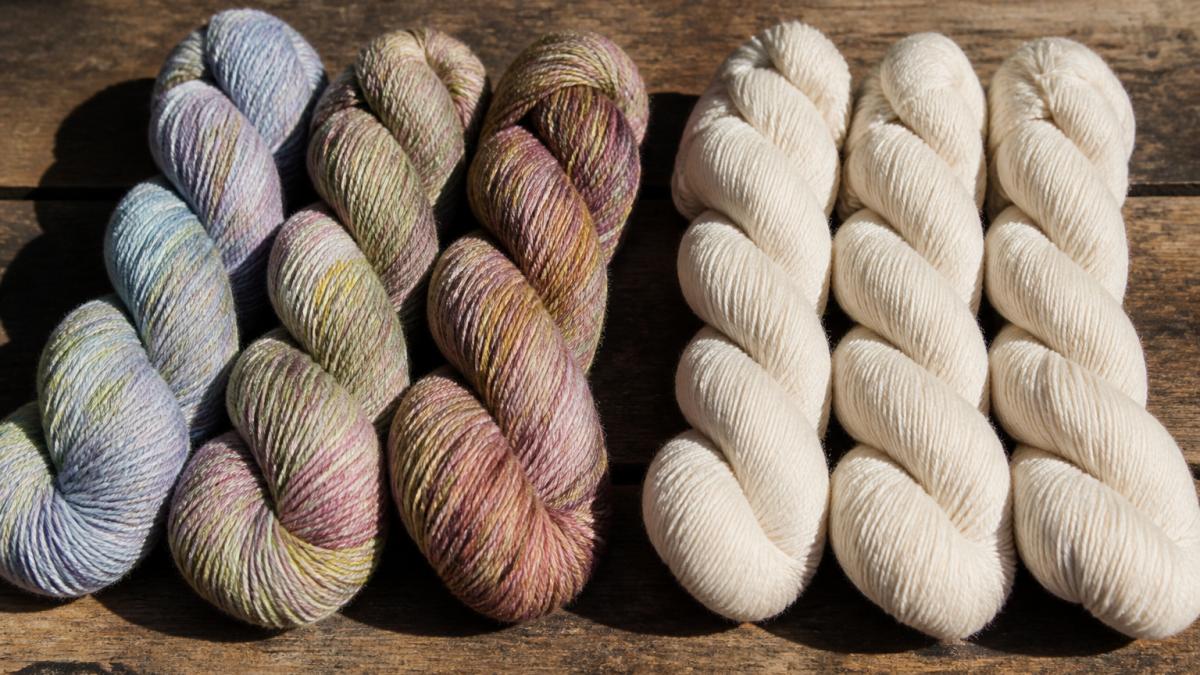
Close-up of multiple hand-dyed yarn skeins arranged to show natural color variation and tonal differences between skeins, with natural lighting highlighting the subtle shifts in hue and saturation within and between individual hanks
Color Consistency and Dye Lot Reliability
Commercial yarn includes dye lot numbers on the label, indicating which batch the yarn came from and ensuring additional skeins with the same number match perfectly. The system exists because knitters often need to purchase yarn in multiple batches.
Hand-dyed yarn typically does not use dye lot numbers, since each batch is unique by design. If a dyer produces a colorway called "Heather Mist," the first 50 skeins might have a particular character, and the next 50, even with the same formula, may shift slightly.
For multi-skein projects, this matters. If a sweater calls for eight skeins and you buy four now and four later, commercial yarn with matching dye lots blends seamlessly; hand-dyed yarn from the same colorway might not.
Dye lot reliability becomes critical for larger projects. A cardigan or blanket using eight or more skeins of hand-dyed yarn will almost certainly show shifts between batches. Knowing your tolerance for variation helps determine whether hand-dyed yarn is right for you.
Cost Per Project: A Practical Comparison
To evaluate whether is hand dyed yarn worth the extra cost, calculate what you'll spend on a completed project rather than comparing per-skein prices alone.
Consider a simple sweater pattern requiring 1,200 yards. Using Brae & Heather's Regal 2-Ply DK 100% Wool Yarn at $8.16 per 272-yard skein, you'd need approximately five skeins, totaling roughly $40.80.
Regal 2-Ply DK 100% Wool Yarn
The difference per project is meaningful but not enormous for a garment you'll wear for years. Spread across the hours spent knitting, it shrinks further: a sweater taking 40 hours costs an additional $0.37-0.77 per hour when choosing hand-dyed yarn.
For smaller projects, the calculus changes. A pair of socks using 400 yards costs roughly $12-13 in commercial yarn versus $22-29 in hand-dyed.
Project type influences value perception. A special project, a wedding shawl, a heirloom blanket, a gift with emotional significance, may justify hand-dyed yarn's premium because the project itself carries meaning beyond the yarn cost. A practice sweater or everyday garment might not.
Project Type
Yardage
Commercial Yarn Cost
Hand-Dyed Yarn Cost
Difference
Socks
400 yards
$12-13
$22-29
+$10-16
Shawlette
800 yards
$24-26
$45-57
+$19-33
Sweater
1,200 yards
$40-43
$67-86
+$27-46
Blanket
2,000 yards
$67-71
$112-143
+$45-76
How to Prevent Pooling With Hand-Dyed Yarn
Color pooling occurs when variegated or hand-dyed yarn groups similar colors together as you knit, creating unintended blocks of color rather than even distribution.
Prevent pooling by alternating skeins.
Change skeins mid-row if necessary. Some knitters switch to a new skein every few rows, rotating through available skeins to distribute colors evenly, which works well for projects using three or more skeins.
Rip back and reknit if pooling occurs. If you notice undesirable pooling after several inches, frog (rip out) the section and reknit with a different skein or different alternation.
Choose stitch patterns that disguise pooling. Textured stitches like cables, seed stitch, or moss stitch break up color blocks more effectively than stockinette, whose smooth surface highlights variation and makes pooling obvious.
Accept pooling as design. Some knitters intentionally use pooling as a design feature, selecting yarns and stitch patterns for specific color effects. It requires planning but transforms a potential problem into an aesthetic choice.
Best Projects for Hand-Dyed Yarn
Hand-dyed yarn excels where color variation enhances the design. Shawls and wraps benefit because the flowing fabric showcases color shifts beautifully, and tonal variation reads as intentional design rather than inconsistency.
Lace projects work well because open stitches let light pass through, highlighting color nuance. A lace shawl in hand-dyed yarn often looks more sophisticated than the same pattern in solid commercial yarn.
Accessories, hats, cowls, mittens, suit hand-dyed yarn because smaller projects complete quickly, limiting visible color variation. A hat knit from two skeins might show beautiful tonal shifts without appearing chaotic.
Projects meant to feel special or unique benefit from hand-dyed yarn. Wedding gifts, heirloom projects, or garments with emotional significance gain character, and the uniqueness becomes part of the gift's value.
Avoid hand-dyed yarn for projects requiring perfect color matching across multiple pieces.
Quality and Performance: What You're Actually Paying For
Hand-dyed yarn's premium price reflects labor and artistry, not necessarily superior fiber quality. Many hand dyers work with the same base yarns available to commercial producers. The difference lies in the dyeing process and the dyer's skill.
Colorfastness, how well color resists fading through washing and sunlight, depends on fiber type and dyes used, not on whether yarn is hand-dyed.
Softness and texture reflect the base fiber, not the dyeing. Brae & Heather's Softspun Cream Undyed at $10.00 demonstrates that quality fiber doesn't require hand-dyeing, this undyed worsted-weight wool at 25-micron fineness is soft and springy whether you dye it yourself or purchase it as-is.
Softspun Cream Undyed
Stitch definition, how clearly individual stitches show, depends on yarn weight, ply structure, and fiber type. A tightly twisted commercial yarn shows stitch definition more clearly than a loosely spun hand-dyed yarn; hand-dyed yarn doesn't automatically knit up with better definition.
Pilling resistance relates to fiber quality and yarn construction. Hand-dyed yarn is not inherently more or less prone to pilling than commercial yarn.
What hand-dyed yarn genuinely offers is aesthetic character, color variation, uniqueness, and the knowledge that it was created through intentional artisan work. That's real value for knitters who prioritize these qualities, but it is not a marker of superior performance or durability.
Is the Premium Worth It? A Balanced Verdict
Hand-dyed yarn is worth the extra cost if you value uniqueness, color variation, and the story of artisan creation. For shawls, colorwork, and special projects, the premium is justified by the aesthetic outcome.
Hand-dyed yarn is not worth the extra cost if you prioritize color consistency, reliable dye lot matching, or predictability.
The honest middle ground: hand-dyed and commercial yarn serve different purposes, and neither is objectively "better." The choice depends on your project, priorities, and tolerance for variation.
Consider your skill level. Intermediate knitters managing color variation and pooling might find commercial yarn's consistency less frustrating while learning, while advanced knitters who plan around variation often prefer hand-dyed yarn's character.
Brae & Heather's curated selection of premium wool, including options like Sport Single Ply 100% Wool Yarn at $7.55 per skein, demonstrates that quality fiber at reasonable prices is available whether you choose hand-dyed or commercially dyed yarn.
The real question isn't whether hand-dyed yarn is worth the cost in absolute terms, it's whether it's worth the cost for your specific project and preferences.
Frequently Asked Questions
Why is hand-dyed yarn so expensive compared to commercial yarn?
Hand-dyed yarn costs more because of labor-intensive dyeing processes, smaller batch sizes, and premium fiber sourcing. Each skein requires individual attention, dyers hand-apply dyes to achieve unique colorways, manage color saturation, and ensure colorfastness. Commercial yarn is dyed in large industrial vats, spreading costs across thousands of skeins. The artisan approach and limited availability add to the price, but you're paying for craftsmanship and exclusivity.
Is hand-dyed yarn actually better quality than commercially dyed yarn?
Hand-dyed yarn isn't automatically better quality, dyeing method and yarn quality are separate factors. A hand-dyed skein with poor-quality fiber won't outperform commercial yarn made from premium natural fibers. What differs is uniqueness and color character. Hand-dyed yarn often features tonal variation, semi-solid colors, and variegated patterns that create visual interest in finished projects. Commercial yarn offers consistency and predictability. For durability, softness, and stitch definition, fiber content and yarn construction matter more than dyeing method. Choose based on whether you value color uniqueness or consistency for your project.
How do you prevent color pooling with hand-dyed yarn?
Color pooling occurs when repeating stitches align with color repeats in variegated yarn, creating blocks of solid color instead of blended hues. To prevent it, alternate between skeins of the same colorway, switch skeins every few rows or rounds. This breaks the pattern repeat and distributes color variation evenly. You can also use a solid or semi-solid hand-dyed yarn instead of heavily variegated options, or choose stitch patterns that don't align with color repeats, such as cables or textured stitches. Some knitters deliberately embrace pooling as a design feature, so it's not always a flaw, it depends on your project vision.
What projects work best with hand-dyed yarn?
Hand-dyed yarn shines in projects where color variation is the star: shawls, wraps, and lace where the colorwork creates movement and depth without competing stitch patterns. Accessories like scarves, cowls, and hats display hand-dyed colors beautifully. Semi-solid and tonal hand-dyed yarns work well for colorwork projects like Fair Isle or stranded knitting, where color changes enhance the design. Avoid hand-dyed yarn for projects requiring strict color consistency, such as garments where color pooling would be visible or where you need exact color matches across pieces. Lightweight hand-dyed options like fingering-weight are excellent for detailed accessories and intricate patterns.
Can you substitute hand-dyed yarn for commercial yarn in any pattern?
You can substitute hand-dyed for commercial yarn if the fiber content, yarn weight, and yardage match your pattern requirements. However, color variation may change the finished look, a pattern designed for solid commercial yarn might show unexpected pooling or color blocks with hand-dyed alternatives. Test your hand-dyed choice in a swatch first to see how the colors interact with your stitch pattern. If the pattern specifies exact color sequences or depends on color consistency, hand-dyed yarn with natural variation may not work as intended. For projects where color uniqueness enhances the design, hand-dyed substitutes often improve the result.




0 comments