The best sweater patterns for rustic wool yarn are relaxed raglan, top-down, round-yoke, and drop-shoulder designs that let the yarn's texture show. Match the pattern's gauge to your yarn's gauge, then swatch and wash it before you cast on.
Rustic wool has more loft and less drape, so choose relaxed fits with positive ease.
Atlantic 3-ply Aran lists 14 stitches over 4 inches on 6 mm needles.
Swatch at least 4 inches square and wash it before measuring gauge.
Buy all skeins in one order, since rustic wools can vary between dye lots.
Size down in round-yoke rustic sweaters, because the yoke volume reads larger in lofty wool.
Rustic wool yarn is the foundation of a sweater that looks and feels like it was made to last. The best sweater patterns for rustic wool yarn are those that let its natural texture stay visible rather than fighting it.
Rustic wool yarn is typically a 100% wool spun with a visible, slightly irregular twist. That character comes from the fiber itself, not added texture, and it shows most clearly in stitch patterns with plenty of surface detail.
Two features set these yarns apart in practice:
Loft and body: Worsted and Aran-weight rustic wools hold their shape and warmth, which suits thick, structured garments.
Natural character: Undyed and lightly processed wools show subtle variation in color and twist, which reads as handmade.
Brae & Heather's Atlantic 3-ply Aran 100% Wool Yarn is a good example. At $7.55 per 4 oz / 113g skein, it offers 135 yards and a sturdy fabric suited to heavy sweaters.
How to Choose a Sweater Pattern for Yarn
Start with the yarn label, not the pattern photo. The gauge, yardage, and recommended needle size tell you whether a design will work before you buy anything.
Check three things before committing:
Gauge match: Compare the pattern's stitches-per-4-inches with your yarn's gauge. Aran-weight yarn such as the Atlantic 3-ply lists 14 stitches over 4 inches on 6 mm needles, so patterns written for a much finer gauge will come out oversized or too dense.
Yardage: Confirm the pattern's total yardage fits the skein count you plan to buy, with a margin for swatching.
Stitch texture: Cables, ribbing, and textured stitches suit rustic wool. Very fine lace can disappear in a thick, irregular yarn.
Watch out: buying yardage for a finished size without a gauge check is the most common mistake. Swatch first, then decide how many skeins you need.
Classic Sweater Silhouettes for Rustic Wool
Most rustic wool sweaters are built on a handful of classic silhouettes, but the shape you choose matters more with rustic yarn than with smooth, uniform wool. Rustic wool has more loft and less drape than a tightly spun yarn, so the silhouette has to work with that body rather than against it.
A general rule: rustic wool suits relaxed fits. A pullover with positive ease, meaning the finished measurement is larger than the body, lets the fabric's loft do its work. Close-fitting silhouettes fight the yarn, the fabric has nowhere to go, seams take strain, and the sweater feels stiff rather than cozy.
Raglan and Top-Down Construction
Raglan sweaters use diagonal seams running from the underarm to the neckline, which creates a comfortable range of motion and distributes the weight of a heavy garment across the shoulders rather than concentrating it at the armhole.
Both approaches suit heavier rustic yarns for a practical reason: you can check fit at every stage. With an Aran-weight rustic wool, a few inches of extra body length or a tighter upper arm can turn a good pattern into a sweater you never wear, and top-down construction lets you catch that before you commit.
Best for: Aran and worsted rustic wools, especially first sweaters where fit adjustments are likely.
Round Yoke and Seamless Options
Round-yoke and seamless sweaters are worked in the round, usually from the top down. Without side seams, the fabric sits evenly and avoids bulk at the shoulders. Circular yoke designs also showcase stitch patterns well, which makes them a strong match for textured rustic yarns, the yoke becomes a natural canvas for colorwork, cables, or a simple textured band.
One trade-off to plan for: a round yoke adds fabric around the upper chest and shoulders, and rustic wool's loft makes that volume read larger than it would in a smoother yarn. If you are between sizes, size down in a round-yoke rustic sweater rather than up.
Best for: Colorwork yokes in DK and fingering rustic wools, and knitters who want a seamless finish.
Drop-Shoulder and Set-In Sleeve Notes
Drop-shoulder sweaters have a straight body and a sleeve seam that sits below the natural shoulder. The shape is simple to knit and forgiving of gauge variation, which makes it a reliable choice for a rustic wool that may relax after washing. Set-in sleeves give a more tailored line, but in a thick rustic yarn the armhole seam can add bulk; if you choose a set-in pattern, look for one with a shaped armhole rather than a straight one.
Pro TipMatch the silhouette to the yarn's drape, not just its weight. A stiff, lofty Aran rustic wool holds a boxy drop-shoulder shape beautifully; a softer worsted rustic wool drapes better in a relaxed raglan or a simple round yoke.
Quick Silhouette-to-Yarn Match
Silhouette
Works best with
Watch out for
Raglan, top-down
Aran and worsted rustic wools
Extra ease at the upper arm in thick yarn
Round yoke, seamless
DK and fingering rustic wools, colorwork
Yoke volume reading large in lofty wool
Drop-shoulder
Lofty, stiff Aran rustic wools
Too much width if gauge relaxes after washing
Set-in sleeve
Worsted rustic wools with some drape
Armhole bulk in thick, low-drape yarn
Shetland Wool Sweater Patterns Compared
Shetland wool is a fine, springy fiber, and it behaves differently from heavier rustic yarns, but the more useful comparison for a sweater project is pattern-to-yarn fit, not yarn-to-yarn. For a direct side-by-side look at Shetland and lambswool sweaters, see how each wool performs. The table below compares the Brae & Heather yarns most often used for sweater work, then maps each to the pattern characteristics it suits. Use it to narrow your pattern search before you buy a single skein.
Yarn Specifications at a Glance
Yarn
Weight
Price
Best For
Atlantic 3-ply Aran 100% Wool
Aran
$7.55 per 4 oz skein
Heavy sweaters, warm socks
Regal 2-Ply DK 100% Wool
Heavy DK
$8.16
Sweaters, colorwork
Heritage 2-Ply Worsted 100% Wool
Worsted
$7.55
Classic, hard-wearing garments
Softspun Cream Undyed
Worsted
$10.00 per 4 oz skein
Soft garments, dyeing projects
Southern Shetlands Yarn Naturals - Fingering
Fingering
$16.99
Detailed colorwork, lightweight garments
Pattern Characteristics to Match
Rather than recommend a single pattern, match the yarn to the pattern's construction, gauge, and intended ease. The table below lists the pattern traits each yarn handles well and the substitution notes that matter most.
Yarn
Construction that suits it
Suggested ease
Skill level
Substitution note
Atlantic 3-ply Aran
Raglan or drop-shoulder, top-down
2-4 in positive
Advanced beginner and up
Do not substitute a finer yarn without re-swatching; the chunky gauge limits fine stitch detail
Regal 2-Ply DK
Round yoke, colorwork, seamless
2-3 in positive
Intermediate
Heritage 2-Ply Worsted
Classic raglan, set-in sleeve
2-4 in positive
Advanced beginner and up
Dependable and versatile; less distinctive texture than looser-spun options
Softspun Cream Undyed
Relaxed, drapey pullover
3-5 in positive
Intermediate
Soft against the skin and easy to dye; highest price in the worsted group
Southern Shetlands Yarn Naturals
Fair Isle, lightweight round yoke
1-2 in positive
Intermediate to advanced
Requires much more yardage for a sweater; budget extra skeins
Yardage Planning by Size
Yardage is where rustic wool projects most often go wrong, because a lofty yarn can knit up at a different rate than the pattern's recommended yarn. As a planning range for a long-sleeve pullover, most patterns fall into these bands:
Aran weight: roughly 1,000-1,400 yards for a finished chest of 38-44 in, depending on body and sleeve length.
Worsted weight: roughly 1,100-1,500 yards for the same size range.
DK weight: roughly 1,300-1,700 yards.
Fingering weight: roughly 1,600-2,200 yards.
These are planning ranges, not guarantees. Always confirm against the pattern's own yardage chart by size, then add one skein of margin for swatching and any length adjustments.
Watch OutBuy all the yarn for a project in one order. Rustic wools can vary slightly between dye lots, and an undyed yarn like Softspun Cream Undyed can shift subtly from batch to batch. One extra skein is cheaper than a mismatched sleeve.
Pros and Cons, by Item
Atlantic 3-ply Aran: Pro: sturdy, generous fabric for warm sweaters.
Regal 2-Ply DK: Pro: looser spin with character, suited to colorwork.
Heritage 2-Ply Worsted: Pro: dependable and versatile across garments.
Softspun Cream Undyed: Pro: soft against the skin (25 micron) and suited to dyeing.
Southern Shetlands Yarn Naturals: Pro: fine detail for Fair Isle and lightweight garments.
Key TakeawayThe fastest way to choose is to work backward from gauge: pick the yarn whose listed gauge matches the pattern's gauge, then confirm the construction and ease suit the yarn's drape. A pattern that matches on gauge but fights the yarn's body will still disappoint.
Gauge Swatching for Rustic Wool Sweaters
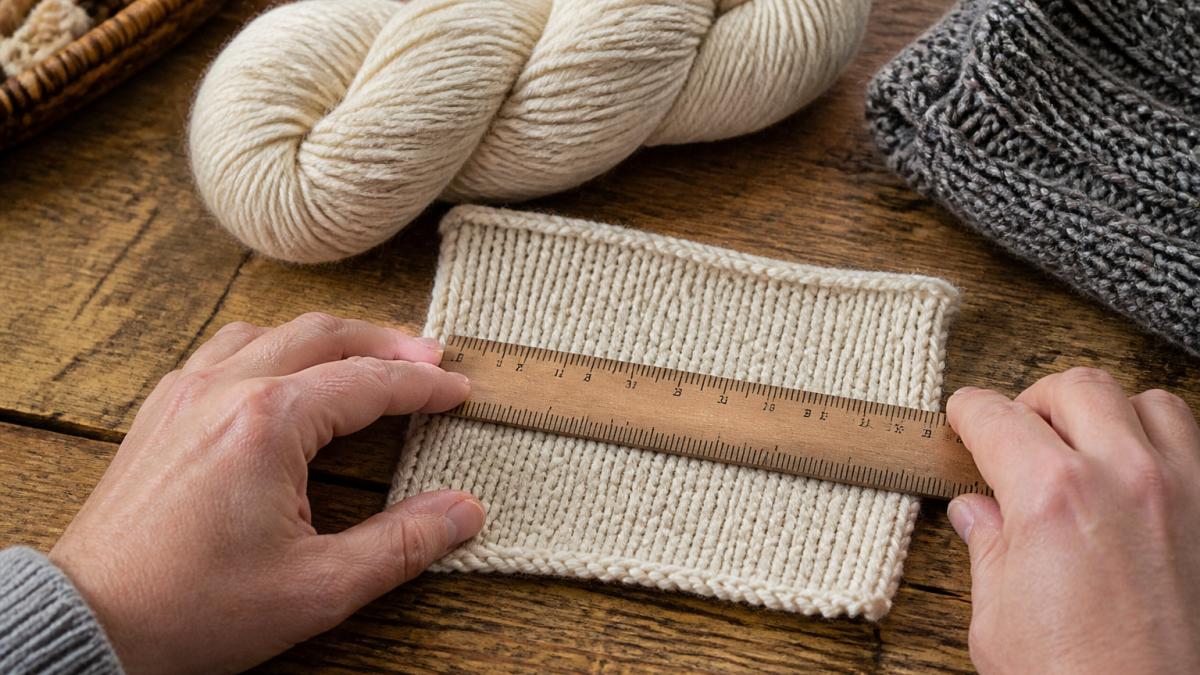
A swatch is the only reliable way to confirm gauge. Knit a square of at least 4 inches in the pattern's stitch, then wash and dry it the way you will treat the finished garment. Wool often relaxes or shrinks after the first wash, and that change can alter the final size (Washing instruction symbols explained).
Step-by-step guide for measuring a knitted wool swatch with a ruler on a wooden table
Measure stitches and rows across the middle of the swatch, not the edges. If your gauge is off, change needle size rather than stitch count. Going up or down one needle size usually closes the gap.
Watch out: skipping the post-wash step. Many wool swatches look correct on the needles and then grow or shrink after washing.
Fit, Ease and Sizing for Rustic Wool Sweaters
Rustic wool has less stretch than many synthetic blends, so fit depends on planning ease into the pattern. Compare the finished chest measurement in the pattern to your own, and aim for the amount of positive ease the pattern intends.
Check the schematic for the finished chest circumference, body length, and sleeve length. Heavier yarns add bulk, so a sweater that fits in lighter yarn may feel tight when knit in Aran weight.
Durability also matters. The yarn listings recommend hand washing and air drying. Following that care routine helps a rustic sweater keep its shape.
Choosing Your Next Rustic Wool Sweater Project
Begin with the yarn you want to showcase. If you're ready to start, this guide to the best Shetland wool for sweater projects covers which Shetland yarns suit sweater work. A chunky Aran suits a classic raglan or round-yoke sweater with bold texture. A softer worsted like Softspun Cream Undyed suits a relaxed, drapey pullover. For colorwork, the Regal 2-Ply DK or a fingering yarn such as Southern Shetlands Yarn Naturals gives the stitch definition that patterns require.
Then swatch, check your gauge, and confirm yardage before buying the full order. Brae & Heather's Cozy Cables book, at $23.99, is a useful next step if you want to explore cable stitches before committing to a full sweater.
Frequently Asked Questions
What sweater patterns work best with rustic wool yarn?
Rustic wool suits simple, structured designs that let its natural texture show. Classic pullovers with raglan or round-yoke construction, worked in worsted or Aran weight, tend to look best because the stitch definition carries the fabric. Heavy cables and bold colorwork also suit this yarn. Lightweight lace and very drapey knits are better matched to finer, softer yarns. Check each pattern's recommended yarn weight and gauge before choosing, and use a swatch to confirm the fabric you will get.
What needle size should I use for rustic wool yarn?
Start with the needle size the pattern specifies, then knit a swatch to match its gauge. For Brae & Heather's Heritage 2-Ply Worsted, the listing recommends US 8 (5mm) needles and a gauge of 17 stitches over 4 inches. Atlantic 3-ply Aran lists 14 stitches over 4 inches on 6mm needles. If your swatch is too tight or too loose, change needle size until the gauge matches, not the other way around.
How do I choose a sweater pattern for a yarn's weight and gauge?
Match the yarn weight named in the pattern to the yarn you plan to use, then compare gauge. Rustic wool typically knits to a bulkier, more open fabric, so a pattern written for a lighter weight will produce a larger, looser sweater. Use the stitches-per-4-inches figure on the yarn label as a starting point, and adjust the number of stitches cast on to hit the pattern's finished measurements.




0 comments