Choosing between alpaca wool and Shetland wool for knitting comes down to understanding how each fiber behaves in your hands and in finished garments. Both are natural fibers with distinct properties suited to different projects, body types, and design intentions.
Shetland Wool Week Annual 2025
Fiber choice directly affects how a sweater fits, how it wears over time, and whether you'll enjoy wearing it. Understanding alpaca wool vs Shetland wool for knitting helps you avoid choosing based on price or availability alone.
Fiber Source and Structure
Shetland wool comes from sheep raised in the Shetland Islands and surrounding regions, bred specifically for their fiber characteristics. The sheep produce a wool with natural crimp and elasticity that responds distinctly to tension and stitch structure.
Shetland wool's crimped structure creates natural elasticity, so stitches hold their definition and fabric resists stretching out of shape.
Quick Comparison Table
Property
Alpaca
Shetland Wool
Warmth-to-weight ratio
Exceptional (lightweight)
Very warm (moderate weight)
Elasticity and stitch memory
Lower (requires careful handling)
High (holds shape well)
Drape
Fluid, graceful
Structured, crisp
Pilling resistance
Good (less prone to fuzz)
Moderate (some pilling expected)
Best for
Lightweight garments, drape-focused designs
Fitted sweaters, colorwork, structured pieces
Fiber weight range
Fine to bulky
Fingering to worsted
Shetland Wool Characteristics and Performance
Shetland wool's natural crimp creates elasticity that keeps stitches defined, ribbing holding its shape through dozens of washes, and fitted garments maintaining their silhouette.
The fiber's natural lanolin provides water resistance, allowing garments to shed water and dry relatively quickly.
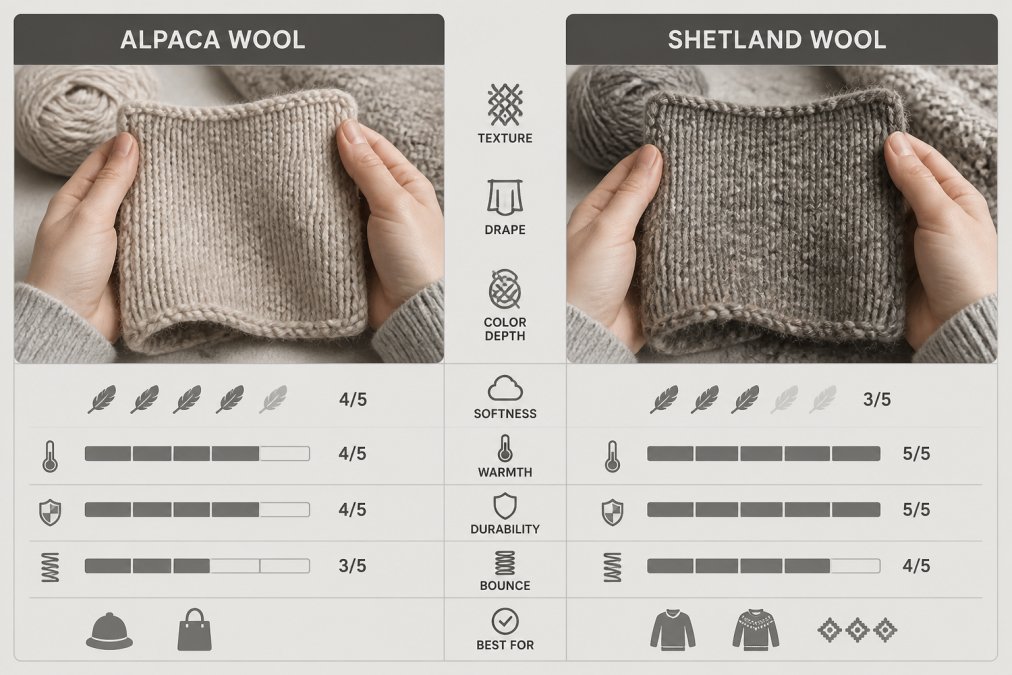
Close-up of hands holding finished knitted swatches of alpaca and Shetland wool side by side, showing texture, drape, and color depth differences in natural light
Elasticity and Stitch Definition
Shetland wool's crimp creates natural elasticity that keeps stitch definition crisp in Fair Isle and colorwork, making tension variations less visible.
This elasticity means ribbing bounces back and maintains structure through years of wear, which matters significantly for fitted sweaters.
Durability and Pilling Resistance
Shetland wool withstands wear well and pills less severely than softer wools because of its natural structure. Pills brush away easily without damaging the fabric.
Shetland wool resists breaking during knitting and maintains integrity through repeated washing, which is why vintage Shetland sweaters remain desirable.
Alpaca Yarn Properties and Behavior
Alpaca yarn tends to split more easily during knitting because the fiber is smoother than wool, requiring deliberate needle tension and yarn management.
Warmth Without Weight
Alpaca lacks the elasticity to hold fitted shapes firmly, so fitted alpaca sweaters may gradually relax into a looser fit.
Drape and Shape Retention
Alpaca garments don't hold their shape as stubbornly as wool and may stretch slightly with wear. Choose designs that work with alpaca's properties rather than against them.
Best Yarn for Sweaters: Choosing Between the Two
Choosing the right fiber depends on your design. Fitted sweaters rely on Shetland wool's elasticity.
Pattern designers engineer designs around fiber properties.
Fitted Garments and Structure
For fitted sweaters with shaping, Shetland wool is the stronger choice. Its elasticity keeps ribbing and waist shaping defined while maintaining silhouette through wear and washing.
The Shetland Wool Week Annual 2025 features garment patterns designed for Shetland wool's elasticity and stitch definition.
Loose-Fitting and Draping Designs
Select a pattern drafted specifically for alpaca or similar fibers, with instructions accounting for its lower elasticity.
How to Care for Alpaca Yarn and Shetland Wool
Shetland wool requires gentle care. Understanding its properties helps your finished garments retain their shape and appearance for years.
Washing: Temperature, Detergent, and Technique
Shetland wool prefers cool water (60-65°F) and mild, pH-neutral soap. Use a wool-specific detergent or baby shampoo; avoid products with enzymes or optical brighteners, which can damage the fibers.
For Shetland wool: Hand wash in cool water, gently agitating the garment for 5-10 minutes. Shetland wool is more robust than fine merino; it can tolerate slightly more movement without felting. Rinse thoroughly in cool water until the water runs clear, typically 3-4 rinses. Gently squeeze out excess water without wringing. The natural lanolin in Shetland wool provides some water resistance, so the garment will dry relatively quickly.
Shetland wool should not go in a washing machine, even on delicate cycles. The agitation and temperature fluctuations damage the fibers and can cause felting, pilling, or permanent shape distortion.
Blocking and Shape Retention
Shetland wool blocking: After washing, gently squeeze out excess water and lay the garment flat on a clean towel. Reshape it to its intended dimensions, straighten the sleeves, smooth the body, and align the neckline. Shetland wool's elasticity means it will hold the blocked shape as it dries. You can also pin the garment to a blocking board if you need precise dimensions. Shetland wool typically dries within 24-48 hours depending on thickness and humidity.
Avoid direct sunlight and heat while drying. Air dry in a cool, well-ventilated space.
Fiber-Specific Behavior: Halo, Growth, and Pilling
Shetland pilling: Shetland wool pills in areas of friction, underarms, cuffs, and anywhere the garment rubs against skin or other fabric. The pilling is typically less severe than in softer, finer wools because Shetland's structure resists excessive fuzzing. To remove pills, use a soft brush or a specialized pilling comb, brushing gently in one direction. Avoid aggressive brushing, which can damage the fibers underneath. Pills brush away relatively easily without harming the fabric.
Storage and Long-Term Maintenance
Store Shetland wool in cool, dry conditions away from direct sunlight, which can fade colors over time. Fold garments rather than hanging them; hanging can cause stretching.
Use acid-free tissue paper to wrap folded garments, which prevents creasing and protects the fibers from dust and light. Cedar blocks or lavender sachets deter moths naturally. Avoid mothballs and other chemical deterrents, which can damage fibers and leave persistent odors that are difficult to remove.
Check stored garments every few months for signs of moth damage or moisture. If you live in a humid climate, consider storing garments in breathable cotton bags rather than plastic, which can trap moisture and encourage mildew.
Refreshing Between Wears
You don't need to wash your garments after every wear. Instead, air them out between wears, hang them in a well-ventilated space or lay them flat for a few hours. This removes odors and allows the fibers to relax. For minor stains, spot-clean with cool water and mild soap rather than washing the entire garment. Spot-cleaning extends the life of your garment and reduces wear on the fibers.
Project-Specific Recommendations
Different project types benefit from different fibers. Understanding which fiber suits your project helps you avoid abandoning half-finished work because the fiber isn't behaving as expected.
Fair Isle and Colorwork
Shetland wool is the traditional choice for Fair Isle and complex colorwork because the stitch definition remains crisp through color changes. The elasticity prevents floats from distorting your stitches, and the natural structure of the fiber holds intricate patterns without them appearing fuzzy or blurred.
The Southern Shetlands Yarn Naturals - Fingering is specifically designed for colorwork. At fingering weight with 114 yards per skein, it provides the yardage needed for detailed Fair Isle patterns. The yarn's structure creates the stitch definition that makes colorwork patterns pop.
Southern Shetlands Yarn Naturals - Fingering
Lace and Lightweight Accessories
Shetland wool works for lace, but the crisper structure creates a different aesthetic, more defined and structured rather than flowing.
Choosing Shetland wool for knitting comes down to matching the fiber to your design and your body. Shetland wool's elasticity and stitch definition make it ideal for fitted garments and colorwork. At Brae & Heather, we stock premium Shetland wool yarn and curated patterns designed to showcase these fibers' strengths. Explore our Shetland Wool Week Annual collections to find patterns that work with your chosen fiber's natural properties, and elevate your next knitting project with fibers and designs crafted for lasting results.
Shetland Wool Week Annual 2026
Frequently Asked Questions
Is alpaca wool better than Shetland wool for knitting?
Shetland wool excels in stitch definition, elasticity, and durability, making it superior for structured sweaters, colorwork, and projects that need shape retention. It is a natural fiber with distinct strengths.
Which is warmer for knitting, alpaca or Shetland wool?
Shetland wool insulates effectively and offers excellent breathability. For traditional warmth with more structure and elasticity, Shetland wool is the better choice.
Does alpaca yarn stretch more than Shetland wool?
Shetland wool's natural crimp and fiber structure provide superior stitch definition and shape memory, making it bounce back after wear.
How should you wash and care for alpaca and Shetland wool?
Shetland wool requires gentle handling. Hand wash in cool water with mild soap, gently squeeze out water without wringing, and lay flat to dry. Avoid the dryer. Store in breathable containers away from direct sunlight and moths.
What knitting projects are best for alpaca yarn?
Fingering-weight yarn like Southern Shetlands Yarn Naturals works beautifully for detailed lace and colorwork projects requiring fine detail and generous yardage.




0 comments