Shetland wool stands apart because of its unique combination of softness, durability, and authentic heritage. Bred on the Shetland Islands for centuries, this fiber naturally resists pilling, offers superior insulation without excessive weight, and takes dye beautifully for colorwork projects. Brae & Heather specializes in sourcing premium Shetland wool that meets the highest standards for serious knitters.
Shetland's micron count, typically between 20-24 microns, creates a hand-feel soft enough for garments worn against skin without itchiness (peer-reviewed research). The fiber's natural crimp and loft provide excellent breathability while maintaining warmth, making it ideal for sweaters worn in variable climates. Moisture-wicking properties mean garments remain comfortable whether the wearer is active or at rest.
The heritage of Shetland wool matters beyond aesthetics. Fair Isle knitting traditions rely on this specific fiber's properties: worsted-spun varieties hold multiple colors without muddying, while woolen-spun options create the shaggy, textured appearance characteristic of authentic Fair Isle garments.
Pro TipAuthentic Shetland wool comes from sheep breeds native to the islands, not simply wool processed there. Check fiber origin carefully; some yarns labeled "Shetland-style" are actually blends or different breeds entirely. True Shetland wool will specify the breed and origin on the label.
Top Shetland Wool Options for Your Next Sweater Project
Understanding the distinctions between weights, spin types, and colorways helps knitters make informed choices that align with their project vision.
Jamieson & Smith 2ply Jumper Weight: The Heritage Standard
This yarn defines Fair Isle knitting. Jamieson & Smith 2ply Jumper Weight is 100% Shetland wool in a 4-ply woolen-spun construction, available at Brae & Heather for $6.99 per 25-gram ball. The yarn produces approximately 105 meters per ball and works best on 3 to 3.5mm needles at a tension of 28 stitches and 36 rows over 4 inches in stocking stitch.
The depth and complexity of its natural color palette sets this yarn apart. Each shade was originally designed by Jamieson & Smith and cannot be replicated in terms of color saturation and spinning quality. The woolen-spun construction creates the characteristic halo and slight irregularity that gives Fair Isle garments their authentic appearance. This yarn is specifically formulated for stranded colorwork, where multiple colors appear in a single row without creating bulk.
The trade-off: this fine yarn requires patience and precision. Tension matters significantly; inconsistent gauge will show in colorwork patterns. However, for Fair Isle projects where authenticity and color definition matter, this yarn delivers results that justify the technical demands.
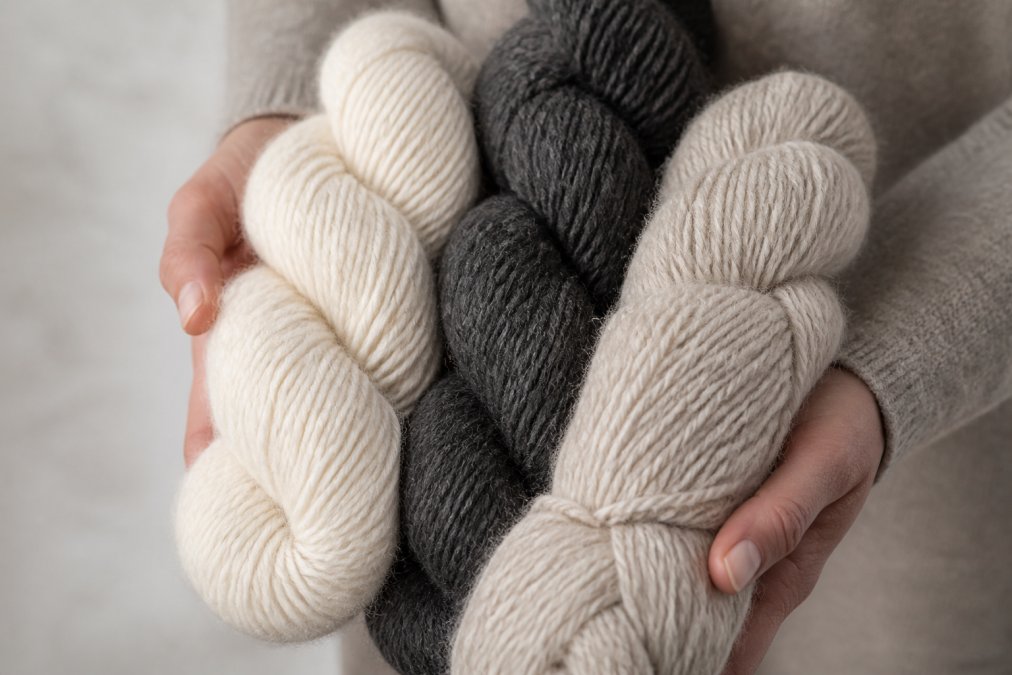
Close-up of hands holding skeins of natural-colored Shetland wool in cream, charcoal, and undyed shades, showing the texture and fiber drape against a neutral background with soft natural lighting
Jamieson & Smith Shetland Heritage: Authentic Colorwork Precision
Shetland Heritage recreates the original characteristics of handspun 'wursit' used in historical Fair Isle garments. This worsted-spun yarn resulted from collaboration between Shetland Amenity Trust, Shetland Museum and Archives, Curtis Wool Direct, and Jamieson & Smith, developed by analyzing Fair Isle artifacts in the museum's collection.
Available at Brae & Heather for $6.99 per 25-gram ball, Shetland Heritage produces approximately 110 meters per ball. The worsted-spun construction is combed and slightly finer, creating a smoother finish while maintaining Shetland wool's characteristic softness. Tension is 30 stitches and 32 rows over 4 inches in Fair Isle pattern using 3mm needles.
The defining advantage is the definition and complexity of color and pattern. The slightly finer gauge and worsted construction produce sharper stitch definition than woolen-spun yarns, making intricate colorwork patterns visually crisp. This yarn bridges historical accuracy with modern knitting expectations, replicating what nineteenth-century knitters used while offering consistency that handspun yarn never could.
Jamieson & Smith Shetland Aran Worsted: Cables and Structure
For knitters moving beyond colorwork into textured stitches, Shetland Aran Worsted suits cable sweaters, textured garments, and structured designs. This worsted-spun yarn is 100% Shetland wool, available at Brae & Heather for $8.49 per 50-gram ball. The yarn produces approximately 61 meters per ball and works on 4mm needles at a tension of 19 stitches and 22 rows over 4 inches.
The worsted construction creates a smooth, consistent yarn with excellent stitch definition; cables and texture stitches pop visually. Shetland wool at this weight maintains the fiber's natural breathability and moisture-wicking properties while providing the structure needed for dimensional stitch patterns. The yarn is available in 13 traditional shades plus 5 undyed options.
This weight suits intermediate to advanced knitters comfortable with larger projects. The yarn's structure means tension consistency matters less than with finer weights, making it more forgiving for knitters still developing consistent gauge. Sweaters knit from Shetland Aran Worsted are hard-wearing and develop character with wear.
Southern Shetlands Yarn Naturals represents American production of Shetland wool. This 3-ply fingerling yarn is crafted in the USA from Shetland wool, available at Brae & Heather for $16.99 per approximately 114-yard ball. The yarn produces beautiful stitch definition with smooth, consistent ply and works on 3 to 3.5mm needles at 28 stitches and 36 rows over 4 inches in stocking stitch.
The appeal lies in supporting American production while accessing Shetland wool's properties. The yarn is produced in small batches with emphasis on sustainability and consistent quality. Southern Shetlands Yarn Naturals works excellently for detailed projects where stitch definition matters, including Fair Isle patterns, fine colorwork, and delicate textured sweaters.
Key TakeawayAll four options are 100% Shetland wool. The differences lie in weight, spin type, and origin, not in core fiber quality. Choose based on your sweater's intended structure and your gauge preferences.
Best Wool for Fair Isle Knitting and Colorwork
Fair Isle knitting demands specific yarn properties that not all Shetland wools deliver equally. The best wool must hold multiple colors without muddying, create sharp stitch definition, and maintain consistent tension across color changes.
Woolen-spun Shetland wools like the 2ply Jumper Weight excel at Fair Isle because the woolen construction creates the characteristic halo and slight texture that defines historical Fair Isle aesthetics. Worsted-spun options like Shetland Heritage and Shetland Aran Worsted offer sharper stitch definition and cleaner color separation, working beautifully for contemporary Fair Isle interpretations where knitters want maximum color clarity.
The distinction matters for project outcomes. A traditional Fair Isle sweater benefits from woolen-spun yarn's visual characteristics. A modern Fair Isle design with complex, detailed colorwork benefits from worsted-spun's clarity. Consider your pattern source and aesthetic goals before selecting between these options.
Best ForTraditional Fair Isle patterns from historical sources: [Jamieson & Smith 2ply Jumper Weight](/products/shetland-2ply-jumper)
Contemporary Fair Isle designs with detailed colorwork: Shetland Heritage or Shetland Aran Worsted
Tension consistency becomes critical when working with fine Shetland wool and multiple colors. Uneven tension between main color and contrast color stitches creates visible irregularities in Fair Isle patterns. Practice maintaining the same tension regardless of which color you're working, often meaning slightly loosening the tension when working with the less-dominant color to maintain consistent fabric density.
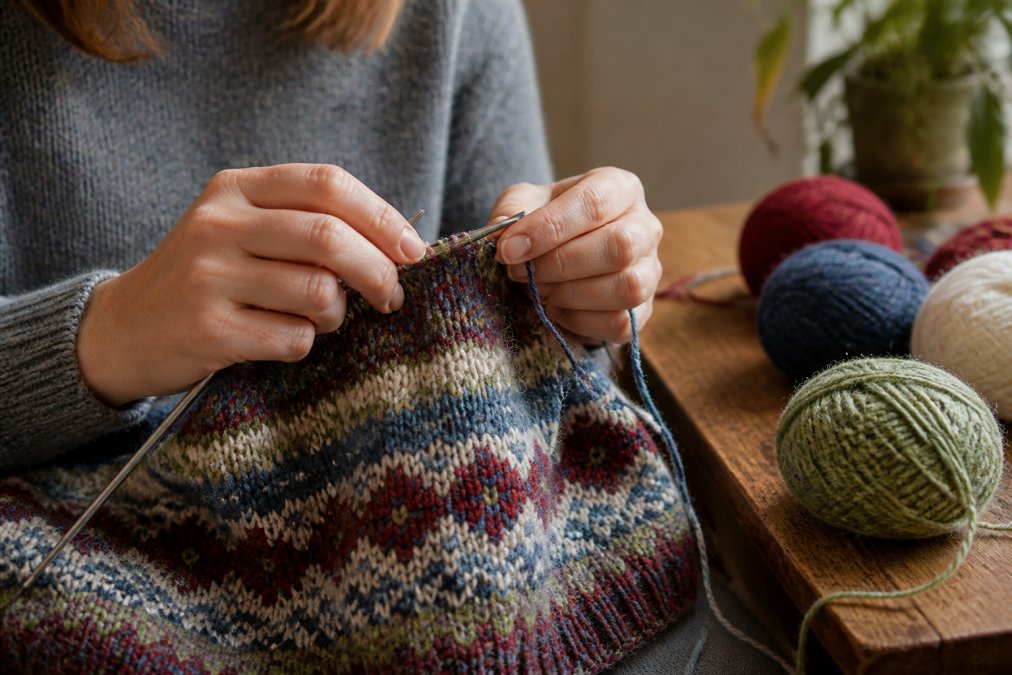
Knitter working on a Fair Isle sweater in progress, showing stranded colorwork technique with multiple colors of Shetland wool on 3mm needles, with natural light illuminating the intricate pattern and stitch detail
Stranding technique directly impacts the finished sweater's wearability. Keep strands loose enough that they don't pucker the fabric but snug enough that they don't create loops that catch during wear. Many knitters find stranding over no more than four stitches works best with fine Shetland wool; longer floats require weaving in the unused color.
Color selection takes advantage of Shetland wool's natural palette. The undyed shades and traditional dyes create color combinations that read beautifully together because they share similar saturation levels and undertones. Brae & Heather's curated selection emphasizes colors that work harmoniously together.
Yarn management during colorwork affects both the knitting experience and the finished fabric. Using bobbins or yarn cards to manage multiple colors prevents tangling and makes tension control easier.
Shetland Wool Sweater Care and Maintenance
Shetland wool sweaters develop character with proper care. The fiber's natural properties mean that washing and wearing actually improve the garment over time.
Hand wash in cool water with mild wool-specific detergent (the FTC). Submerge the garment gently, allow it to soak for 15-20 minutes, then rinse in cool water until no soap remains (peer-reviewed research). Squeeze out excess water, never wring, then lay flat to dry on a clean towel.
Blocking after washing sets the garment's final dimensions and enhances stitch definition. Shetland wool responds beautifully to wet blocking, where the garment is pinned to shape while damp and allowed to dry. Fair Isle sweaters benefit particularly from blocking, which opens up the colorwork and makes patterns visually crisp.
Store sweaters in sealed containers with cedar blocks or lavender sachets. Never store in plastic bags, which trap moisture and encourage mildew. Pilling, while rare in quality Shetland wool, can occur in high-friction areas; use a fabric comb or pill remover designed for fine knits rather than pulling pills.
Watch OutAvoid dry cleaning Shetland wool sweaters unless absolutely necessary. The chemicals used in commercial dry cleaning can damage the fiber's natural oils and alter the yarn's hand-feel. Hand washing preserves the garment far more effectively.
How to Identify High-Quality Shetland Wool
Not all yarn labeled "Shetland" meets the standards that define authentic Shetland wool. Learning to evaluate yarn quality protects your investment and ensures your sweater delivers the performance you expect.
Fiber content transparency is the first indicator of quality. Authentic Shetland wool should be labeled 100% Shetland wool with no blends. The label should specify the sheep breed when possible. Labels that say "Shetland-style" or "Shetland blend" indicate the yarn is not authentic Shetland wool.
Micron count affects how the yarn feels and performs. Shetland wool typically ranges from 20-24 microns in diameter. Finer micron counts (20-22) create softer yarn suitable for garments worn against skin, while coarser counts (23-24) work better for structural pieces.
Spin type, whether the yarn is woolen-spun or worsted-spun, determines the yarn's visual character and how it performs in different stitch patterns. Woolen-spun yarn has a slightly fuzzy, textured appearance and creates softer-looking fabric. Worsted-spun yarn appears smooth and creates crisp stitch definition.
Natural color depth indicates quality dye work or authentic undyed fiber. Authentic colors appear rich and multi-tonal rather than flat and uniform. Undyed Shetland wool should appear natural rather than bleached white.
Consistency across balls matters for sweater success. Quality Shetland wool maintains consistent yardage, color, and texture from ball to ball. Purchase enough yarn from the same dye lot to complete your project, as different dye lots can vary in color depth.
Pro TipRequest a yarn sample before committing to a large project. Authentic Shetland wool should feel soft without itchiness, show natural color depth, and demonstrate consistent ply structure.
Conclusion
The best shetland wool for sweater projects depends on your specific design goals, knitting style, and aesthetic preferences. Jamieson & Smith 2ply Jumper Weight remains the heritage standard for Fair Isle knitting, delivering the authentic appearance and color complexity that historical patterns demand. For contemporary colorwork or textured sweaters, Shetland Heritage and Shetland Aran Worsted offer worsted-spun alternatives with sharp stitch definition. Southern Shetlands Yarn Naturals provides American-made Shetland fiber for knitters prioritizing local production.
Jamieson & Smith Shetland Heritage
Brae & Heather curates the finest Shetland wool selections specifically for knitters who refuse to compromise on fiber quality or design authenticity. Our collection includes Jamieson & Smith's complete range of Shetland wools, from the delicate 2ply Jumper Weight at $6.99 to the substantial Shetland Aran Worsted at $8.49, plus American-made alternatives like Southern Shetlands Yarn Naturals. Beyond yarn, Brae & Heather provides expertly designed patterns, including the Shetland Wool Week Annual 2025, which showcases eight stunning designs that highlight Shetland wool's remarkable versatility. Explore our complete collection of premium Shetland fiber and pattern resources to elevate your next sweater project with authentic, heritage-quality materials.
Frequently Asked Questions
Q: Is Shetland wool soft enough for sweaters?
A: Yes, authentic Shetland wool is soft enough for sweaters when sourced from reputable producers like Jamieson & Smith. The softness depends on fiber micron count and spinning method. Worsted-spun Shetland, like the Shetland Aran Worsted at $8.49 per ball, produces soft garments because combing aligns fibers and removes coarser guard hairs. Woolen-spun varieties offer more loft and insulation. The key is matching the yarn weight and spin to your project, fingerling weights work for delicate layers, while Aran weights provide structure for cables and heavier garments.
Q: What should I look for when buying Shetland wool for colorwork?
A: When selecting Shetland wool for colorwork projects, prioritize yarns that deliver crisp color definition and even tension. Look for consistent ply structure, 2ply or 3ply options prevent pilling and maintain stitch clarity across stranded patterns. Verify the yarn is 100% Shetland wool with no blends. Check the gauge and yardage per ball to ensure you have enough for your pattern. The Shetland Heritage line at $6.99 per ball recreates historical colorwork precision, while the 2ply Jumper Weight offers the traditional palette that Shetland Fair Isle is known for. Examine the natural color range available, authentic Shetland provides deep, complex shades without synthetic dyes.
Q: How does Shetland wool compare to merino wool for sweaters?
A: Shetland and merino wool serve different sweater needs. Shetland wool offers insulation, breathability, and moisture-wicking due to its crimp structure and fiber loft. It resists pilling better than merino in high-wear areas and develops a beautiful patina over time. Merino feels soft initially but lacks Shetland's heritage and color depth. Shetland's natural palette ranges from cream to charcoal without synthetic dyes, while merino typically requires acid dyes. For heirloom sweaters and colorwork projects, Shetland's hard-wearing nature and historical significance make it a strong choice. Merino works well for next-to-skin base layers where extreme softness matters most.
Q: What yarn weight works best for Shetland wool sweater projects?
A: Fingerling weight (2ply and 3ply options) suits delicate, fitted sweaters and intricate colorwork. The Jamieson & Smith 2ply Jumper Weight at $6.99 per 25g ball (105 yards) works at 28 stitches over 4 inches and creates beautiful Fair Isle garments with stitch definition. Aran weight (worsted-spun) at $8.49 per 50g ball (61 yards) is ideal for cables, structured garments, and faster knitting. Choose based on your pattern's stitch gauge and desired drape. Fingerling creates more refined, elegant sweaters with complex colorwork, while Aran produces warmer, cozier garments with visible texture. Always match your needle size and tension to the yarn's recommended gauge for proper fit and hand-feel.




0 commentaire