Fair isle knitting is a traditional two-color stranded colorwork technique originating from Fair Isle, a small island between Orkney and Shetland in Scotland. The technique creates fabric with characteristic horizontal bands of pattern, each using no more than two colors per row, with unused yarn carried across the wrong side as "floats."
The most common misconception is that fair isle knitting is reserved for advanced crafters. The two-colors-per-row rule actually makes it more manageable than it looks. You follow a chart, carry your yarns, and the pattern emerges.
Fair Isle vs. Stranded Colorwork: What's the Difference?
Stranded colorwork is the broad category: any technique where two or more yarn colors are carried across the row, creating floats on the wrong side. Fair Isle is a specific tradition within stranded colorwork, characterized by small repeating geometric motifs, a maximum of two colors per row, and a heritage tied to Shetland's knitting culture.
Intarsia uses separate yarn bobbins for each color block and produces no floats, it's the technique for large isolated color shapes. For beginners, fair isle knitting is generally more approachable than intarsia because the yarn management is simpler.
Best Wool for Fair Isle Knitting
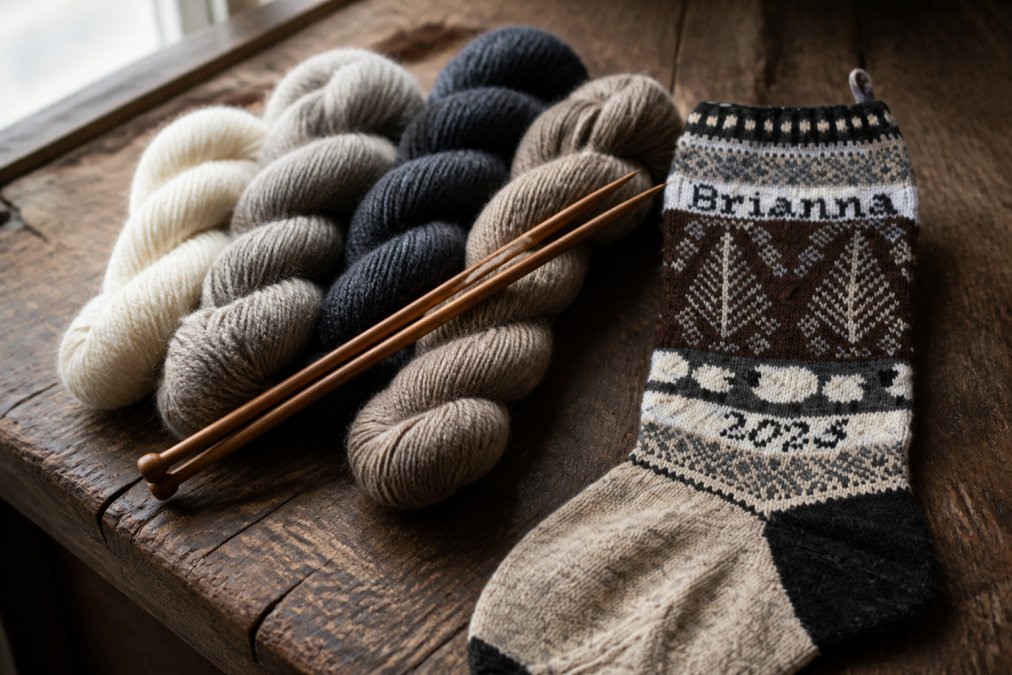
Choosing the right fiber fundamentally affects your tension, your floats, and how the finished fabric behaves. For fair isle knitting, the best wool is traditionally Shetland wool, specifically the fine, springy, slightly hairy fiber that comes from Shetland sheep.
Close-up of several skeins of natural Shetland wool in earthy tones, cream, heathered brown, deep navy, and warm oatmeal, arranged on a worn wooden surface with a pair of knitting needles resting across them, soft natural window light
The hairiness of Shetland wool is not a flaw, it's a feature. Those tiny fibers bloom slightly after washing, causing the stitches to "felt" lightly together in a process called fulling (peer-reviewed research). This closes up the floats on the wrong side and makes the fabric more elastic and cohesive. For beginners, Shetland wool is more forgiving of uneven tension because the slight halo disguises small inconsistencies.
Why Shetland Wool Outperforms Other Fibers
The natural crimp of Shetland fiber creates memory and elasticity, the short staple length produces that characteristic halo, and the range of natural shades means you can work with undyed fiber and still achieve sophisticated color palettes.
Jamieson & Smith's 2ply Jumper Weight is the closest thing to a standard yarn for traditional fair isle knitting. Available through Brae & Heather, it's 100% Shetland wool and carries a depth of color that comes from the fiber's natural structure. At £6.99 per skein, it's a premium choice for fair isle knitters.
Jamieson & Smith Shetland Heritage
For historical accuracy, the Jamieson & Smith Shetland Heritage yarn recreates the original characteristics of handspun "wursit" used in old Fair Isle garments, developed in collaboration with Shetland Museum and Archives.
Pro TipWhen selecting your color palette, work with the yarn physically before committing. Shetland wool colors read very differently under artificial light versus daylight. Order small quantities of your planned palette and view them together in natural light before buying full project amounts.
How to Hold Your Yarn and Manage Floats
How you hold your two working yarns determines your tension, your speed, and whether your floats sit correctly on the wrong side. The two main methods are:
Two-handed (Continental + English): One yarn held in the left hand Continental-style, one in the right hand English-style. Many experienced colorwork knitters prefer this because each hand works independently.
Both yarns in one hand: Both yarns held in the same hand, typically the left for Continental knitters. This requires more deliberate yarn separation but works well once the muscle memory develops.
Neither method is objectively correct. The one that produces even tension for you is the right one.
Floats are the strands of yarn that travel across the wrong side when the other color is being worked. Short floats, spanning three stitches or fewer, generally don't need intervention (craftscouncil.org.uk). Longer floats need to be caught, or "woven in," to prevent them from sagging.
Weaving In vs. Carrying Floats
Carrying floats means letting the unused yarn travel freely across the wrong side. This works well for floats spanning up to five stitches in a yarn with good elasticity, like Shetland wool.
Weaving in (also called "catching" or "trapping" floats) means periodically looping the carried yarn around the working yarn so it's anchored to the fabric. This is necessary for longer floats and prevents snagging.
The practical rule: catch any float that spans more than five stitches. For fair isle patterns with their characteristic short repeats, you'll rarely need to catch floats in the middle of a motif.
Watch OutWeaving in floats too frequently creates a double-thick fabric that loses elasticity and can pucker badly. Catch only what genuinely needs catching.
Reading Fair Isle Knitting Charts for Beginners
A fair isle knitting chart is a grid where each square represents one stitch and each row represents one row of knitting. Colors in the chart correspond to your yarn colors.
Charts are read from bottom to top, because that's the direction your knitting grows. For flat knitting, right-side rows are read right to left and wrong-side rows are read left to right. For knitting in the round, every round is read right to left, because you're always facing the right side.
The key insight: fair isle charts show only the pattern repeat, not the full row. A 10-stitch repeat chart means you work those 10 stitches across the entire row, repeating until you reach the end. This is why fair isle knitting has such a satisfying rhythm.
Digital Tools for Creating and Adapting Charts
Digital tools allow knitters to design, adapt, or colorize fair isle charts without specialist software knowledge. Print the chart at a scale that lets you track your position clearly, use a magnetic board or sticky note to track your current row, and mark completed rows as you go.
Fair Isle Knitting Tension Tips That Actually Work
Tension is where most fair isle projects succeed or fail. The challenge is specific: you're working with two yarns simultaneously, and the carried yarn on the wrong side creates a second layer of tension that can pull the fabric inward, causing puckering.
The fix is to spread your stitches on the right needle before working the next color. By stretching the stitches slightly, you ensure the float spans the actual width it needs to, rather than pulling the fabric together.
Swatching is non-negotiable for fair isle. Work a swatch in the round if your project is worked in the round, because tension in flat knitting differs from tension in circular knitting for most people. Wash and block the swatch before measuring gauge.
Yarn Dominance and Why It Matters
When you hold two yarns, one yarn is always positioned below the other. The yarn carried below travels a slightly longer path around each stitch, which makes it appear slightly larger and more prominent in the finished fabric. This is the dominant yarn.
Whichever yarn you consistently hold in the dominant position will appear more prominent in the colorwork. For most patterns, you want the pattern color (the motif) to dominate and the background color to recede. Assign your yarns deliberately and hold them consistently throughout the project.
Inconsistent yarn dominance is one of the leading causes of muddy, unclear colorwork motifs, even when the colors themselves are well-chosen.
Circular vs. Flat Knitting for Fair Isle
Fair isle knitting is traditionally worked in the round, and there are good reasons for this. Working in the round means you always face the right side, which makes reading the chart straightforward and allows you to see the pattern developing as you go. It also means every round is a knit round, which produces stockinette fabric without purling.
Flat fair isle knitting requires purling on wrong-side rows while managing two yarns. This is genuinely harder, and tension tends to be less even because most knitters purl more loosely than they knit.
For beginners, start with a project worked in the round. A hat or cowl gives you the circular knitting experience with a manageable stitch count before you tackle a full yoke sweater.
Addi Turbo circular needles, available through Brae & Heather at £16.00, are a reliable choice for fair isle worked in the round. The nickel-plated tips move smoothly through Shetland wool without snagging the fiber's slight halo.
Addi Turbo Knitting Needles
Corrugated Ribbing and Managing Yarn Ends
Corrugated ribbing is the traditional edging for fair isle garments: a two-color rib where the knit stitches are worked in one color and the purl stitches in another. The result is a visually striking, elastically functional edge that complements the colorwork above it.
The technique is worked by holding both colors simultaneously and switching between them for knit and purl stitches. Because the rib alternates colors every stitch, the carried floats are very short and require no catching.
One limitation of corrugated ribbing: it's less stretchy than standard single-color rib because the carried yarn restricts lateral movement (peer-reviewed research). For garments that need a snug cuff, size down one needle size for the ribbing section to compensate.
Managing yarn ends in fair isle requires weaving tails into the floats on the wrong side, following the path of the existing yarn rather than weaving perpendicular to it. Leave tails of at least 15cm at every join. Thread each tail on a tapestry needle and weave it through at least 5cm of floats on the wrong side, then double back to lock it. Trim close but not flush, leaving a few millimeters prevents unraveling.
Your First Fair Isle Knitting Project: A Step-by-Step Start
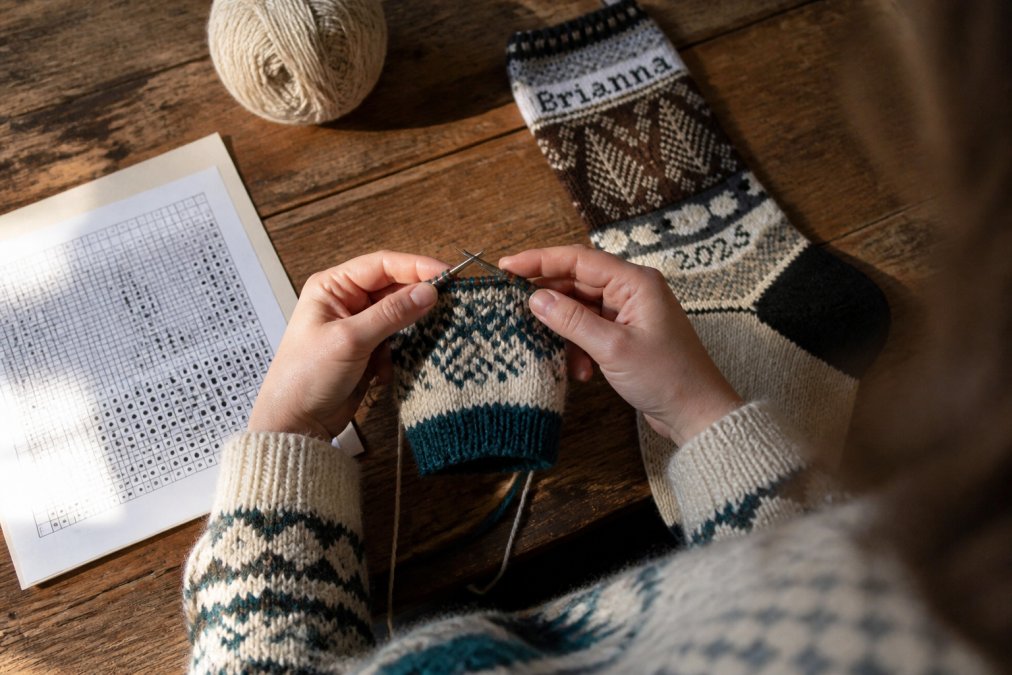
The best first fair isle project is a hat worked in the round. It's small enough to complete in a reasonable time, uses a manageable stitch count, and produces a finished object that's genuinely wearable.
A pair of hands holding circular knitting needles mid-row, working a colorful Fair Isle swatch in cream and deep teal, with a small printed chart and a ball of natural wool visible on a worn wooden table in warm afternoon light
Step 1: Choose your yarn and colors. Select two colors with strong contrast. Low contrast colorwork is beautiful but unforgiving of tension inconsistencies. For beginners, high contrast makes the pattern legible and errors easier to spot.
Step 2: Swatch in the round. Cast on 40-50 stitches on circular needles, join, and work your chosen pattern for at least 10cm. Wash and block the swatch. Measure your gauge before proceeding.
Step 3: Select a simple chart. A 6-8 stitch repeat with no floats longer than 5 stitches is ideal. Traditional Fair Isle OXO motifs and simple geometric bands are well-documented and widely available.
Step 4: Work corrugated ribbing. Cast on and work 2x2 corrugated rib for 2-3cm. This establishes the two-color habit before the pattern begins.
Step 5: Begin the colorwork. Follow your chart, spreading stitches before each float, and checking the wrong side periodically to confirm floats are lying flat.
Step 6: Decrease for the crown. Most hat patterns use simple k2tog decreases worked in a single color. This is a good moment to rest from colorwork and consolidate your tension.
Step 7: Finish and block. Weave in ends, wash gently in cool water, and block over a hat form or balloon. Blocking transforms fair isle fabric, the stitches even out and the motifs sharpen considerably.
The Brae & Heather 2025 Christmas Stocking Pattern is an excellent first colorwork project: it combines traditional Fair Isle motifs including Christmas trees and repeating geometric bands in a format that's forgiving for beginners, worked in natural earthy shades that showcase Shetland wool's depth of color.
2025 Christmas Stocking Pattern by Brae & Heather
Key TakeawayThe single most important habit to build in your first fair isle project is consistency: consistent yarn dominance, consistent float tension, and consistent chart tracking. These three habits, established on a small project, transfer directly to complex colorwork later.
Common Fair Isle Mistakes and How to Avoid Them
Most fair isle mistakes are invisible until blocking, but a few errors genuinely undermine the finished object.
Floats pulled too tight. The most common problem. The fabric puckers, the motifs distort, and the garment loses elasticity. Fix: spread stitches on the right needle before each float, and check the wrong side every few rows.
Inconsistent yarn dominance. Motifs look muddy or uneven even when the chart is followed correctly. Fix: decide which yarn is dominant before you start and hold it consistently in the same position throughout.
Skipping the swatch. Fair isle worked in the round at the correct gauge produces a very different fabric from the same yarn worked flat or at the wrong gauge. Fix: always swatch in the round, wash the swatch, and measure after blocking.
Losing your place in the chart. A single misread row creates a visible error that propagates through the repeat. Fix: use a row counter, mark your chart as you go, and check the pattern on the needle against the chart at the start of every round.
Starting too large. A yoke sweater as a first fair isle project is a recipe for abandonment. Fix: start with a hat or small accessory. Build the muscle memory on a project you can finish in a week.
Fair isle knitting rewards patience and precision, but the learning curve is shorter than most beginners expect. The real challenge isn't the technique, it's building the habits around tension, chart reading, and yarn management that make colorwork consistent. Brae & Heather offers the materials to start that practice properly: from Jamieson & Smith 2ply Jumper Weight and Shetland Heritage yarns to Addi Turbo circular needles and thoughtfully designed patterns like the Fair Isle Christmas Stocking. Get started with Brae & Heather and work your first colorwork project with fiber and tools that match the tradition you're learning.
Frequently Asked Questions
Is Fair Isle knitting easy for beginners?
Fair Isle knitting has a steeper learning curve than single-color knitting, but beginners can absolutely succeed with the right approach. The core skill is managing two yarn colors at once while keeping even tension. Starting with a small swatch or a simple motif project, like a hat or a Christmas stocking, lets you practice carrying yarn and reading a basic chart before committing to a larger garment. Most knitters find the technique becomes intuitive after just a few rows of practice.
What is the best first project for learning Fair Isle knitting?
A small circular project such as a hat, wrist warmers, or a decorative stocking is ideal. Working in the round means you always see the right side of the fabric, which makes reading the chart and checking your floats much easier than flat knitting. The 2025 Christmas Stocking pattern from Brae & Heather is a well-structured beginner-friendly option that introduces classic Fair Isle motifs, sheep and Christmas trees, at a manageable scale without overwhelming new colorwork knitters.
How do you hold yarn when knitting Fair Isle?
The two most common methods are holding one color in each hand (Continental for one, English for the other) or holding both in the same hand. Holding one color in each hand tends to produce more even tension because each color travels a consistent path. Whichever method you choose, keep the same color dominant throughout the project, typically the background color held in your right hand and the pattern color in your left. Consistency in hand position directly affects how your motifs appear on the finished fabric.
What are the most common mistakes in Fair Isle knitting?
The three mistakes beginners make most often are: pulling floats too tight (which causes puckering), letting floats run longer than about five stitches without weaving them in (which snags), and ignoring yarn dominance (which makes motifs look uneven). Swatching before starting a project catches tension problems early. Spreading stitches apart on the right needle before carrying the yarn across the wrong side keeps floats relaxed and the fabric flat.
What is the difference between Fair Isle and stranded colorwork?
Stranded colorwork is the broad technique of carrying two or more yarn colors across a row, creating floats on the wrong side. Fair Isle is a specific style of stranded knitting that originates from Fair Isle in Shetland. Traditional Fair Isle uses only two colors per row, features repeating geometric and nature-inspired motifs, and is worked in the round. All Fair Isle knitting is stranded colorwork, but not all stranded colorwork qualifies as Fair Isle, intarsia, for example, uses separate yarn sections rather than carried floats.
Do I need special needles for Fair Isle knitting?
Circular needles are strongly recommended for Fair Isle, even if you are not knitting in the round. Their long cable lets you spread stitches wide, which is the easiest way to keep floats at the correct length and avoid a puckered fabric. A smooth, slick needle surface, like the nickel-plated tips on Addi Turbo needles, helps yarn glide freely when you are managing two colors simultaneously. The correct needle size for your chosen yarn is always more important than the brand, so swatch first.






0 commentaire