Knitters search for wool factory alternatives when they want higher fiber quality, distinctive colorwork options, and yarns aligned with sustainability and craftsmanship values. Intermediate and advanced knitters recognize that yarn choice shapes the entire project experience, the right fiber transforms a pattern into something extraordinary.
At Brae & Heather, we've curated premium yarns and patterns for knitters who refuse to compromise on quality. Whether you're drawn to authentic Shetland wool or seeking natural fiber alternatives, understanding the landscape of wool factory alternatives helps you invest in materials that match your project goals and personal values.
Pro TipThe best yarn for your project isn't always the most expensive or the most famous. It's the one that matches your pattern's requirements, your skill level, and what you actually want to knit next.
Premium Shetland Wool Options
Shetland wool stands apart because of its heritage and distinctive properties. Genuine Shetland wool comes from sheep raised in the Shetland Islands, where harsh climate and traditional breeding practices have shaped the fiber's unique characteristics: natural crimp, excellent elasticity, and a range of undyed natural colors.
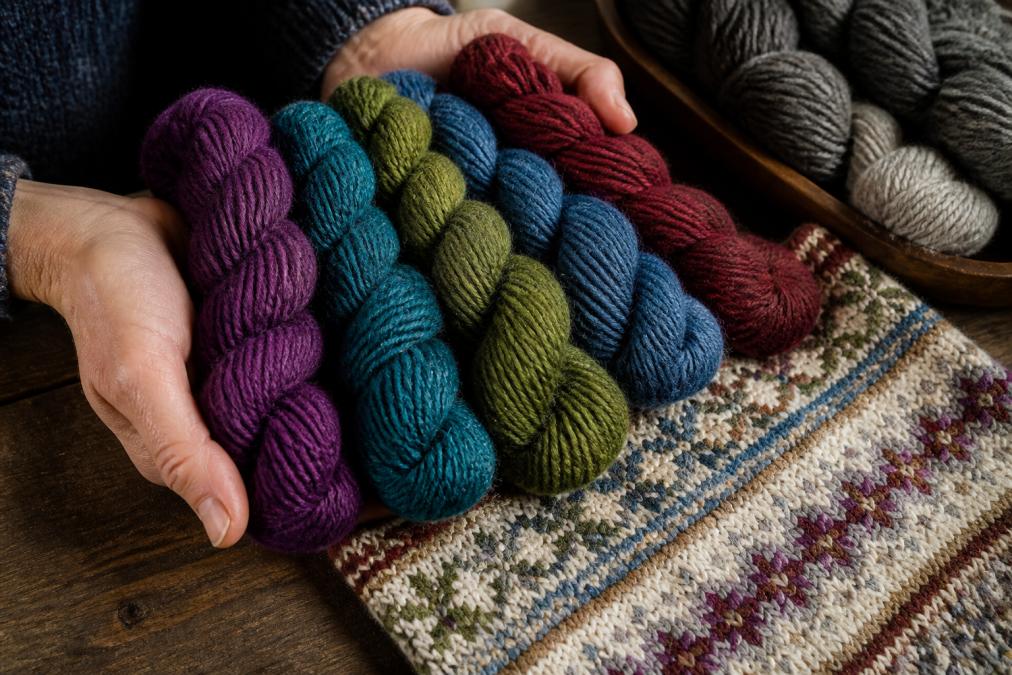
Close-up of hands holding different weights of natural wool yarn skeins in rich jewel tones, displayed on a wooden surface with a knitted Fair Isle swatch nearby
Shetland wool excels at stitch definition and colorwork. The fiber's natural structure holds colors with remarkable depth and complexity, making it the gold standard for Fair Isle and stranded colorwork patterns. Many heritage patterns were designed specifically around Shetland's properties, honoring the original designer's intent.
Brae & Heather offers exceptional Shetland options. The Jamieson & Smith 2ply Jumper Weight ($6.99) recreates the exact characteristics of yarn found in historic Fair Isle garments, working beautifully for intricate colorwork and delicate projects. The Jamieson & Smith Shetland Aran Worsted ($8.49) expands into heavier weights, perfect for cables and larger colorwork projects while maintaining signature Shetland quality.
Jamieson & Smith 2ply Jumper Weight
For knitters seeking locally produced alternatives with Shetland heritage, Southern Shetlands Yarn Naturals ($16.99) offers a 3-ply fingerling yarn crafted in the USA, maintaining the soft, durable character of traditional Shetland while supporting American fiber production.
Key TakeawayAuthentic Shetland wool offers stitch definition and color depth that factory yarn cannot match, making it essential for heritage patterns and complex colorwork.
Plant-Based Fiber Alternatives
Plant-based fibers appeal to knitters prioritizing sustainability or seeking alternatives to animal fibers. Cotton, linen, bamboo, and hemp each bring distinct properties, though none perfectly replicate wool's warmth and elasticity.
Cotton works best for lightweight garments, lace, and summer projects. Cotton has minimal elasticity, requiring careful tension management. Projects benefit from blocking, which sets stitches and creates intended drape. Cotton breathes well and washes easily, making it practical for items worn against skin.
Linen shares cotton's breathability and washability but offers slightly more structure. Linen softens considerably after washing and wear, takes dye beautifully, and develops subtle sheen over time. Linen works particularly well for structured garments where its natural stiffness becomes an asset.
Bamboo yarn represents a middle ground between plant fibers and wool in terms of drape and hand-feel. Bamboo is softer than cotton and linen, though it still lacks wool's natural elasticity. Bamboo absorbs moisture well and has a slight sheen, making it attractive for projects where visual interest matters alongside wearability.
Hemp fiber is increasingly available in yarns. Pure hemp can feel harsh, but blended with other fibers, it contributes durability and environmental benefits. Hemp resists pilling better than many plant fibers and develops character through wear.
A critical note: avoid acrylic and acrylic-blend yarns entirely. These synthetic fibers don't breathe, pill excessively, and lack the elasticity that makes knitting satisfying. They also shed microplastics during washing, contributing to environmental damage. Plant-based and protein fibers offer superior performance and sustainability.
What Is the Difference Between Worsted and DK Yarn
Worsted yarn and DK yarn differ in weight, ply structure, and spinning method. Worsted is heavier and thicker, while DK (double knit) falls into a lighter category. Understanding these differences helps knitters select yarn appropriate for their pattern's requirements.
Worsted yarn typically knits at 14-18 stitches per 4 inches on 5mm to 6mm needles (craftyarncouncil.com). The term "worsted" refers to the spinning method: fibers are combed parallel before spinning, creating smooth, strong yarn with excellent stitch definition. Worsted weight works beautifully for sweaters, hats, and structured garments where durability and clear stitch definition matter.
DK yarn knits at 20-24 stitches per 4 inches on 3.75mm to 4.5mm needles (craftyarncouncil.com). DK offers versatility for lightweight sweaters, accessories, and colorwork projects where you want more detail than worsted provides. A worsted-weight sweater knits faster and uses less yardage than the same design in DK, while DK projects reveal more stitch detail and suit complex colorwork or lace patterns.
Brae & Heather carries Regal 2-Ply DK ($8.16) from Maritime Family Fiber, a looser-spun heavy DK weight perfect for sweaters and colorwork. For worsted options, Atlantic 3-ply Aran ($7.55) delivers warmth and durability in traditional aran weight.
Regal 2-Ply DK 100% Wool Yarn
Watch OutSubstituting yarn weights without adjusting stitch counts and needle sizes will result in a garment that doesn't fit and doesn't look like the designer intended. Always swatch at the specified gauge before committing yardage to a project.
Protein-Based and Specialty Fibers
Protein-based fibers include silk, alpaca, mohair, and angora. These fibers come from animal sources but offer properties distinctly different from sheep's wool, making them valuable alternatives for specific project types.
Silk yarn creates drape unmatched by any other fiber. Silk has minimal elasticity but exceptional luster and smooth hand-feel. Silk works brilliantly for lace, shawls, and garments where drape is the primary design feature. Silk is also temperature-regulating, making it surprisingly practical for layering pieces.
Alpaca fiber is softer than most sheep's wool and lacks the lanolin that makes wool slightly water-resistant. Pure alpaca can feel slippery on needles, but blended with other fibers, it contributes extraordinary softness. Alpaca has minimal elasticity, so garments benefit from careful blocking and being worn over other layers.
Mohair adds volume and halo to yarn. Mohair fibers are long and fine, creating airy, fuzzy texture. Mohair works well for lace and shawls where the halo creates visual interest. However, mohair's lack of elasticity means garments require careful fit planning and blocking.
Angora fiber is extremely soft but sheds considerably and requires special care during washing. Angora is typically blended with other fibers to reduce shedding while maintaining softness. Each specialty fiber brings distinct visual and tactile qualities, with the trade-off being elasticity: these fibers lack the natural bounce and recovery that makes wool so forgiving.
How to Substitute Yarn in Knitting Patterns
Substituting yarn requires understanding three core variables: yardage, gauge, and fiber properties. Misunderstanding any of these leads to projects that don't fit, don't look right, or behave unpredictably.
Step 1: Calculate Yardage Requirements
Find the total yardage the pattern requires in the materials section. Determine how much yardage your substitute yarn provides per unit. Divide the total project yardage by the yardage per unit to find how many balls you need. Round up to ensure you have enough yarn.
Gauge is the number of stitches and rows that fit within a 4-inch square of knitted fabric. Knit a swatch with your substitute yarn using the needle size the pattern recommends. Measure your swatch carefully. If your swatch is too loose, switch to smaller needles. If it's too tight, switch to larger needles. Keep adjusting until your swatch matches the pattern's gauge.
This step is non-negotiable. Gauge determines finished size. Always swatch, always measure, always adjust.
Step 3: Evaluate Fiber Properties
Consider what the pattern demands from the yarn. A lace pattern needs yarn with good stitch definition and ideally some elasticity. A cable pattern needs yarn with enough structure to make cables pop visually. Colorwork needs yarn that holds color distinctly.
Match your substitute yarn's fiber properties to these demands. If the original pattern calls for wool and you're substituting cotton, remember that cotton has no elasticity and you may need to go up a needle size.
Consideration
Wool
Cotton
Silk
Alpaca
Elasticity
High
Low
Very Low
Low
Stitch Definition
Excellent
Good
Good
Fair
Drape
Good
Excellent
Excellent
Good
Durability
High
High
Medium
Medium
Care Requirements
Hand wash
Machine wash
Hand wash
Hand wash
Step 4: Swatch in Context
Before committing to a full project, knit a larger swatch, at least 6 inches square, in your substitute yarn. Wash and dry it the way you plan to care for the finished garment. This reveals how the yarn behaves after washing: does it shrink, bloom, or change texture? Does the color hold or fade?
A small investment in swatching prevents expensive mistakes.
Pro TipKeep swatches from every yarn substitution you make. Over time, you'll build a reference library showing exactly how each yarn behaves after washing, helping future substitutions go faster.
Evaluating Fiber Quality for Your Projects
Fiber quality determines how a finished project looks, feels, and ages over time. High-quality fiber holds its shape, resists pilling, and develops character through wear. Poor-quality yarn pills excessively, loses elasticity quickly, and often looks tired after a few washes.
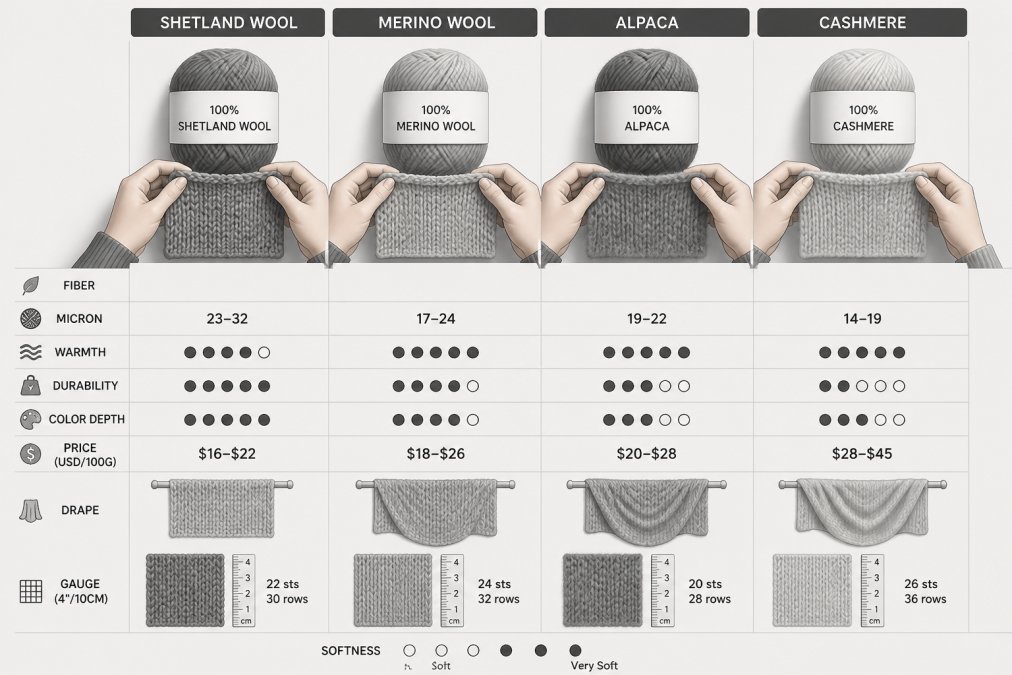
Knitter's hands examining yarn texture and drape, comparing different fiber samples side-by-side with a gauge ruler and ball band information visible
Micron count measures fiber diameter. Finer fibers (lower micron count) feel softer against skin. Merino wool typically ranges from 19-24 microns; Shetland wool from 22-25 microns (peer-reviewed research). Fiber under 20 microns feels luxurious next to skin, while fiber above 25 microns can feel slightly scratchy for sensitive knitters. Brae & Heather's Softspun Cream Undyed ($10.00) uses 25-micron wool, specifically soft enough for garments worn next to skin.
Softspun Cream Undyed
Twist and ply structure affect how yarn handles during knitting and how the finished fabric behaves. A tightly twisted yarn resists splitting on needles and holds stitches cleanly. Single-ply yarns show individual fiber character but lack the durability of multi-ply construction. Two-ply and three-ply yarns offer better durability and more balanced behavior.
Pilling resistance matters for longevity. High-quality wool resists pilling because fibers are long and well-spun. Shetland wool naturally resists pilling because of the fiber's length and crimp structure.
Color fastness determines whether dyed yarn bleeds during washing or fades in sunlight. Quality dyers use dyes that bond thoroughly to fiber. Testing a small swatch in warm water reveals whether a yarn holds color reliably.
Hand-feel and memory tell you how the yarn will behave in your hands and how the finished fabric will drape. Yarn with good memory springs back when stretched, helping stitches hold their shape. Protein fibers like silk and alpaca have minimal memory; wool has excellent memory.
Evaluating fiber quality before committing to a project prevents disappointment. Spend time with yarn in person when possible. Feel it, watch how it moves on needles, examine how stitches form.
Conclusion
Choosing alternatives to mass-produced yarn transforms the knitting experience. Whether you invest in authentic Shetland wool, explore plant-based fibers, or discover specialty options like silk or alpaca, thoughtful yarn selection elevates every project. The key is matching yarn properties to pattern demands and your own values as a maker.
Brae & Heather's curated selection of premium yarns gives you access to fibers specifically chosen for quality, distinctive colorwork potential, and the ability to create heirloom pieces. Start by swatching, always verify gauge, and invest in yarn that will reward your time and skill.
Frequently Asked Questions
Q: What should I look for when substituting yarn in a pattern?
A: Check fiber content, yarn weight, yardage, and gauge first. Match the gauge to your needles, if a pattern calls for 20 stitches over 4 inches on size 5 needles, your substitute yarn should achieve the same gauge on similar needle size. Verify total yardage meets the pattern's requirement, accounting for the project's finished dimensions. Test drape and stitch definition with a swatch; some fibers show colorwork differently than others. Consider how the fiber's properties, breathability, warmth, elasticity, suit the garment's purpose.
Q: Why do knitters choose Shetland wool for traditional colorwork?
A: Shetland wool has exceptional stitch definition and color clarity, making Fair Isle and stranded colorwork patterns visually distinct and crisp. The fiber's natural elasticity supports intricate stitch patterns without distortion. Jamieson & Smith Shetland Heritage yarn ($6.99) recreates the exact characteristics of historical Fair Isle garments from the Shetland Museum's collection, giving your colorwork authentic depth and complexity. The yarn's worsted spin provides smooth, even color saturation across patterns.
Q: What is the difference between worsted and DK yarn weight?
A: Worsted yarn is thicker and spins with tightly twisted fibers, creating dense fabric suitable for cables, sweaters, and structured garments. DK (double knit) is lighter and thinner, working at a finer gauge for delicate drape and detailed stitch definition. Worsted typically requires 4-5mm needles at 16-20 stitches per 4 inches; DK uses 3-4mm needles at 20-24 stitches. Regal 2-Ply DK ($8.16) works at 20 stitches over 4 inches on 4.5mm needles, while Softspun Cream Undyed worsted ($10.00) achieves 20 stitches at 4.5mm. Choose worsted for warmth and structure, DK for elegance and intricate colorwork.
Q: How do I evaluate yarn quality for heirloom knitting projects?
A: Examine fiber content, 100% natural fibers like wool, silk, alpaca, and linen age beautifully and strengthen over time. Check the ply structure; tightly twisted plies resist pilling and maintain stitch definition through decades of wear. Review the ball band for yardage, gauge, and care instructions; quality yarn specifies hand-wash and air-dry. Swatch the yarn to assess hand-feel, elasticity, and how it holds color. Look for consistent color saturation and minimal fading risk. Jamieson & Smith Shetland yarns, developed with museum curators and fiber experts, meet these standards for heirloom-quality colorwork and Fair Isle projects.
Q: What are the best natural fiber alternatives to mass-produced yarn?
A: Plant-based options include cotton for breathability and drape, linen for structure and coolness, and bamboo for softness and moisture-wicking. Protein fibers like silk, alpaca, and merino offer warmth, luster, and elasticity. Shetland wool provides unmatched stitch definition and color depth for colorwork. Southern Shetlands Yarn Naturals fingerling ($16.99) offers locally produced wool with smooth ply and beautiful stitch definition. All-natural fibers resist pilling, age gracefully, and create garments that improve with wearing. Avoid synthetic blends if you prioritize longevity and authentic hand-feel.






0 commentaire