
Shetland Wool Sustainability: Ethical Sourcing Guide
Publié le Oct 18, 2026
By Editorial Team
Économisez 25 % sur les patrons et accessoires de tricot, aucun code requis

Last Updated: October 18, 2026
Shetland wool sustainability begins with the islands' geography and traditional sheep husbandry. Wool is renewable and biodegrades naturally, unlike synthetic fibers that persist for decades.

Shetland wool sustainability depends on sheep health, land management, and supply chain transparency from farm to yarn.
What distinguishes shetland wool from mass-produced alternatives is the integration of animal welfare, environmental stewardship, and cultural heritage in one production system.
Ethical wool sourcing requires visibility across every stage, from moorland grazing to the finished skein: who raised the sheep, how they were treated, where the wool was processed, and what standards applied.
Traceability also means understanding processing locations and methods.
Brae & Heather prioritizes suppliers who meet documented ethical standards, protecting knitters from greenwashing, sustainability claims without substantive practices behind them.
Traceability is where Shetland wool claims are most often overstated and least often explained. The useful question is mechanical: how does a fleece move from flock to skein, and where can provenance be lost, blended, or relabeled?

A typical chain has six handoffs where documentation either holds or breaks:
Shetland fleece is not uniform. Hand graders separate it into fine neck and shoulder wool, mid-grade body wool, and coarser britch wool, and proportions vary by animal, age, and season. Two skeins labeled "Shetland" can contain very different grade mixes, so a yarn built mostly from fine neck fleece will feel and wear differently from one with more britch fiber.
Three different things get called Shetland:
None is inherently dishonest, but they are not interchangeable, and a label saying only "Shetland" has told you very little. There is no protected designation of origin for Shetland wool, so buyers have to ask.
A credible provenance record answers four questions in writing:
Batch or lot numbers on the skein are the practical test. If a supplier can connect a specific skein to a specific production run, the rest of the chain is usually documented. If the only information is a generic fiber-content line, treat the provenance claim as unverified.
In practice, provenance is lost at scouring and dyeing far more often than at the farm. Small island flocks are frequently combined at scouring because a dedicated scour for a few hundred pounds of fleece is expensive. That does not make the wool unethical, but a "single farm" claim should be read carefully: ask whether the farm name refers to the raw fleece source or to a batch kept separate throughout.
Welfare is the part of ethical wool sourcing buyers care most about and can verify least. Generic assurances, "humanely raised," "grass-fed," "small farm", are unfalsifiable. Here is what welfare actually looks like in Shetland flock management, and how to check a claim.
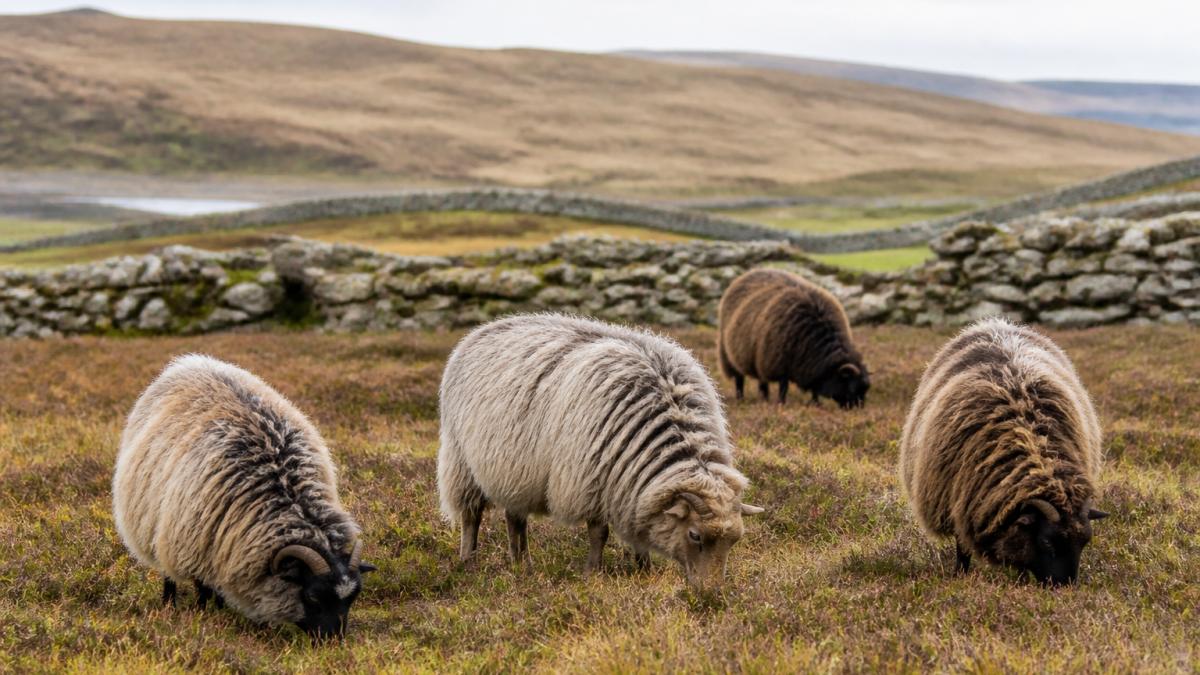
Shetland sheep are a hardy, short-tailed Northern European breed adapted to exposed grazing and coarse forage. That hardiness shapes the welfare calendar:
Mulesing, surgically removing skin around the breech to reduce flystrike, is a welfare flashpoint in global wool sourcing and a common reason buyers seek non-mulesed fiber. It is associated with certain large-scale Merino systems, not typical Shetland flock management, where hardy breeds on open pasture and lower stocking densities reduce flystrike pressure. Ask directly whether mulesing is practiced anywhere in the supply chain.
Certification is the closest thing to third-party verification a buyer has, but each scheme answers a different question. Read them as separate claims, not one "ethical" seal:
When a welfare claim lacks a named certification, these questions do the work a certificate would:
A supplier who answers these specifically is doing the work; one who answers only with adjectives is asking you to trust the label instead of the practice.
Southern Shetlands Yarn Naturals - Fingering →
The structural advantage of island flock management is ratio, not sentiment. Smaller flocks with closer shepherd oversight make individual animal observation practical, so problems get caught early. Provenance and welfare tend to travel together: operations that document husbandry in detail are usually small enough to know each animal.
Understanding wool's environmental impact means examining the full lifecycle, grazing, shearing, processing, transportation, use, and biodegradation. Shetland wool's profile depends on how each stage is managed.
Wool regenerates annually as sheep grow new fleece, so production does not deplete nonrenewable reserves the way fossil-fuel-derived synthetics do. Wool also biodegrades: fibers decompose in soil within a few years, returning nutrients rather than accumulating as microplastics.
Synthetic fiber production generates microplastics that persist in waterways and soil indefinitely, while wool garments break down through natural decomposition without releasing persistent pollutants.
Wool's carbon footprint varies with grazing practices and processing methods.
Centuries of land management on the Shetland Islands balance sheep production with conservation. Moorland grazing maintains biodiversity, prevents invasive species encroachment, and preserves the landscape's ecological character, using marginal land unsuitable for crops.
Transportation is a significant part of wool's carbon footprint. Shetland wool processed locally and shipped directly to knitters incurs lower emissions than fiber routed through multiple intermediaries, so transparent supply chains that minimize movement reduce overall impact.
Identifying authentic Shetland wool means understanding labeling standards, recognizing quality markers, and evaluating supplier credibility.
Evaluating supplier credibility means researching sourcing practices, certifications, and transparency standards.
The Southern Shetlands Yarn Naturals Fingering from Brae & Heather is a 3-ply fingering-weight wool produced in the USA for detailed knitting and color work.

Price matters, but the lowest cost rarely means the best value.
Wool's environmental benefit depends partly on how long garments stay in use.
Gentle washing in cool water with wool-specific soap preserves fiber structure and prevents felting.
Shetland wool naturally resists odors and needs less frequent washing than synthetics.
Repair and modification extend garment life beyond the original design.
Choosing shetland wool sustainability means committing to fiber that reflects genuine environmental stewardship and animal welfare.
Shetland wool sustainability depends on production practices. The fiber itself is renewable and biodegradable, unlike synthetic alternatives. What matters most is how the sheep are raised, managed, and whether land practices support soil health and biodiversity. Responsibly sourced Shetland wool from producers using regenerative grazing practices and transparent supply chains represents a genuinely sustainable choice. Always verify sourcing claims through traceability documentation.
Ask sellers for documentation showing where sheep were raised, which mill processed the fiber, and which dyer applied color. Reputable producers provide batch numbers linking finished yarn to specific farms or regions. Look for certifications from recognized standards bodies. Brae & Heather's curated selection includes detailed sourcing information. Request specifics: farm location, breed details, processing methods, and any third-party verification.
Sheep welfare directly affects environmental outcomes. Well-managed flocks on appropriate pastures support soil carbon sequestration and biodiversity. Stressed animals in poor conditions produce lower-quality fiber and degrade land. Ethical sourcing means verifying that sheep spend time on pasture, receive appropriate veterinary care, and are handled according to established animal welfare standards. Regional husbandry practices in Shetland traditionally prioritize these conditions.
Wool is biodegradable and renewable; acrylic and polyester shed microplastics throughout their lifecycle and persist in the environment for decades. Wool production does generate methane and requires land, but regenerative grazing practices can offset carbon impacts while improving soil health. The key difference: at end-of-life, wool returns to the soil. Synthetic fibers accumulate in waterways and landfills. For longevity-focused projects, wool's durability means fewer replacements over time.

0 commentaire