Shetland Wool vs Merino for Sweaters: Key Differences at a Glance
Shetland wool, traditionally sourced from sheep in the Shetland Islands, offers exceptional warmth and textural depth ideal for colorwork and heritage projects. Merino wool, prized for its fine micron count and moisture-wicking properties, excels in next-to-skin comfort and contemporary designs. At Brae & Heather, we work with premium Shetland fibers that showcase the authentic characteristics these yarns have offered knitters for centuries.
When comparing shetland vs merino sweaters, your choice depends on intended use, texture sensitivity, and design complexity. This guide breaks down fiber characteristics, performance differences, and care considerations.
Characteristic
Shetland Wool
Merino Wool
Micron Count
24-30 microns (coarser)
18-24 microns (finer)
Hand-Feel
Textured, crisp
Soft, smooth
Warmth & Loft
Exceptional insulation, high loft
Good warmth, moderate loft
Moisture-Wicking
Moderate
Excellent
Best For
Colorwork, cables, texture
Everyday wear, next-to-skin
Pilling Resistance
Good durability
Prone to pilling
Ideal Needle Size
3-4mm
2.5-3.5mm
Understanding Shetland Wool: Fiber Characteristics and Micron Count
Shetland wool's micron count of 24-30 creates distinctive crimp and loft that trap warmth effectively. This coarser fiber resists pilling better than finer wools, making Shetland sweaters more durable through years of wear.
Fiber Fineness and Hand-Feel
Shetland's slightly crisp, tactile hand-feel differs from merino's smooth finish. Quality Shetland is not scratchy, simply more textured. Its structure holds stitch definition beautifully, making it the traditional choice for Fair Isle and stranded colorwork.
Shetland's greater elasticity and snap make it easier to maintain even tension in complex colorwork patterns.
Warmth, Loft, and Insulation Properties
Shetland's higher loft, air space within the fiber, creates superior thermal regulation and exceptional insulation even at lighter weights, often outperforming much heavier merino garments.
This property makes Shetland particularly valuable for layering. The fiber's natural structure allows moisture to move away from skin while retaining heat, making it an excellent mid-layer choice for variable climates. The Textile Research Institute studies on wool fiber properties confirm that coarser fibers with higher crimp create superior insulation compared to finer fibers of equal weight.
Pro TipShetland's superior loft means you can knit lighter-weight sweaters that still deliver serious warmth. A fingering-weight Shetland Fair Isle sweater often outperforms a bulkier merino in actual thermal performance.
Understanding Merino Wool: Properties and Performance
Merino's micron count of 18-24 creates significantly finer fibers than Shetland, producing a luxuriously soft hand-feel ideal for garments worn close to skin. This fineness also allows merino to be spun into thinner yarns while maintaining strength.
Micron Count and Softness Compared
Merino's finer fibers bend more easily against skin, reducing scratchiness for those with sensitive skin or garments worn directly against the body.
However, this softness comes with trade-offs. Merino's finer fibers are more prone to pilling, the formation of small balls of fiber on the surface of the garment. While quality merino resists pilling better than lower-grade wools, it still requires more careful handling and maintenance than Shetland. The American Fiber Manufacturers Association data on wool durability indicates that coarser fibers demonstrate greater abrasion resistance and longer effective garment lifespan.
Moisture-Wicking and Breathability
Merino's primary advantage is moisture management: fibers absorb moisture vapor while remaining dry to the touch, ideal for active wear and dynamic temperature regulation.
Merino also dries faster than Shetland when wet, an important consideration for frequently washed or outdoor garments.
Key TakeawayChoose merino if your sweater will be worn actively or next to skin where moisture management matters. Choose Shetland if you prioritize durability, warmth retention, and textural interest.
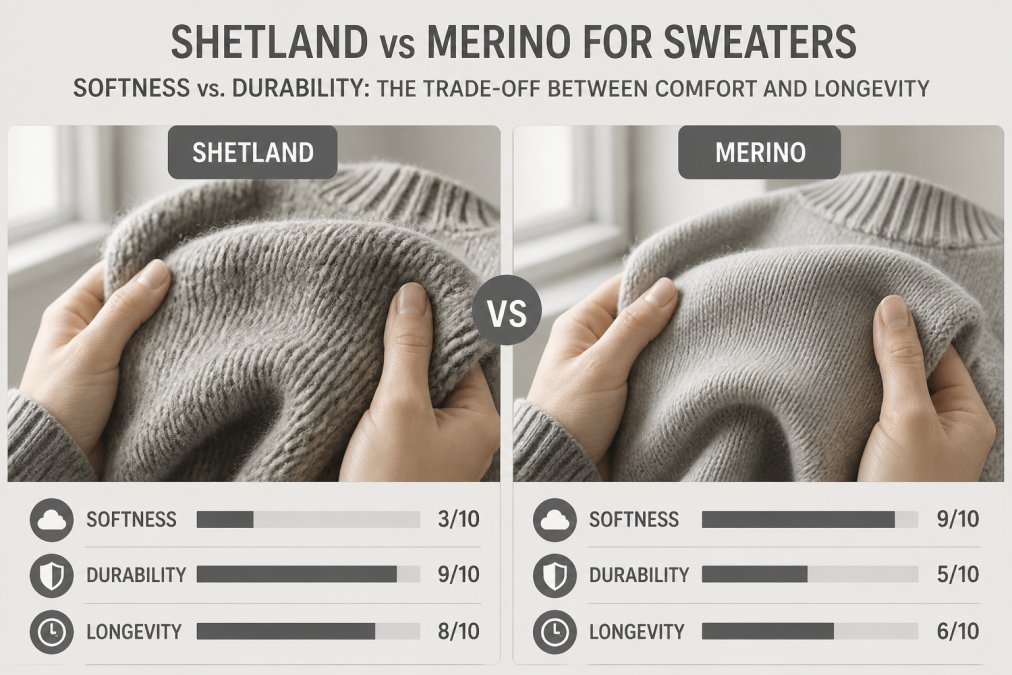
Softness vs. Durability: The Trade-Off Between Comfort and Longevity
Close-up of hands holding two different wool sweaters side by side, showing distinct texture and weave detail with natural window lighting
The fundamental trade-off: merino prioritizes softness and next-to-skin comfort, while Shetland prioritizes durability and shape retention.
Merino sweaters feel luxurious immediately, explaining their popularity in contemporary design. However, this softness requires active maintenance and periodic de-pilling.
Shetland sweaters improve with wear and hold their shape better through repeated wearing and washing. The coarser fibers resist pilling significantly better than merino, which is why vintage Fair Isle pieces remain treasured heirlooms.
Best Wool for Colorwork Sweaters: Which Fiber Excels
Colorwork, particularly stranded Fair Isle patterns, has a clear fiber preference. Shetland wool is the traditional and superior choice for this technique, and the reasons are both historical and practical.
Shetland wool became the foundation of Fair Isle knitting for good reason. The fiber's crisp hand-feel and excellent stitch definition make color transitions sharp and precise. When you're carrying yarn floats inside a stranded pattern, Shetland's elasticity and structure make tension management significantly easier. The yarn doesn't compress or distort as readily as merino, giving you more control over gauge consistency across color changes.
The traditional Shetland Museum and Archives collection of historic Fair Isle garments showcases centuries of colorwork knit exclusively in Shetland wool. These pieces demonstrate not just the technical suitability of the fiber, but also its unmatched ability to hold complex color patterns with clarity and definition.
Quality Shetland from sources like Jamieson & Smith carries the depth of color that makes Fair Isle patterns truly sing. The Jamieson & Smith 2ply Jumper Weight at Brae & Heather represents this tradition, 100% Shetland wool in the full palette of shades originally designed for Fair Isle work. The 4ply woollen spun thickness creates that characteristic loft and stitch definition that contemporary knitters seek when recreating heritage patterns.
Jamieson & Smith 2ply Jumper Weight
Best ForShetland wool is essential if you're tackling stranded colorwork, Fair Isle patterns, or any design where stitch clarity and color definition matter more than next-to-skin softness.
Merino's Role in Contemporary Colorwork
Merino can work in colorwork designs, but it requires different expectations. The softer hand-feel creates a more fluid appearance in color transitions, which suits contemporary interpretations of traditional patterns. Some modern designers intentionally choose merino for colorwork to achieve a softer, less structured aesthetic than traditional Fair Isle.
However, merino's finer fibers make tension control more challenging in stranded patterns. The yarn compresses more easily under the tension of carried floats, which can lead to gauge inconsistency.
Skin Sensitivity and the Itch Factor: Comfort for Everyday Wear
The itch factor is often the deciding point for knitters choosing between these fibers. Merino's finer micron count makes it significantly less likely to cause irritation, particularly for people with sensitive skin or those wearing sweaters next to bare skin.
How to Care for Wool Sweaters: Maintenance and Long-Term Wear
Both Shetland and merino require thoughtful care to maintain their appearance and performance over time. The specific maintenance needs differ between these fibers, with Shetland generally requiring less intervention.
Washing, Drying, and Pilling Prevention
Wool sweaters should be hand-washed in cool water with wool-specific detergent. Avoid agitation and never wring or twist the garment. For Shetland, this gentle approach preserves the fiber's natural oils and structure. For merino, careful washing is essential to minimize pilling, use a gentle, shorter wash cycle and consider using a mesh laundry bag for additional protection.
Storage and Shape Retention
Store wool sweaters folded rather than hanging. Hanging causes permanent stretching, particularly at the shoulders and neckline. Folded storage protects both Shetland and merino from distortion. For long-term storage, place sweaters in breathable cotton bags rather than plastic, which can trap moisture and encourage mildew.
Watch OutNever dry-clean wool sweaters unless absolutely necessary. Dry-cleaning chemicals can damage the fiber structure and strip natural oils. Hand-washing preserves both the appearance and longevity of your investment.
Ideal Use Cases: When to Choose Shetland or Merino
Your choice between shetland vs merino sweaters should align with the garment's intended purpose and how you'll wear it.
Choose Shetland wool for:
Stranded colorwork and Fair Isle patterns where stitch definition matters
Heritage and traditional designs that honor knitting history
Sweaters prioritizing durability and long-term wear
Layering pieces where next-to-skin softness is less critical
Projects where texture and visual interest enhance the design
Garments intended as heirlooms or investment pieces
Choose merino wool for:
Garments worn directly against skin where softness matters
Contemporary designs emphasizing comfort and performance
Active wear or sweaters subjected to frequent washing
Projects where moisture management is important
Knitters with sensitive skin or low tolerance for coarser fibers
Designs where a fluid, soft aesthetic takes priority over textural definition
Frequently Asked Questions
Which is warmer, Shetland or merino wool?
Shetland wool typically provides greater warmth due to its coarser fiber diameter and higher loft, which traps more air for insulation. Merino wool offers excellent thermal regulation and moisture-wicking, making it warmer in active conditions where sweat management matters. For static warmth in cold climates, Shetland edges ahead; for layering and temperature control, merino performs better.
What's the best wool for colorwork sweaters?
Shetland wool is traditionally the best choice for colorwork sweaters, especially Fair Isle patterns. Its coarser fiber diameter and crimp structure hold dyes with remarkable depth and complexity, creating the visual definition that characterizes heritage colorwork. Jamieson & Smith's Shetland Heritage yarns are specifically engineered to recreate the exact characteristics of historical Fair Isle garments, offering unmatched color complexity and pattern clarity.
Is Shetland wool itchy compared to merino?
Shetland wool can feel itchier than merino because of its higher micron count (typically 24-30 microns versus merino's 17-24 microns). However, modern Shetland yarns like Jamieson & Smith's worsted-spun options are significantly softer than traditional Shetland. Merino's finer fibers and lanolin content make it naturally smoother against skin, though quality Shetland worn next to skin can be comfortable with proper care.
How does the durability of Shetland wool compare to merino?
Shetland wool generally offers superior durability and abrasion resistance due to its coarser, stronger fibers and higher elasticity. It resists pilling better than merino and maintains shape retention through repeated wear and washing. Merino, while durable for its weight, is more prone to pilling in high-friction areas. For sweaters worn regularly, Shetland provides longer garment longevity, especially in stranded colorwork where yarn integrity is critical.




0 commentaire