Shetland wool and Icelandic wool represent two distinct fiber traditions shaped by geography, breeding practices, and centuries of textile heritage. Both produce durable, warm garments prized by knitters worldwide, though shetland icelandic wool durability differs fundamentally in fiber structure, staple length, and how they perform under wear. Understanding these differences helps knitters choose the right fiber for their project's demands, whether that's a delicate Fair Isle shawl or a hardy sweater built to last decades.
Shetland Wool Week Annual 2026
Brae & Heather specializes in authentic Shetland wool and expertly designed patterns that showcase this fiber's unique qualities. The distinction between shetland icelandic wool durability matters because each fiber behaves differently when knitted, washed, and worn. A sweater that maintains its shape after five years of daily use reflects not just fiber choice but also yarn construction and care practices.
Characteristic
Shetland Wool
Icelandic Wool
Staple Length
3-4 inches
4-6 inches
Fiber Diameter
Fine to medium (typically 20-24 microns)
Coarser (typically 20-28 microns)
Structure
Single-coated fleece
Dual-coated (thel and tog)
Warmth
Excellent insulation
Superior insulation
Resilience
High; bounces back from compression
Very high; maintains loft
Best For
Detailed colorwork, lightweight garments
Heavy outerwear, durability-focused projects
Softness
Softer variants available
Generally coarser next-to-skin
Shetland Wool Characteristics and Structure
Shetland wool comes from small, hardy sheep bred on the Shetland Islands for over a thousand years. This heritage shaped the fiber's distinctive properties: fine staple length, natural elasticity, and a range of natural colors from cream to dark brown. The fleece is single-coated, meaning each fiber grows from a single follicle without the distinct undercoat and outer guard hair found in some other breeds.
Shetland Wool Week Annual 2025
Shetland fiber typically measures 3 to 4 inches in staple length. This moderate length provides good yarn strength without excessive bulk. The fiber diameter ranges from fine to medium, around 20 to 24 microns for quality Shetland wool, making it softer and more comfortable against skin than coarser alternatives.
The fiber's natural crimp and elasticity give Shetland yarn excellent resilience. A sweater knitted from Shetland wool resists permanent creasing and bounces back after compression. Brae & Heather's Southern Shetlands Yarn Naturals - Fingering exemplifies this quality, a 3-ply fingering-weight yarn at $16.99 per skein designed specifically for detailed colorwork and lightweight garments where shape retention matters.
Southern Shetlands Yarn Naturals - Fingering
Shetland's natural color palette is another defining characteristic. Sheep produce fleece in cream, fawn, gray, brown, and black without chemical dyes. This natural variation means colors are inherently stable, they won't fade or shift the way some dyed fibers do. Many knitters prefer Shetland for heritage projects precisely because the fiber respects traditional aesthetics while delivering modern durability.
Icelandic Wool Characteristics and Fiber Properties
Icelandic wool comes from sheep adapted to one of the world's harshest climates. The fleece reflects this: it's thicker, coarser, and structurally distinct from Shetland. Icelandic sheep produce a dual-coated fleece with two distinct fiber types, the soft undercoat (called thel) and the longer, coarser guard hairs (called tog). This dual structure provides exceptional insulation and water resistance.
Staple length in Icelandic wool typically ranges from 4 to 6 inches, longer than Shetland. This extra length contributes to yarn strength and a smoother, less fuzzy finish. The fiber diameter averages 20 to 28 microns depending on grade, placing it in the medium to coarse range.
The dual-coated structure is Icelandic wool's defining feature for durability. The thel provides softness and warmth, while the tog gives strength and water shedding. Together, they create a fiber that resists abrasion and maintains loft under pressure. Icelandic wool sweaters stay puffy and warm even after years of heavy wear. The fiber's natural oils also provide inherent water resistance, making it ideal for outerwear in wet climates.
Icelandic wool's coarseness is sometimes perceived as a drawback, but it's actually a durability advantage. Coarser fibers resist pilling better than fine fibers because they're less likely to break at the surface. A sweater knitted from Icelandic wool may feel less soft initially, but it will look newer longer, the surface stays smooth and intact.
Wool Yarn Durability Factors: What Actually Determines Wear
Fiber choice alone doesn't determine how long a sweater lasts. Three factors work together: fiber properties, yarn construction, and care practices. Understanding all three explains why some wool garments fail after one season while others endure decades.
Fiber strength and resilience form the foundation. Longer staple fibers create stronger yarn because there's more surface area for fibers to grip each other. Both Shetland and Icelandic wool have adequate staple length for durable yarn, but Icelandic's extra length gives a slight advantage in raw strength.
Yarn twist and ply directly affect wear resistance. A tightly twisted yarn resists abrasion better than a loosely twisted one. Two-ply or three-ply construction distributes stress across multiple strands, preventing single-point failures. A single-ply yarn, no matter how well-twisted, is inherently more vulnerable to breakage.
Yarn weight influences how garments wear. Lighter yarns (fingering, sport, DK weight) create more delicate fabric that's more prone to snags and pilling. Heavier yarns (worsted, bulky) create denser fabric with better abrasion resistance.
Garment construction matters as much as fiber. Seams, edge finishing, and how stitches are secured affect durability. A sweater with reinforced seams and neat edge finishing lasts longer than one with sloppy construction, regardless of fiber type.
Washing and storage practices determine real-world lifespan. Wool requires gentle care: cool water, mild detergent, and air drying. Repeated hot-water washing or machine drying breaks down fibers faster than any amount of normal wear.
Pro TipThe most durable wool garment combines three elements: quality fiber with adequate staple length, tight yarn twist with at least two plies, and garment construction that reinforces stress points. No single factor guarantees durability alone.
Durability Head-to-Head: Where Each Fiber Excels
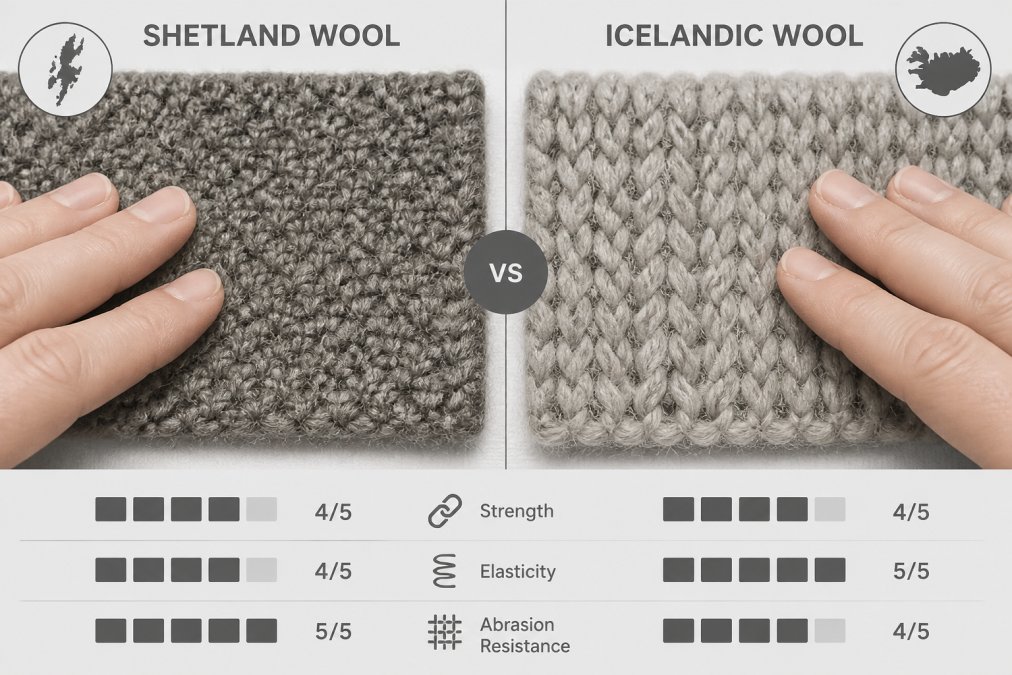
Shetland wool excels in garments requiring frequent washing and detailed construction. The finer fiber creates yarn that holds intricate patterns without visible distortion. Fair Isle sweaters, lace shawls, and color-detailed accessories showcase Shetland's strength: the fiber is fine enough for detail work yet strong enough for everyday wear.
Close-up of two knitted wool swatches side by side showing distinct texture and fiber structure, one Shetland and one Icelandic wool, with hands gently touching to demonstrate the feel and resilience of each fiber
Icelandic wool excels in heavy outerwear and garments designed for durability over decades. The coarser fibers and dual-coat structure resist pilling and surface wear better than Shetland. A traditional Icelandic lopapeysa (sweater) can outlast five Shetland sweaters of similar weight simply because the fiber structure sheds stress better.
The practical difference emerges in use. A Shetland sweater worn daily may need careful handling, gentle washing, storage away from friction, occasional blocking to restore shape. An Icelandic sweater tolerates rougher treatment.
Pilling presents a real distinction. Shetland's finer fibers are more prone to surface pilling, especially in lighter weights like fingering or sport. Icelandic's coarser fibers resist pilling because they're less likely to break and ball up. This doesn't mean Shetland sweaters are fragile, proper care prevents excessive pilling.
Key TakeawayChoose Shetland for refined garments, detailed colorwork, and projects where shape retention and softness matter. Choose Icelandic for heavy-duty outerwear, frequent wear, and garments designed for longevity.
How to Care for Wool Sweaters and Extend Their Life
Proper care is non-negotiable for wool durability. A well-cared-for Shetland sweater outlasts a neglected Icelandic one. The basics are simple but essential.
Washing: Use cool water (below 70°F), mild wool-specific detergent, and gentle agitation. Machine washing on a delicate cycle is acceptable, but hand washing is gentler. Submerge the garment, gently squeeze soapy water through the fibers, and rinse thoroughly in clean water. Do not wring or twist.
Drying: Air dry flat on a clean surface, away from direct heat and sunlight. Never hang a wet wool sweater, the weight stretches the fibers permanently. Reshape the garment while damp, smoothing seams and straightening edges.
Storage: Keep wool garments in breathable cotton or linen bags, never plastic. Moths are attracted to wool, so consider cedar blocks or lavender sachets in storage. Store in cool, dry conditions away from direct light. Fold sweaters rather than hanging them to prevent stretching.
Pilling management: Pilling is normal, especially in fine fibers like fingering-weight Shetland. Use a wool comb or fine-toothed brush to gently remove pills. Never pull pills forcefully, you risk breaking fibers. A fabric shaver designed for wool works well for stubborn pills.
Mending: Address holes and snags immediately. A small hole left unattended will unravel and become a large hole. Wool is forgiving, small holes can be sewn closed invisibly with matching yarn. Snags can often be gently worked back into the fabric with a crochet hook.
Choosing the Right Wool for Your Project
The decision between Shetland and Icelandic wool depends on three factors: the garment's purpose, your skill level, and your willingness to provide care.
For detailed colorwork and Fair Isle patterns, Shetland is the traditional and practical choice. Brae & Heather's collection of Shetland Wool Week Annual books showcases patterns specifically designed around Shetland's strengths, Fair Isle techniques, lace details, and color-heavy designs that demand fine yarn.
For heavy sweaters, outerwear, and heirloom garments, Icelandic wool is the better choice. Its durability and water resistance suit outdoor use. If you're knitting a sweater meant to be worn hard and passed down, Icelandic's coarser fiber and dual-coat structure will serve you better.
For intermediate knitters, Shetland is more forgiving. The fine fiber is easier to work with, stitches are visible, tension mistakes are less noticeable, and the yarn responds well to blocking and shaping. Icelandic's coarser fiber requires more precise tension and technique to look polished.
For beginners, either fiber works, but yarn weight matters more than fiber type. A worsted-weight Shetland yarn is easier to work with than a fingering-weight version, regardless of fiber.
Budget considerations: Both fibers are premium choices. Shetland's finer weight means you need less yardage for a finished garment, which can offset the higher per-ounce cost. Icelandic's longer staple length means fewer yarn ends to weave in, saving time.
Conclusion
The durability of Shetland versus Icelandic wool isn't a simple question with a single answer. Shetland wool offers refined beauty, excellent shape retention, and suitability for detailed colorwork, qualities that matter for garments meant to showcase technique and design. Icelandic wool offers superior resistance to pilling and abrasion, making it the choice for heavy-duty outerwear and garments built for decades of use.
Both fibers are durable when chosen correctly for their intended purpose and cared for properly. A fingering-weight Shetland shawl and a worsted-weight Icelandic sweater serve different needs. Neither is inherently superior, they're different tools for different projects.
For knitters seeking authentic Shetland wool and patterns designed to showcase its qualities, Brae & Heather offers both. The Southern Shetlands Yarn Naturals - Fingering provides premium fiber for detailed work, while the Shetland Wool Week Annual collections deliver expertly designed patterns that honor Shetland's heritage and potential. Start with the fiber that matches your project's purpose, then trust in proper care to ensure your finished garment lasts for years.
Frequently Asked Questions
Which is more durable, Shetland wool or Icelandic wool?
Durability depends on fiber properties and yarn construction more than breed alone. The deciding factor is how the yarn is prepared and twisted, not the breed itself.
Is Shetland wool durable enough for everyday sweaters?
Yes, when sourced and spun correctly. Shetland wool characteristics include fine staple length and natural strength that make it ideal for garments worn regularly. The key is yarn construction: a 3-ply or higher twist creates better resistance to breakage and pilling. Our Southern Shetlands Yarn Naturals, for example, is a 3-ply fingering-weight that holds up well to repeated wear and washing. Fine-gauge Shetland sweaters can last decades with proper care.
Does Icelandic wool pill easily?
Icelandic wool's tendency to pill depends on fiber properties. Garment construction and washing technique matter as much as the fiber itself.
How should you care for Shetland and Icelandic wool garments?
Both fibers benefit from gentle handling. Hand wash in cool water with wool-specific detergent, or use a wool cycle on your machine if the garment allows it. Avoid high heat and aggressive agitation, which accelerate fiber breakage and felting. Dry flat to prevent stretching. Both improve with age when cared for properly.
What projects are best suited to Shetland wool?
Shetland wool excels in projects where fine detail and color work matter. Fair Isle patterns, lace, intricate accessories, and fitted garments all showcase Shetland's strength. The consistent fiber diameter makes it ideal for precise stitch definition. Shetland wool also works beautifully in shawls and lightweight garments. Our Southern Shetlands Yarn Naturals fingering weight is specifically designed for detailed knitting and color work, with approximately 114 yards per skein and suggested needles of 3 to 3.5mm.



0 commentaire