
How to Store Premium Yarn to Prevent Moths
Publié le Oct 12, 2026
By Editorial Team
Économisez 25 % sur les patrons et accessoires de tricot, aucun code requis

Last Updated: October 12, 2026
Knowing how to store premium yarn to prevent moths starts with understanding what draws them in. Clothes moths feed on keratin, the protein found in animal fibers. Wool, cashmere, mohair, alpaca, and silk all contain it. Synthetic yarns do not.
That single fact explains why a yarn stash built on Shetland wool and other natural fibers needs more protection than a bin of cotton. Moths ignore plant fibers and plastic. They target the good stuff.
The lifecycle makes this harder. A female clothes moth can lay eggs directly on a wool sweater or a wound skein, and the larvae do the damage, not the adult moths.
At Brae & Heather, the yarns stocked are almost entirely animal fiber. That means storage is not optional housekeeping. It is part of protecting the investment.
Checking yarn for moths before storage takes five minutes per skein and saves entire projects. Inspect every skein, even new ones from a shop or a yarn swap.
Here is what to look for:
Work in bright light. Shake each skein over a white surface so anything falling out is visible.
Active infestation means live larvae, webbing, or moths present now. Old damage means holes with clean, finished edges and no webbing or larvae. Old damage is stable. Active infestation spreads.
If a skein shows active signs, isolate it immediately. Do not store it with clean yarn. If the damage looks old and the skein is otherwise sound, it can still be stored after cleaning.
Clean yarn and wool garments before storage. Moth larvae are drawn to soil, sweat, and food residue left in fibers. Dirt also hides eggs, so cleaning removes both the attractant and part of the problem.
For wool garments, hand wash in cool water with a gentle wool wash, then rinse thoroughly. Squeeze out water without wringing. Lay flat to dry away from direct heat. The fiber must be completely dry before it goes into any container.
For skeins still in hanks, wash gently and let them dry fully. For wound balls, surface cleaning is limited, so focus on inspection and airtight storage instead.
Airtight storage is the single most reliable defense. A sealed, impermeable container stops moths from reaching the yarn at all. That beats every repellent on the market.
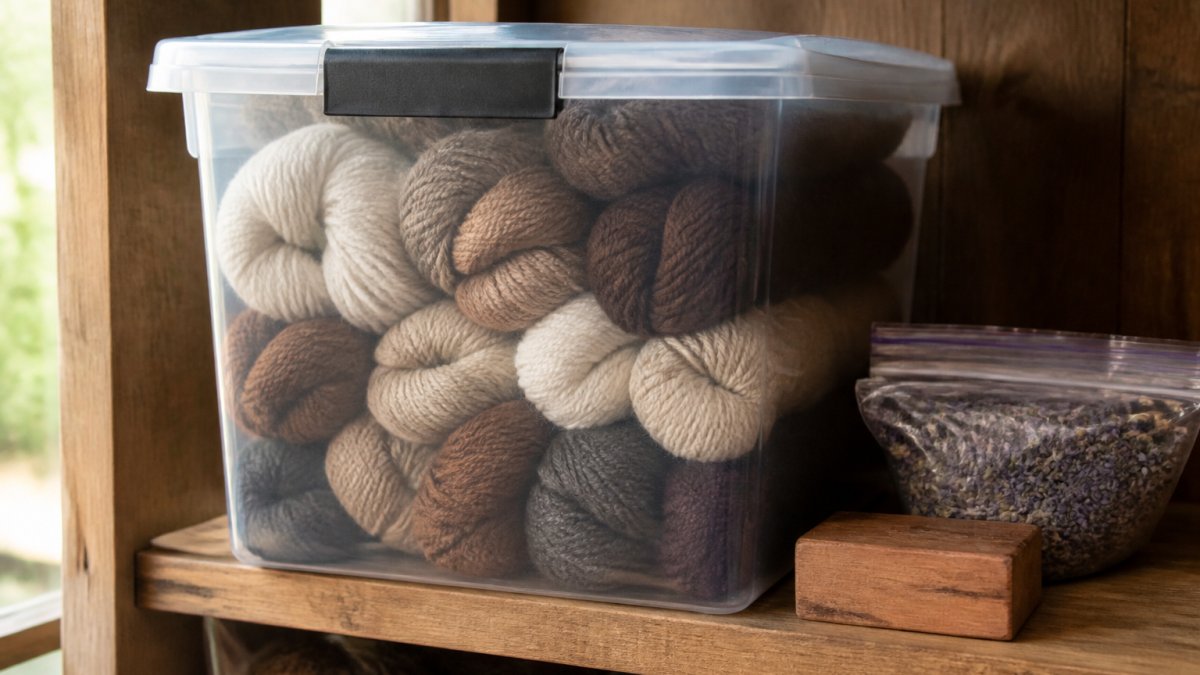
Look for containers with a gasket seal or a locking lid. Standard plastic bins with loose lids leave gaps. Moths are small and determined. A gasketed bin with a rubber or silicone gasket and four locking latches is the gold standard for a full stash.
Every airtight container traps whatever is inside it, including moisture. If a skein goes in even slightly damp, a sealed bin holds that humidity against the fiber for months.
Compression is the second trade-off. Luxury fibers like cashmere and alpaca have hollow or fine structures that crush permanently under weight. Stacking gasketed bins so the bottom bin carries the load is fine; stuffing a bin so full that the lid presses down on the skeins is not.
Off-gassing is the third. Some inexpensive plastic bins release a faint chemical odor, especially in warm rooms. That odor can settle into animal fiber and is difficult to remove. If a new bin smells strongly of plastic, air it out for a few days before loading it.
| Container | Seal Quality | Best For | Watch Out For |
|---|---|---|---|
| Gasketed plastic bins | Excellent | Long-term stash storage | Bulky; traps moisture if yarn is damp |
| Heavy-duty zip-closure bags | Good | Single projects, small skeins | Reuse weakens the seal; sharp needles can puncture |
| Screw-top containers | Excellent | Notions, small quantities of fine fiber | Limited capacity; hard to label |
| Vacuum-seal bags | Excellent | Flat storage, short-term | Can crush halo fibers like mohair and alpaca |
| Cedar chest | Moderate | Display and short-term storage | Not airtight on its own; cedar scent fades |
| Cotton pillowcase or canvas bag | Poor | Breathable short-term staging | No moth protection; use only for airing |
Heavy-duty plastic bags work well for individual projects. Press out the air before sealing, but do not vacuum-seal mohair or alpaca, the compression flattens the halo permanently. Screw-top containers suit small amounts of luxury fiber. For a full stash, gasketed bins give the best protection per dollar.
Airtight wins for anything going into storage for more than a few weeks. Breathable storage, cotton pillowcases, canvas totes, open baskets, is only appropriate for yarn that is actively in use and being handled regularly, because handling disturbs larvae and lets you spot problems early. Never put premium yarn into long-term breathable storage and assume cedar will cover the gap.
A project bag helps here too. The Knitting Project Bag - Little Voices keeps active work together, so the rest of the stash stays sealed. It holds up to 33 lb and has a drawstring closure and twin cotton handles for moving between rooms.

Freezing yarn to kill moths works, but only when done correctly. Cold stops larvae and eggs, and repeated cycles catch what a single freeze misses.
Knitting Project Bag - Little Voices →
Follow these steps:
The bag matters. A loose wrap lets moisture in and lets moths out. Seal it tight.
A single freeze kills live larvae but may not kill every egg. Eggs can survive cold that larvae cannot. The thaw period gives surviving eggs a chance to hatch, and the next freeze kills the new larvae.
Two to three cycles cover the gap. Skipping the thaw defeats the purpose, so build the wait time into the schedule.
Cedar blocks and lavender sachets help, but they are not a cure. Cedar oil can deter adult moths, and lavender adds a pleasant scent. Neither kills larvae already inside a skein.
Use repellents as a second layer, not the first. Airtight storage does the heavy lifting. Cedar and lavender make the space less inviting.
Refresh cedar by lightly sanding the surface. Replace lavender sachets when the scent fades. Both lose potency over time.
Mothballs are a different category. They contain chemicals that require careful handling and are not a good fit for yarn that will touch skin. Stick with cedar, lavender, and sealed containers.
Not every yarn in a stash is at equal risk. Clothes moth larvae feed on keratin, the protein in animal fiber. That means the vulnerability map is drawn by fiber content, not by price or brand.
High risk, animal protein fibers:
Low risk, plant-based fibers:
No risk, synthetic fibers:
A common mistake is storing everything together in one open bin because "it's all yarn." If a moth gets in, it will find the animal fiber and ignore the cotton, but the cotton gave it a place to hide. The practical fix is to seal animal fibers in gasketed bins and treat plant and synthetic yarns as secondary containers that still get sealed, just with less urgency.
Delicate fibers suffer from handling as much as from moths. Cashmere, alpaca, and silk should be pulled from storage as whole sealed units, worked from, and returned the same day rather than left out on a shelf. Shetland and other sturdy wools tolerate more back-and-forth.
Store the whole stash in a cool, dry place away from sunlight. Basements and attics swing in temperature and humidity, so a closet shelf beats both. Check containers every few months and re-inspect any yarn that comes out of storage.
Brae & Heather carries Shetland wool and other natural fibers, plus patterns that make the most of them. Pairing good storage with good materials keeps both in shape for years.
Freeze yarn for at least 72 hours at 0°F (-18°C) or below. After removing it, let the yarn return to room temperature completely, then freeze it again for another 72 hours. This freeze-thaw-freeze cycle kills moths at every life stage, including eggs and larvae that survive a single freeze. Seal yarn in zip-closure bags before freezing to prevent moisture damage.
Cedar blocks and lavender sachets can deter adult moths, but they do not kill eggs or larvae already present in your yarn. Treat cedar as a secondary layer of protection, not a replacement for airtight storage. Refresh cedar by lightly sanding the surface every few months, and replace lavender sachets when the scent fades. Neither option works if your yarn is already infested.
Airtight containers with a rubber gasket or screw-top lid offer the most reliable protection. Heavy-duty zip-closure bags work well for individual skeins, while plastic bins with sealed lids suit larger stashes. Avoid cardboard boxes and open baskets, which give moths easy access. Whichever container you choose, confirm it seals completely and store it in a cool, dry place away from direct sunlight.
Inspect skeins for fine webbing, small holes, or gritty debris that looks like sand. Live larvae leave silken tunnels and shed casings. Check the bottom of your storage container and the folds of any wool garments. If you find signs, isolate the affected yarn immediately and treat it with freezing before returning it to storage. Early detection saves the rest of your stash.

0 commentaire